Pentagon Reduces Public Briefings During Iran War, Shifts to Social Media Strategy

The Pentagon held only eight press briefings during a nearly six-week U.S. and Israeli bombing campaign against Iran, compared to 40 briefings in the first five weeks of the 2003 Iraq invasion. Secretary of Defense Pete Hegseth conducted minimal media interviews and the department has increasingly relied on social media messaging with limited specifics. The shift represents a significant departure from decades of wartime communication norms and raises concerns about transparency and public accountability.
During Operation Epic Fury, the joint U.S. and Israeli bombing campaign against Iran, the Pentagon held only eight press briefings led by Secretary of Defense Pete Hegseth, a dramatic reduction compared to historical precedent. In contrast, the 2003 Iraq invasion saw 40 Pentagon briefings in its first five weeks, with then-Secretary Donald Rumsfeld and deputies giving nearly 50 media interviews. Under Hegseth's tenure, the Pentagon has shifted toward social media messaging while restricting journalist access, including barring reporters from the press office and redesignating it as classified space. Military correspondents report receiving minimal information from U.S. Central Command, lacking the daily briefings with uniformed officials that characterized previous major combat operations. Critics, including experts in military-media relations, argue these changes reduce oversight and transparency, while Pentagon officials counter they represent transparency and cite operational security concerns.
What's missing
The article does not provide the Pentagon's detailed rationale for the reduced briefing schedule or explain whether operational security concerns justified the departure from historical norms. Additionally, the specific content and reach of the Pentagon's social media messaging is not detailed, making it difficult to assess the actual information flow to the public through alternative channels.
What different sources said
- UPICenter
War in Iran showcases Pentagon’s break from public affairs norms
Related
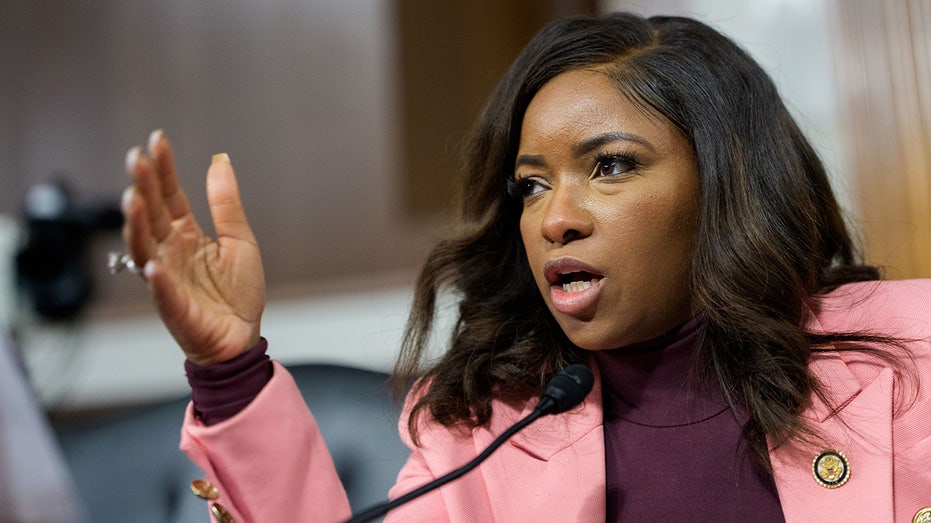
Rep. Crockett and Alveda King clash at Capitol Hill hearing on SPLC funding
During a House Judiciary Committee hearing on the Southern Poverty Law Center's funding practices, Rep. Jasmine Crockett criticized Republicans for what she called using Martin Luther King Jr.'s niece Alveda King as a 'prop' to deflect from racism allegations. Crockett accused the GOP of being predominantly white and unwelcoming to people of color, while Alveda King responded by asserting her legitimate place in the King family legacy. The exchange highlighted partisan disagreements over civil rights organizations and representation within the Republican Party.
DOJ Brief Claims Anti-Weaponization Fund Was Politically Neutral; Trump's Recent Comments Contradict That Position
The Department of Justice filed a brief arguing that Trump's proposed Anti-Weaponization Fund is moot because it will not be implemented, and denying claims it was designed to benefit Trump supporters. However, Trump stated in a recent television interview that the fund would benefit people hurt by the "radical-left," directly contradicting the DOJ's legal position. The discrepancy highlights tensions between the administration's official legal arguments and the president's public statements about the fund's intended purpose.
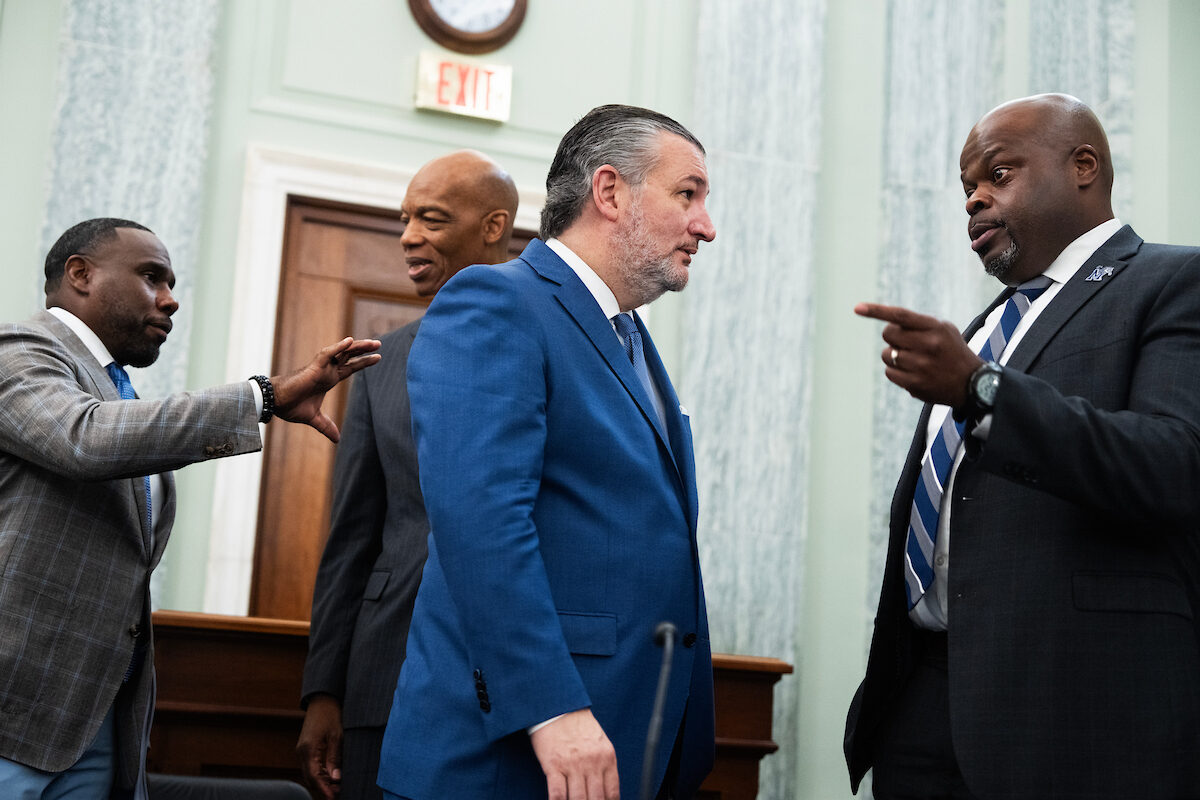
Bipartisan College Sports Reform Bill Creates Unusual Political Alliances
A Senate bill called the Protect College Sports Act, co-authored by Republican Ted Cruz and Democrat Maria Cantwell, is advancing with backing from President Trump and support from rival college football coaches. The legislation aims to regulate Name, Image, and Likeness (NIL) payments and restore order to college athletics amid skyrocketing costs and roster instability. The bill has created unusual cross-party and regional alliances, though it faces opposition from some conservatives and progressives, as well as divisions among conference leaders.