Michigan Senate Candidate el Sayed Backs Sanders' Proposal for Government Ownership of AI Companies

Michigan Democratic Senate candidate Abdul el Sayed endorsed Sen. Bernie Sanders' proposal to give the federal government 50% ownership stakes in major AI companies like OpenAI and Anthropic through a sovereign wealth fund. El Sayed argued this approach should be paired with regulatory enforcement mechanisms similar to banking oversight to ensure safety compliance. The position distinguishes el Sayed from his primary opponents McMorrow and Stevens, who favor regulation and public-private partnerships respectively.
Abdul el Sayed, a progressive candidate in Michigan's August 4 Democratic Senate primary, expressed support for Bernie Sanders' American AI Sovereign Wealth Fund Act, which would grant the federal government 50% ownership and equal board representation in major AI firms. Sanders outlined the proposal in a New York Times op-ed, arguing that government voting shares would enable blocking of harmful decisions and promotion of beneficial policies. El Sayed told Bridge Michigan that AI's potential to fundamentally alter the social contract and threaten human existence justifies treating it differently from other industries, but emphasized that public ownership must be accompanied by enforceable safety requirements modeled on federal banking regulation. His position contrasts with fellow primary candidates Mallory McMorrow, who opposes public ownership despite making AI regulation central to her campaign, and Haley Stevens, who advocates for public-private partnerships instead. El Sayed has received endorsements from Sanders and the United Auto Workers, and recent polling shows him performing competitively in the three-way race.
What's missing
The article does not explain the specific mechanisms by which the sovereign wealth fund would acquire these ownership stakes, nor does it address potential constitutional or legal challenges to such government ownership of private companies. Additionally, there is no discussion of how this proposal might affect AI company valuations, investor confidence, or the competitive position of U.S. AI firms relative to international competitors.
What different sources said
- Washington ExaminerRight
Michigan Senate candidate agrees with Sanders on public ownership of AI firms
Related
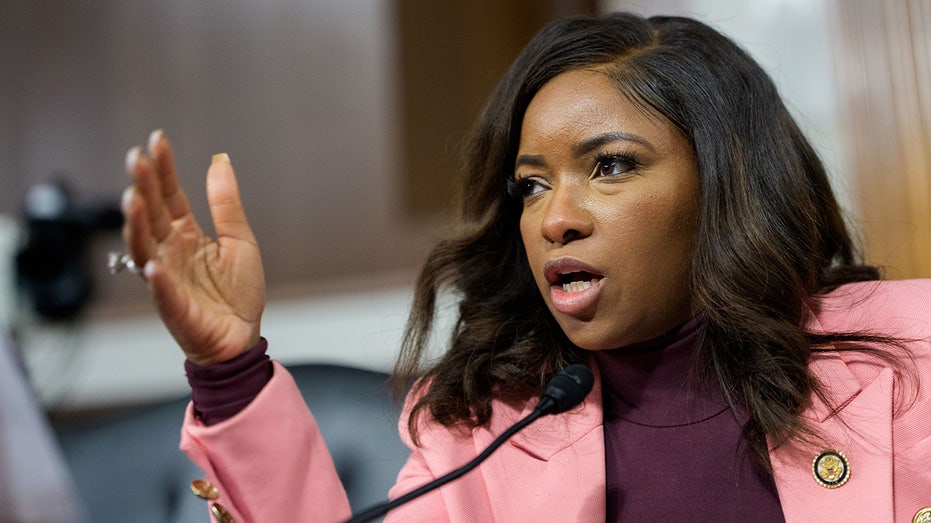
Rep. Crockett and Alveda King clash at Capitol Hill hearing on SPLC funding
During a House Judiciary Committee hearing on the Southern Poverty Law Center's funding practices, Rep. Jasmine Crockett criticized Republicans for what she called using Martin Luther King Jr.'s niece Alveda King as a 'prop' to deflect from racism allegations. Crockett accused the GOP of being predominantly white and unwelcoming to people of color, while Alveda King responded by asserting her legitimate place in the King family legacy. The exchange highlighted partisan disagreements over civil rights organizations and representation within the Republican Party.
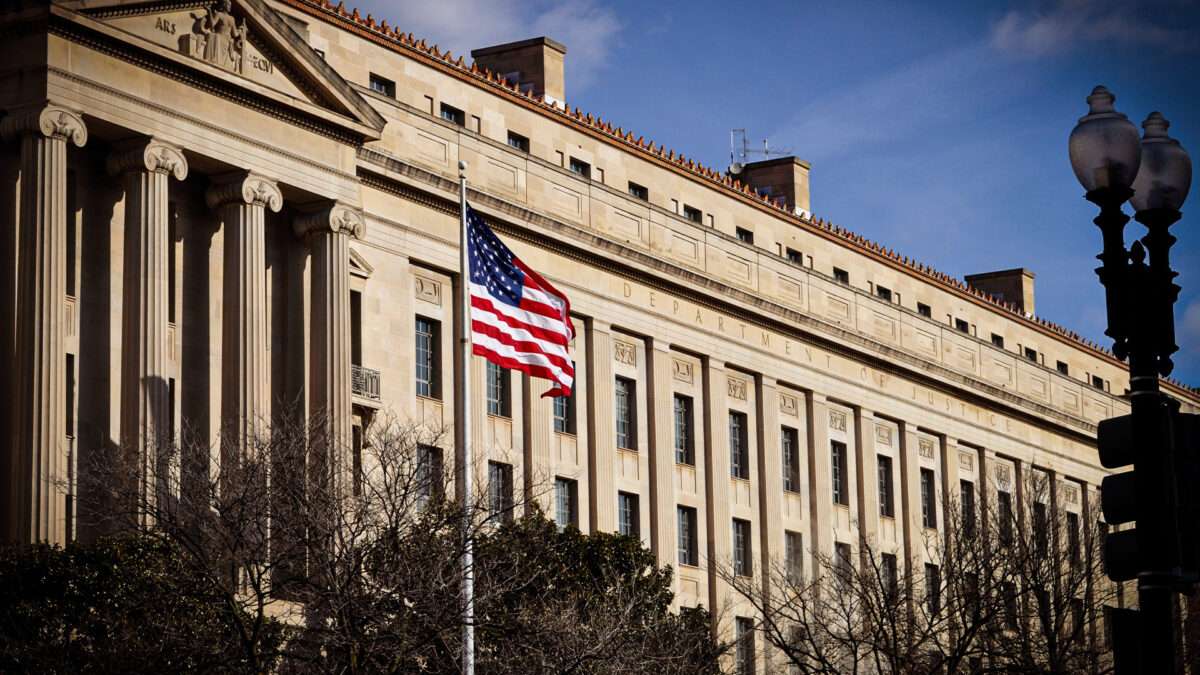
DOJ Brief Claims Anti-Weaponization Fund Was Politically Neutral; Trump's Recent Comments Contradict That Position
The Department of Justice filed a brief arguing that Trump's proposed Anti-Weaponization Fund is moot because it will not be implemented, and denying claims it was designed to benefit Trump supporters. However, Trump stated in a recent television interview that the fund would benefit people hurt by the "radical-left," directly contradicting the DOJ's legal position. The discrepancy highlights tensions between the administration's official legal arguments and the president's public statements about the fund's intended purpose.
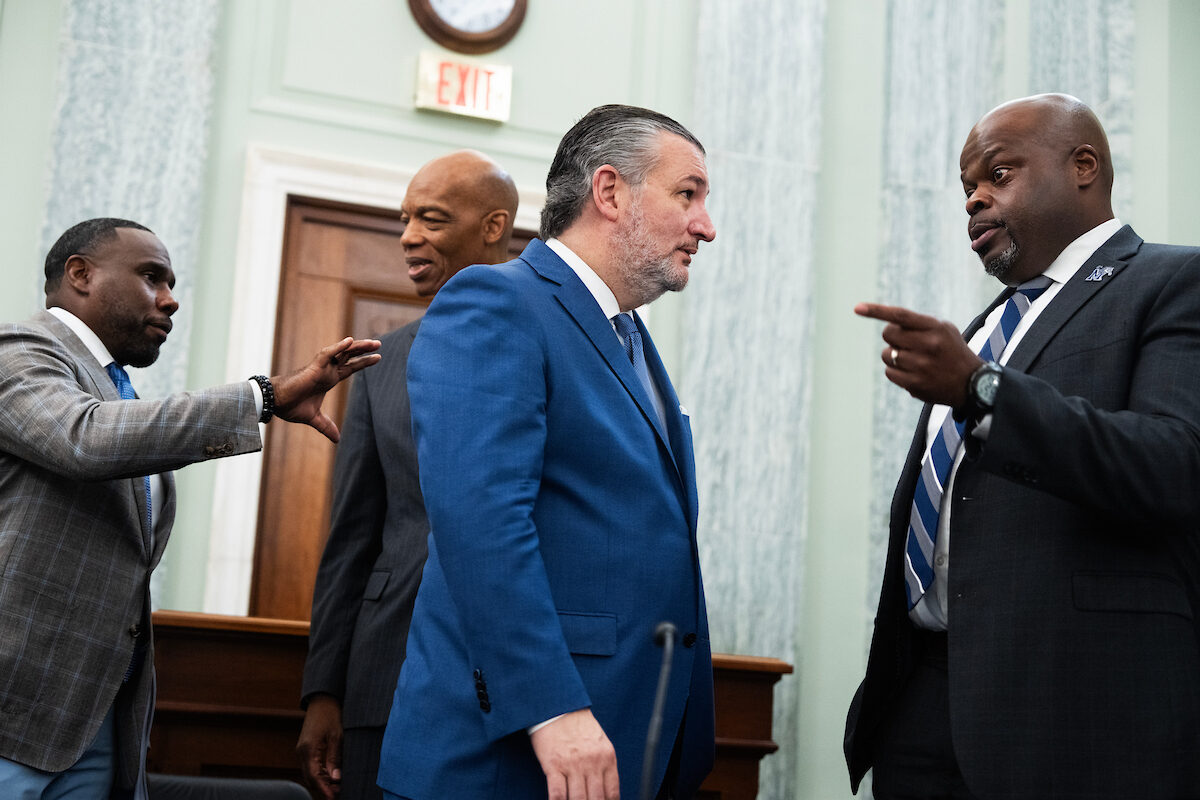
Bipartisan College Sports Reform Bill Creates Unusual Political Alliances
A Senate bill called the Protect College Sports Act, co-authored by Republican Ted Cruz and Democrat Maria Cantwell, is advancing with backing from President Trump and support from rival college football coaches. The legislation aims to regulate Name, Image, and Likeness (NIL) payments and restore order to college athletics amid skyrocketing costs and roster instability. The bill has created unusual cross-party and regional alliances, though it faces opposition from some conservatives and progressives, as well as divisions among conference leaders.