University of Texas Researchers Develop Water-Harvesting Textiles for Portable Drinking Water from Air

Engineers at the University of Texas at Austin have developed a jacket made from a special textile that harvests drinking water directly from ambient air, producing 400–900 milliliters per day depending on humidity. The same research team also set a new record for atmospheric water harvesting using a solar-powered hydrogel device tested in both arid and semi-humid environments. The advances could provide decentralized water access for hikers, emergency responders, and water-stressed communities worldwide.
Researchers at UT Austin's Cockrell School of Engineering have published two related breakthroughs in atmospheric water harvesting. The first, detailed in Science Advances, involves a wearable jacket whose textile funnels moisture from the air into detachable harvesting units, which are then heated in a foldable collector to produce drinkable water. Scatter plot data from the study shows the new textile outperforms competing materials — including MOFs, hydrogels, and salt composites — at every tested humidity level, yielding roughly 410 ml at 28% relative humidity, 590 ml at 50%, and 890 ml at 68%. A key innovation is the engineered transport pathway that moves water rapidly from vapor to liquid on the fiber surface and into the textile, enabling real-world wearability rather than just lab performance. The team also reported a separate record-setting solar device, published in Nature Water, that captured 1.3 liters of clean water per day in field tests across the Chihuahuan Desert and Austin, Texas — equivalent to 4.3 liters per kilogram of sorbent material per day, surpassing all previously reported results. Both technologies are being eyed for applications including backpacks, tents, emergency shelters, disaster response, and water access in arid or infrastructure-limited regions across North Africa, the Middle East, South Asia, and sub-Saharan Africa.
Data: article/research publication
Limitations & open questions
Neither source addresses the durability or washability of the water-harvesting textile after repeated use, the energy source required to heat the detachable harvesting units in field conditions, the cost or scalability of manufacturing the fabric, or whether the collected water has been tested against drinking-water safety standards beyond the lab setting. The timeline to commercialization is also not discussed.
What different sources said
- Hacker NewsCenter
This Jacket Pulls Drinking Water from Thin Air
- EngadgetCenter
Researchers are developing textiles that can produce drinking water from the air
Related

Nobel Laureates Rebut Study Claiming Universe's Expansion Is Slowing, Confirm Acceleration Continues
An international team of astrophysicists, including Nobel laureates Adam Riess and Brian Schmidt, has published a study in the Monthly Notices of the Royal Astronomical Society confirming that the universe's expansion is still accelerating. The rebuttal targets a late-2024 South Korean study that had claimed dark energy was weakening, a finding that would have overturned nearly three decades of cosmological understanding. The new study identifies two specific methodological errors in the earlier work, restoring confidence in the standard model of cosmic acceleration while leaving the deeper mystery of what dark energy actually is unresolved.

Study Finds Trees May Store Less Carbon Than Climate Models Predict
A new study published in Science Advances found that oak trees stop growing months before they stop photosynthesizing, meaning increased carbon uptake does not necessarily translate into more wood growth and long-term carbon storage. Researchers analyzed 137 sites across the US, finding that 26–36% of annual carbon uptake occurred after tree growth had already ceased, with drought and heat identified as key triggers for halting growth. The findings suggest that widely used climate models, which assume photosynthesis and growth are tightly linked, may be overestimating forests' future capacity to sequester carbon.
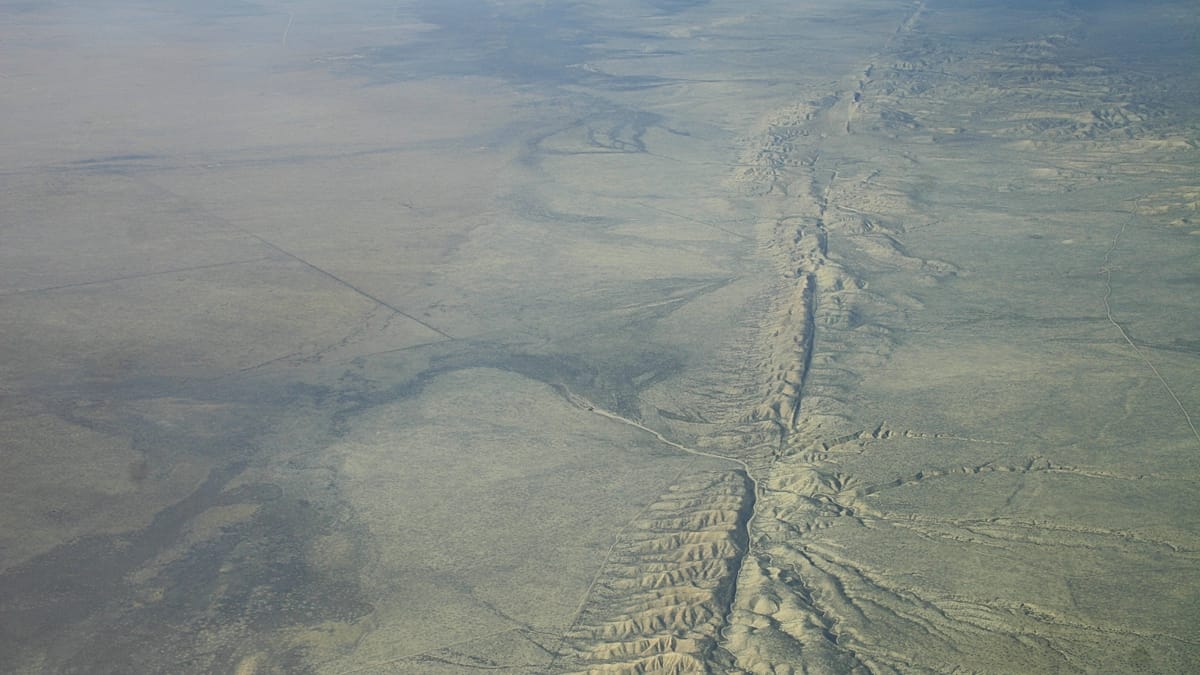
San Andreas Fault Stress Reaches Highest Level in 1,000 Years, Study Finds
A new peer-reviewed study finds that tectonic stress on Southern California's San Andreas and San Jacinto fault systems has reached its highest levels in at least 1,000 years, with the San Jacinto-Bernardino section measuring 3.6 megapascals. The research, led by the University of Hawaiʻi at Mānoa and published in the Journal of Geophysical Research: Solid Earth, used a computer model drawing on geological data including radiocarbon dating and tree-ring records to reconstruct a millennium of earthquake history. The findings cannot predict when a major earthquake will occur but are intended to improve hazard assessments, inform building codes, and guide emergency preparedness in a region home to millions.