Study Finds Trees May Store Less Carbon Than Climate Models Predict
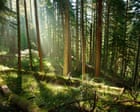
A new study published in Science Advances found that oak trees stop growing months before they stop photosynthesizing, meaning increased carbon uptake does not necessarily translate into more wood growth and long-term carbon storage. Researchers analyzed 137 sites across the US, finding that 26–36% of annual carbon uptake occurred after tree growth had already ceased, with drought and heat identified as key triggers for halting growth. The findings suggest that widely used climate models, which assume photosynthesis and growth are tightly linked, may be overestimating forests' future capacity to sequester carbon.
A study led by Mukund Palat Rao of Columbia University's Lamont-Doherty Earth Observatory, published in Science Advances, challenges a core assumption in climate modeling: that photosynthesis and tree growth are closely coupled. Using satellite imagery, CO2 flux instruments, trunk sensors, and growth ring records across 137 US sites, researchers found that oak trees in the eastern US stopped growing by mid-summer but continued photosynthesizing into October, with roughly 36% of annual carbon uptake occurring after growth had ceased. At California sites, the figure was about 26%. The primary driver of this decoupling appears to be aridity and heat — when conditions become hot and dry, trees lose the internal water pressure needed for growth while photosynthesis continues at a reduced rate. Carbon absorbed after growth stops is largely directed toward foliage, metabolic maintenance, or soil microbial communities rather than long-lived woody biomass. The decoupling was most pronounced in years with high climate variability, a pattern expected to intensify with climate change. The researchers caution that Earth system models relying on photosynthesis as a proxy for carbon sequestration may therefore overestimate how much carbon forests will store in a warmer, higher-CO2 world.
Limitations & open questions
The study focuses exclusively on oak trees in the US, which limits the generalizability of the findings to worldwide carbon sink projections. Additionally, the precise quantitative impact on existing Earth system model projections — i.e., by how much forests' carbon sequestration capacity might be overestimated — is not provided.
How coverage differed
Both outlets reported the core findings consistently, but The Guardian added broader policy context — including a recent report on carbon removal technologies and the scale of land-based carbon removal efforts globally — framing the study within ongoing debates about climate mitigation strategies, while Mirage News stayed closer to the scientific methodology and researcher quotes.
What different sources said
Trees may store less planet-heating carbon than hoped, study suggests
- Mirage NewsCenter
Research: Future Trees May Store Less Carbon Than Expected
Related
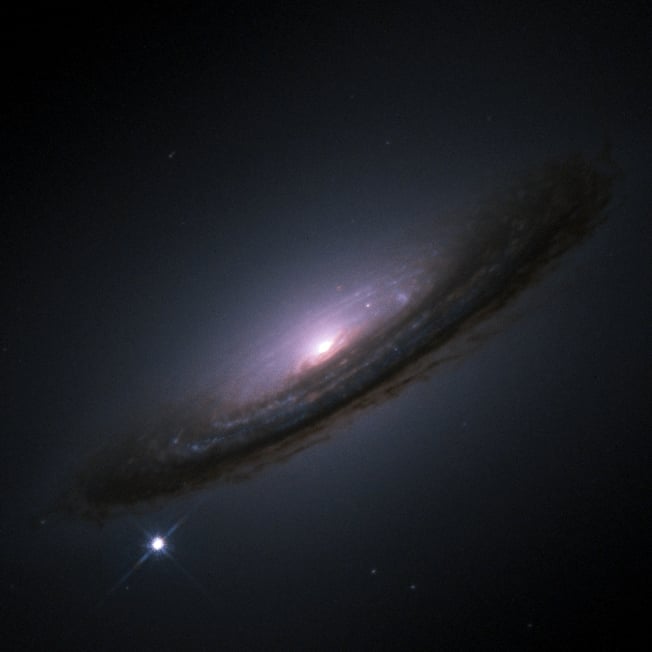
Nobel Laureates Rebut Study Claiming Universe's Expansion Is Slowing, Confirm Acceleration Continues
An international team of astrophysicists, including Nobel laureates Adam Riess and Brian Schmidt, has published a study in the Monthly Notices of the Royal Astronomical Society confirming that the universe's expansion is still accelerating. The rebuttal targets a late-2024 South Korean study that had claimed dark energy was weakening, a finding that would have overturned nearly three decades of cosmological understanding. The new study identifies two specific methodological errors in the earlier work, restoring confidence in the standard model of cosmic acceleration while leaving the deeper mystery of what dark energy actually is unresolved.
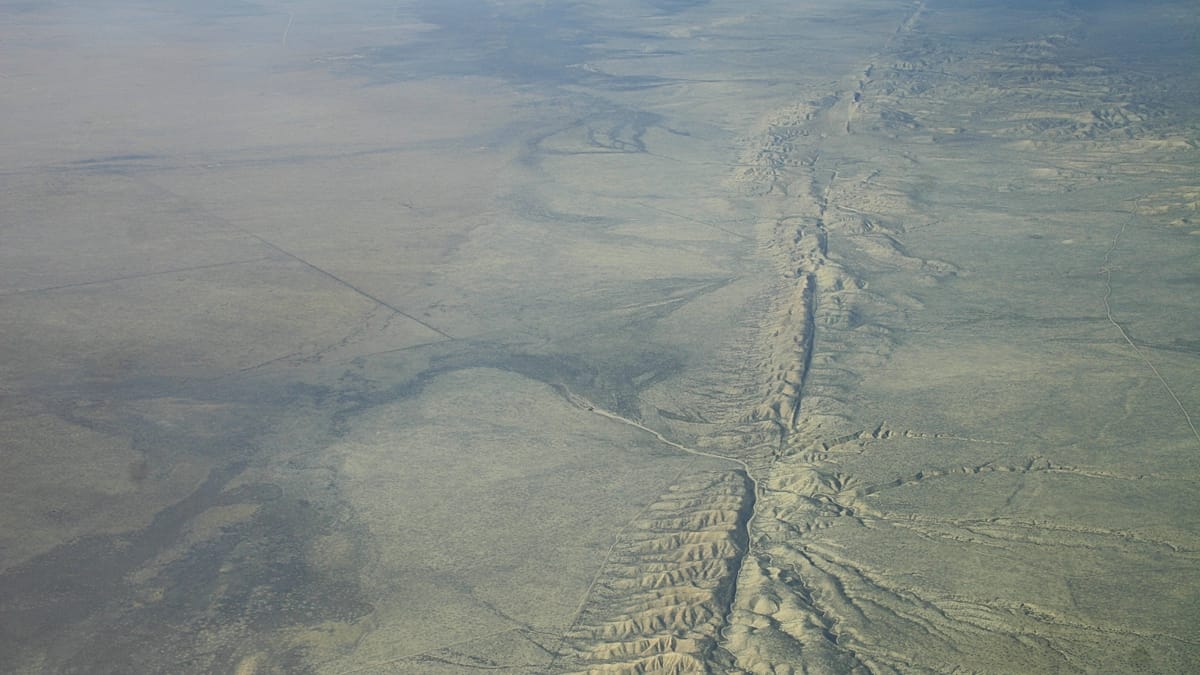
San Andreas Fault Stress Reaches Highest Level in 1,000 Years, Study Finds
A new peer-reviewed study finds that tectonic stress on Southern California's San Andreas and San Jacinto fault systems has reached its highest levels in at least 1,000 years, with the San Jacinto-Bernardino section measuring 3.6 megapascals. The research, led by the University of Hawaiʻi at Mānoa and published in the Journal of Geophysical Research: Solid Earth, used a computer model drawing on geological data including radiocarbon dating and tree-ring records to reconstruct a millennium of earthquake history. The findings cannot predict when a major earthquake will occur but are intended to improve hazard assessments, inform building codes, and guide emergency preparedness in a region home to millions.

NASA-Backed Study Suggests Jupiter Shaped Earth's Supply of Life-Essential Elements
Two new studies advance understanding of how life's essential ingredients are distributed across the solar system: one identifying novel organic carbon molecules on Mars, another suggesting Jupiter shaped the delivery of life-essential elements to early Earth. The Mars findings, led by University of Florida astrobiologist Amy Williams, detected simple organic carbon compounds on the planet's surface, some never previously observed there. Together, the studies deepen scientific debate about where life could exist and how the conditions for it arise.