Nobel Laureates Rebut Study Claiming Universe's Expansion Is Slowing, Confirm Acceleration Continues
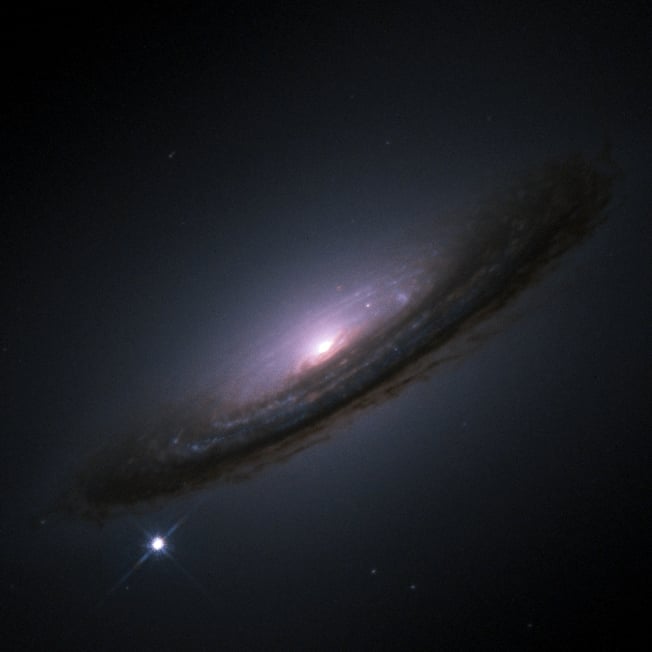
An international team of astrophysicists, including Nobel laureates Adam Riess and Brian Schmidt, has published a study in the Monthly Notices of the Royal Astronomical Society confirming that the universe's expansion is still accelerating. The rebuttal targets a late-2024 South Korean study that had claimed dark energy was weakening, a finding that would have overturned nearly three decades of cosmological understanding. The new study identifies two specific methodological errors in the earlier work, restoring confidence in the standard model of cosmic acceleration while leaving the deeper mystery of what dark energy actually is unresolved.
A University of Southampton-led team, co-authored by Nobel Prize-winning astrophysicists Adam Riess and Brian Schmidt, has published a detailed rebuttal confirming that the universe's expansion continues to accelerate, driven by dark energy. The study, appearing in the Monthly Notices of the Royal Astronomical Society, directly addresses a late-2024 paper by South Korean researchers who had argued that Type Ia supernova data indicated dark energy was weakening and cosmic expansion was decelerating. The new analysis identified two key errors in that earlier work: it incorrectly assumed the age of an exploding star matched the age of its host galaxy — a flawed shortcut that distorts brightness calculations — and it failed to apply a standard correction accounting for host galaxy mass. When both errors are corrected, the evidence for cosmic acceleration returns clearly and consistently, as illustrated by NASA's timeline of the universe showing dark-energy-driven acceleration beginning roughly five billion years ago. Lead author Dr. Phil Wiseman described the episode as a scientific misunderstanding rather than a flaw in the universe, and Riess emphasized that extraordinary claims require especially careful testing. The mystery of dark energy's fundamental nature remains entirely open, but researchers say the episode has also opened new avenues for thinking about how supernovae explode and how dark energy can be measured more precisely.
Limitations & open questions
The study addresses methodological errors in the South Korean paper, but does not detail whether the South Korean team has responded to or acknowledged the rebuttal. Additionally, independent verification from teams unaffiliated with the original 1998 discovery — whose Nobel laureates co-authored this rebuttal — would further strengthen confidence in the findings.
What different sources said
- Mirage NewsCenter
Universe Expansion Still Accelerating Say Astronomers
- Universe TodayCenter
The Universe is Still Running Away From Us
Related

Study Finds Trees May Store Less Carbon Than Climate Models Predict
A new study published in Science Advances found that oak trees stop growing months before they stop photosynthesizing, meaning increased carbon uptake does not necessarily translate into more wood growth and long-term carbon storage. Researchers analyzed 137 sites across the US, finding that 26–36% of annual carbon uptake occurred after tree growth had already ceased, with drought and heat identified as key triggers for halting growth. The findings suggest that widely used climate models, which assume photosynthesis and growth are tightly linked, may be overestimating forests' future capacity to sequester carbon.
San Andreas Fault Stress Reaches Highest Level in 1,000 Years, Study Finds
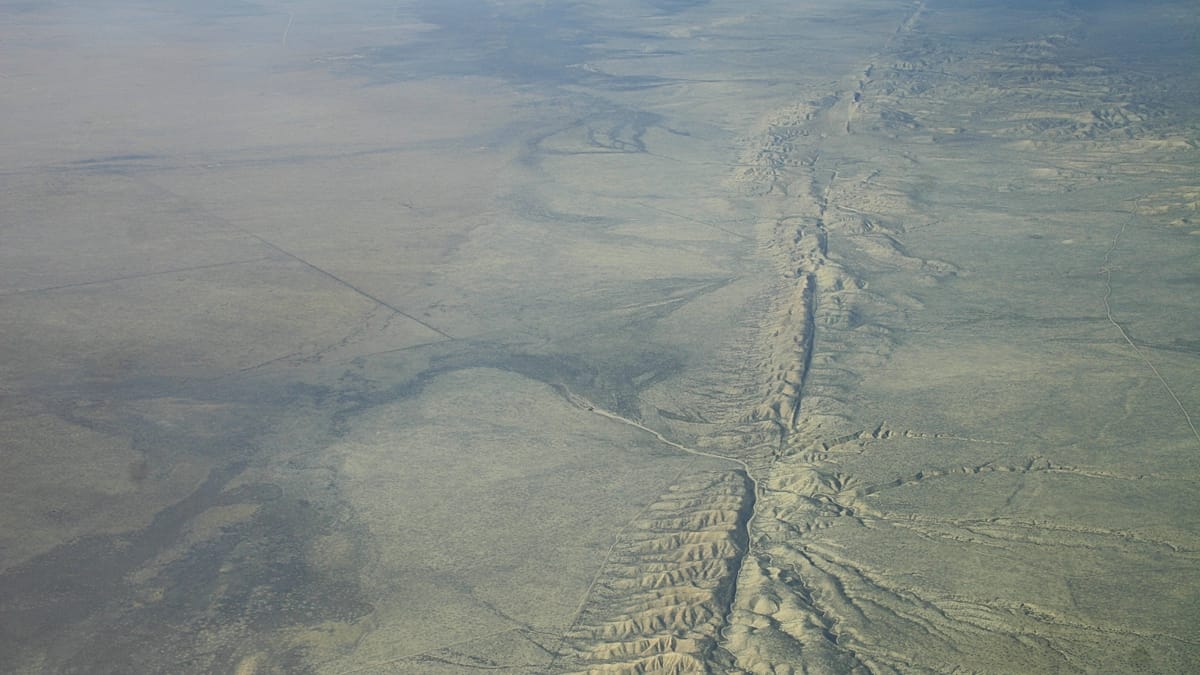
A new peer-reviewed study finds that tectonic stress on Southern California's San Andreas and San Jacinto fault systems has reached its highest levels in at least 1,000 years, with the San Jacinto-Bernardino section measuring 3.6 megapascals. The research, led by the University of Hawaiʻi at Mānoa and published in the Journal of Geophysical Research: Solid Earth, used a computer model drawing on geological data including radiocarbon dating and tree-ring records to reconstruct a millennium of earthquake history. The findings cannot predict when a major earthquake will occur but are intended to improve hazard assessments, inform building codes, and guide emergency preparedness in a region home to millions.
NASA-Backed Study Suggests Jupiter Shaped Earth's Supply of Life-Essential Elements
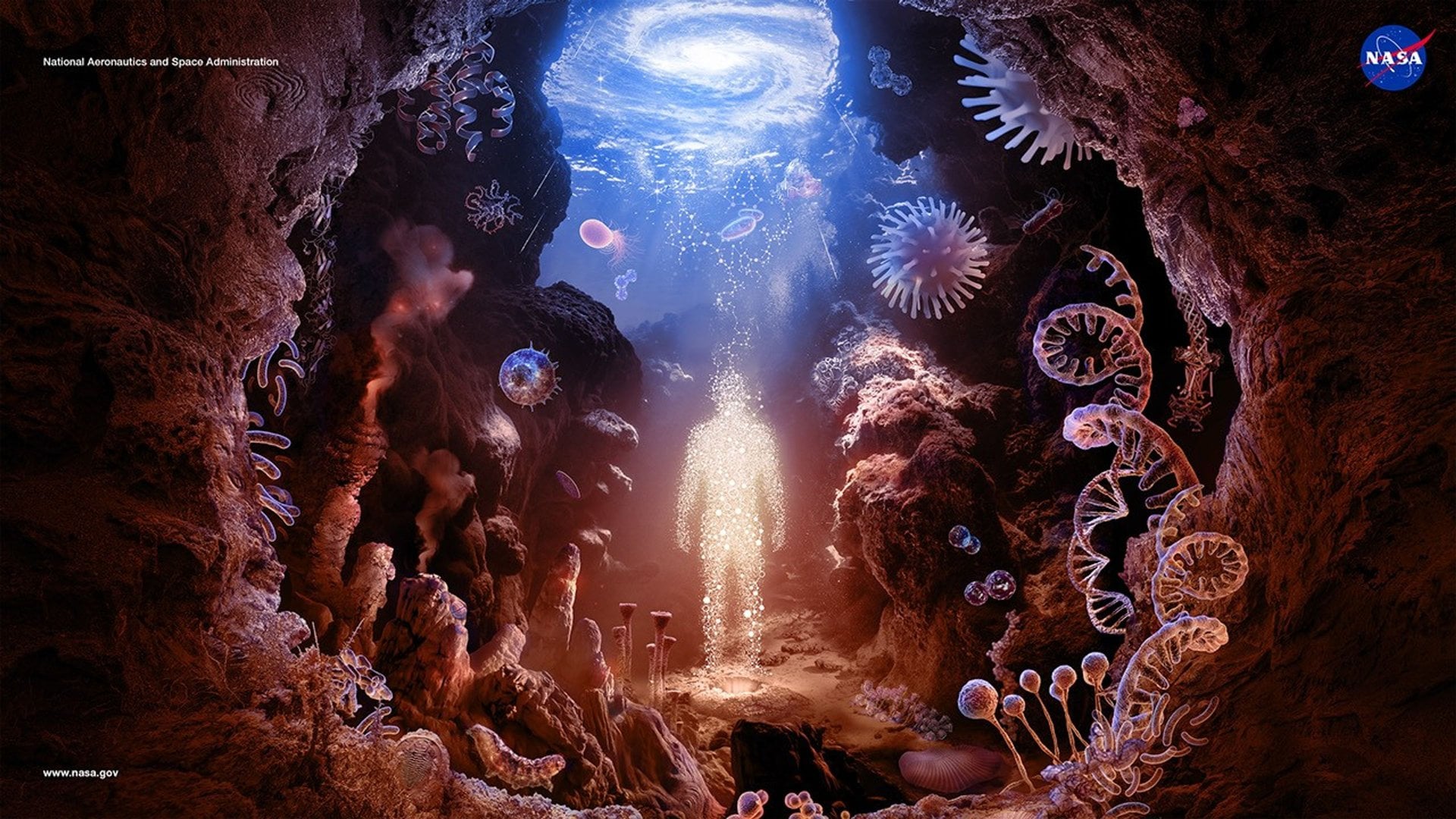
Two new studies advance understanding of how life's essential ingredients are distributed across the solar system: one identifying novel organic carbon molecules on Mars, another suggesting Jupiter shaped the delivery of life-essential elements to early Earth. The Mars findings, led by University of Florida astrobiologist Amy Williams, detected simple organic carbon compounds on the planet's surface, some never previously observed there. Together, the studies deepen scientific debate about where life could exist and how the conditions for it arise.