Tesla Receives Approval to Sell Full Self-Driving Technology in Belgium

Tesla has been authorized to sell its Full Self-Driving supervised driver assistance software in Belgium following successful testing, announced by Flanders transport minister Annick De Ridder. The approval is valid across all Belgian territories and follows similar authorizations in the Netherlands and Lithuania. This represents growing regulatory acceptance of Tesla's autonomous driving technology within the European Union.
Tesla's Full Self-Driving technology has received official approval for sale in Belgium after the company completed a series of tests in the country. Flanders transport minister Annick De Ridder announced the authorization on June 10, 2026, posting an image of the signed approval document on X (formerly Twitter). The approval is significant because authorizations granted in one of Belgium's three regions are valid across the entire country. Belgium becomes the third EU member state to approve the technology, following the Netherlands and Lithuania, indicating a gradual shift toward regulatory acceptance of Tesla's autonomous driving systems in Europe.
What different sources said
- Channel NewsAsiaCenter
Tesla gets go-ahead to sell self-driving technology in Belgium
Related
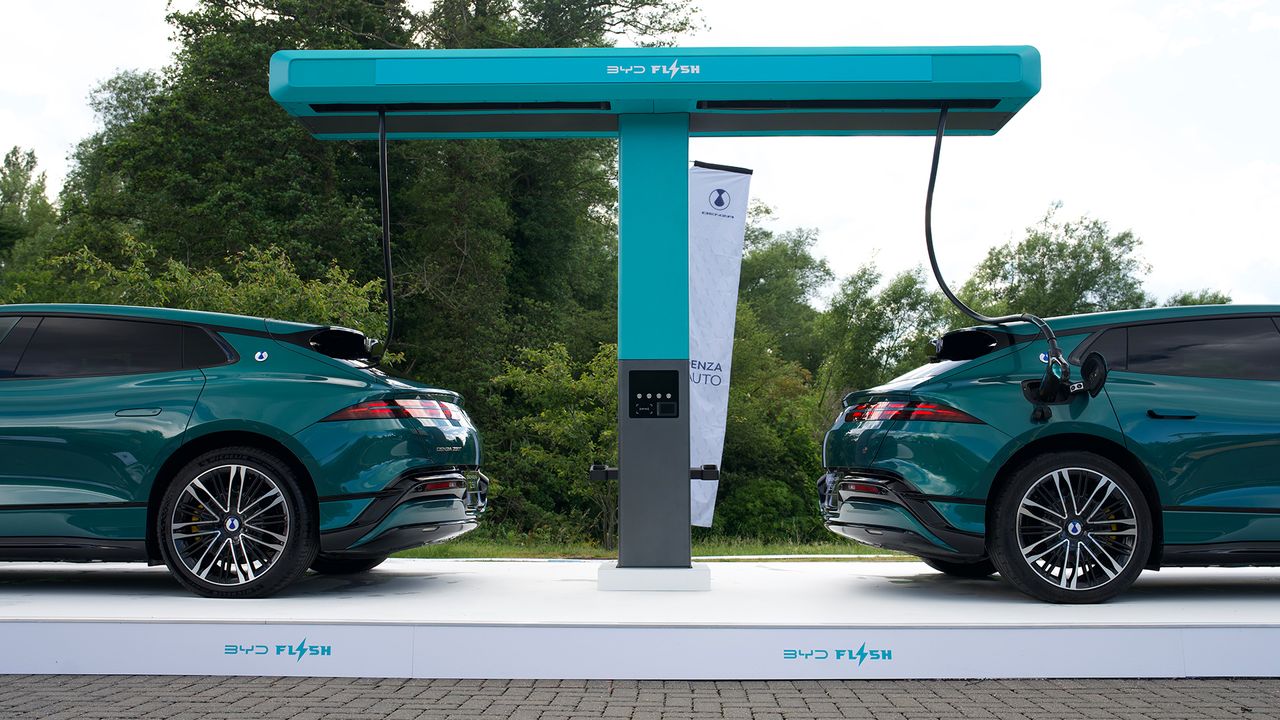
BYD Demonstrates Ultra-Fast 9-Minute EV Charging Technology at UK Headquarters
BYD showcased its Flash Charge technology at its West London headquarters, charging a Denza Z9 GT from 10% to nearly 100% in nine minutes using 1,500kW peak power. The system uses CCS 2 connectors compatible with most EVs and includes on-site battery storage to reduce grid demand. BYD plans to deploy 6,000 Flash Charging stalls globally by end of 2027, with 3,000 in Europe and 300 in the UK, potentially offering charging at under 50 pence per kilowatt-hour.

Anthropic's Claude Fable 5 Model Blocking Harmless User Requests with Overly Strict Safety Filters
Anthropic's newly released Claude Fable 5 AI model is refusing to respond to innocuous user prompts, including simple greetings like "hello," due to overly conservative safety guardrails. The company acknowledged the issue and stated that false positives occur in less than 5% of sessions, but has not provided exact refusal rates. The problem affects millions of users and has generated numerous bug reports and complaints from researchers and developers.

Open-Source Raspberry Pi Project Recreates Retro VCR Interface for Modern Media Playback
Developer Anthony Caccese has released 240-MP, an open-source Raspberry Pi project that creates a vintage VCR-style interface for playing local media files and Plex libraries on CRT or modern screens. The project runs on Raspberry Pi 4B, 3B+, and 3B models and supports navigation via remote control or keyboard. The tool addresses nostalgia for older display formats while enabling modern streaming functionality.