Study Suggests Two Giant Planets Once Orbited Near Uranus and Neptune Before Vanishing
A new study published in Icarus analyzed 122 simulations of early solar system evolution and found that the unusual characteristics of Uranus' moons are best explained by the former existence of one or two additional giant planets that were later ejected into interstellar space. The research builds on existing planetary-instability models, which propose that the giant planets once occupied different, closer orbits before migrating outward through a period of violent gravitational chaos. The findings matter because they offer the first potential physical evidence — embedded in the structure of Uranus' moon system — for the long-hypothesized 'missing planets' of the outer solar system.
A study published in the journal Icarus examined 122 simulations of early solar system history to test whether the current configuration of Uranus' moons could be explained without invoking additional, now-absent giant planets. In roughly 85 percent of scenarios, the Uranian moon system collapsed entirely; the small fraction of simulations in which the moons survived all included the presence of one or two extra giant planets — likely 'super Earths' — that were eventually ejected into interstellar space. The research suggests Uranus' moons were destabilized at least twice: first by the massive impact that tilted the planet on its axis, and then by close gravitational encounters during the planetary instability phase. Miranda, the smallest of Uranus' major moons, is highlighted as the most compelling piece of evidence — its patchy, geologically active surface and anomalously small size suggest it is the remnant of a larger body destroyed during this chaotic period, as visible in Voyager 2 imagery showing its heavily cratered terrain and deep canyon systems. The study adds weight to the broader planetary-instability model, which has struggled to fully account for the current eccentric orbits of Jupiter and Saturn and the structure of the Kuiper Belt without invoking additional planetary bodies that no longer exist.
Limitations & open questions
The study's own limitations are worth noting: the simulations are statistical in nature and cannot definitively confirm the existence of past planets, only assess their probability under various scenarios. The paper does not identify a mechanism to directly observe or verify the ejected planets, and the hypothesis remains unfalsifiable with current technology. Additionally, the exact size, composition, and number of the proposed missing planets remain uncertain — the two sources describe them differently, with Live Science calling them 'super Earths' while Wired refers to them as 'bodies the size of Uranus or Neptune,' suggesting some ambiguity in the study's characterization.
How coverage differed
Wired framed the story around the scientific methodology and the specific role of Miranda as physical evidence, while Live Science led with a more accessible, dramatic angle emphasizing the 'two super Earths' that 'vanished,' slightly sensationalizing the hypothesis. Both outlets conveyed the same core findings, but Wired provided more technical depth.
What different sources said
- Live ScienceCenter
2 giant 'super Earths' once orbited near Uranus and Neptune, messed up a bunch of moons, then vanished, new study hints
- WiredLeft
The Moons of Uranus May Hold the Key to Finding Missing Planets
Related
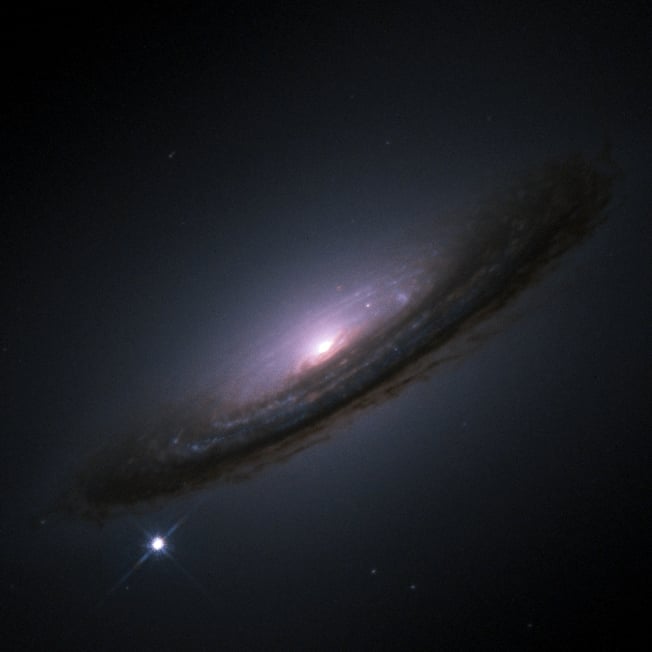
Nobel Laureates Rebut Study Claiming Universe's Expansion Is Slowing, Confirm Acceleration Continues
An international team of astrophysicists, including Nobel laureates Adam Riess and Brian Schmidt, has published a study in the Monthly Notices of the Royal Astronomical Society confirming that the universe's expansion is still accelerating. The rebuttal targets a late-2024 South Korean study that had claimed dark energy was weakening, a finding that would have overturned nearly three decades of cosmological understanding. The new study identifies two specific methodological errors in the earlier work, restoring confidence in the standard model of cosmic acceleration while leaving the deeper mystery of what dark energy actually is unresolved.

Study Finds Trees May Store Less Carbon Than Climate Models Predict
A new study published in Science Advances found that oak trees stop growing months before they stop photosynthesizing, meaning increased carbon uptake does not necessarily translate into more wood growth and long-term carbon storage. Researchers analyzed 137 sites across the US, finding that 26–36% of annual carbon uptake occurred after tree growth had already ceased, with drought and heat identified as key triggers for halting growth. The findings suggest that widely used climate models, which assume photosynthesis and growth are tightly linked, may be overestimating forests' future capacity to sequester carbon.
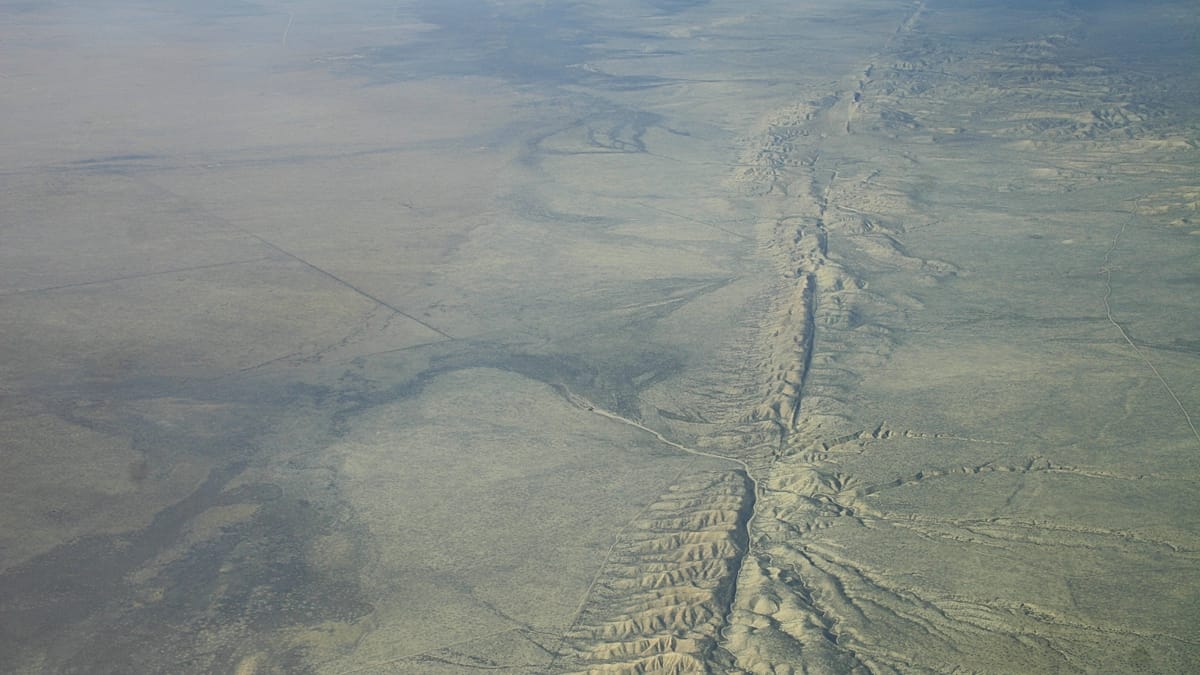
San Andreas Fault Stress Reaches Highest Level in 1,000 Years, Study Finds
A new peer-reviewed study finds that tectonic stress on Southern California's San Andreas and San Jacinto fault systems has reached its highest levels in at least 1,000 years, with the San Jacinto-Bernardino section measuring 3.6 megapascals. The research, led by the University of Hawaiʻi at Mānoa and published in the Journal of Geophysical Research: Solid Earth, used a computer model drawing on geological data including radiocarbon dating and tree-ring records to reconstruct a millennium of earthquake history. The findings cannot predict when a major earthquake will occur but are intended to improve hazard assessments, inform building codes, and guide emergency preparedness in a region home to millions.