Study reveals diverse microbial gene sources in early eukaryotic evolution beyond previously identified partners
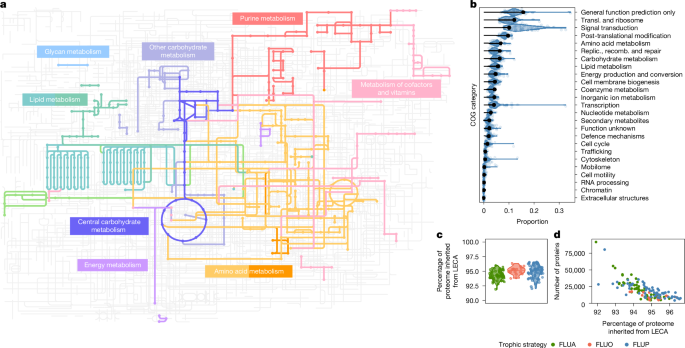
A large-scale phylogenomic study published in Nature has found that the last eukaryotic common ancestor (LECA) acquired genes not just from Asgard archaea and alphaproteobacteria, but also significantly from Planctomycetota and Myxococcota bacteria, as well as through giant viruses. The research reconstructed a LECA proteome of roughly 7,700–12,900 gene families and traced their ancestries using curated datasets spanning over 65,000 prokaryotic genomes. The findings challenge the prevailing two-partner model of eukaryogenesis and support a more gradual, multi-partner origin of complex cellular life.
Researchers reconstructed the proteome of the last eukaryotic common ancestor (LECA) using three independent datasets of 100 eukaryotic proteomes each, expanded against a broad database of over 65,000 prokaryotic genomes and 1.3 million viral protein clusters. Phylogenetic analysis of roughly 7,751–12,907 gene families revealed that while Alphaproteobacteria (the mitochondrial ancestor, ~4.0% of the proteome) and Asgard archaea (~3.3%) remain the dominant prokaryotic contributors, Myxococcota (~3.9%) and Planctomycetota (~2.2%) represent two additional major bacterial donors with statistically robust signals. Approximately 4.5% of gene acquisitions appear to have been mediated by Nucleocytoviricota giant viruses, which transferred genes of diverse prokaryotic origin—including from Asgard archaea—into the proto-eukaryotic lineage. Branch-length ratio analyses suggest a temporal ordering in which Asgard archaea interacted earliest, followed by Planctomycetota, then Myxococcota and the alphaproteobacterial mitochondrial ancestor, a sequence that mirrors the vertical stratification of these groups in modern microbial mats. The study concludes that eukaryogenesis was likely a gradual, community-level process involving serial symbiotic or syntrophic interactions in complex microbial environments, rather than a single binary merger event.
Data: Nature (article figures)
Limitations & open questions
The study acknowledges that its ancestral metabolic reconstructions are indirect and rely on co-occurrence patterns in extant genomes rather than true ancestral state reconstruction, meaning inferred donor metabolisms carry substantial uncertainty. The analysis cannot distinguish between endosymbiotic, ectosymbiotic, or parasitic modes of interaction for any of the proposed partners, and the precise ecological setting of eukaryogenesis remains speculative. Additionally, the phylogenetic signals for minor donors such as Chloroflexota and Gammaproteobacteria did not pass consistency thresholds across all datasets, leaving open the question of how many additional minor contributors existed.
What different sources said
- Nature NewsCenter
Gene ancestries reveal diverse microbial associations during eukaryogenesis
Related
Nobel Laureates Rebut Study Claiming Universe's Expansion Is Slowing, Confirm Acceleration Continues
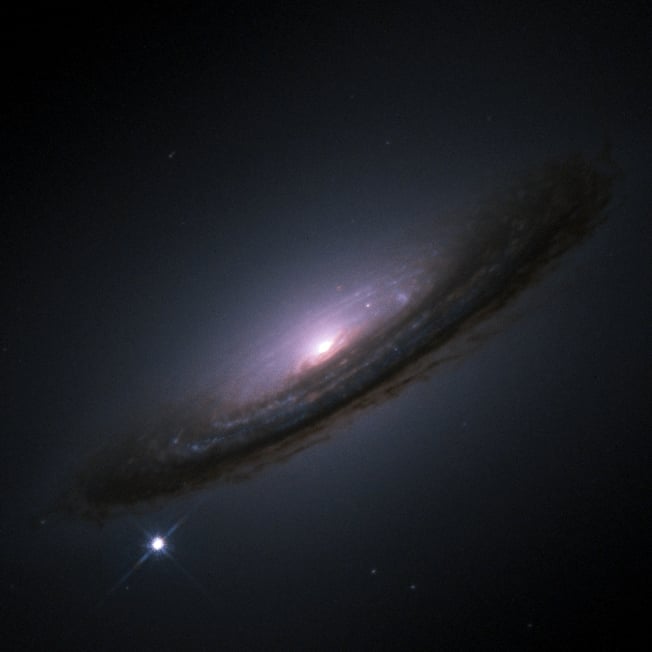
An international team of astrophysicists, including Nobel laureates Adam Riess and Brian Schmidt, has published a study in the Monthly Notices of the Royal Astronomical Society confirming that the universe's expansion is still accelerating. The rebuttal targets a late-2024 South Korean study that had claimed dark energy was weakening, a finding that would have overturned nearly three decades of cosmological understanding. The new study identifies two specific methodological errors in the earlier work, restoring confidence in the standard model of cosmic acceleration while leaving the deeper mystery of what dark energy actually is unresolved.

Study Finds Trees May Store Less Carbon Than Climate Models Predict
A new study published in Science Advances found that oak trees stop growing months before they stop photosynthesizing, meaning increased carbon uptake does not necessarily translate into more wood growth and long-term carbon storage. Researchers analyzed 137 sites across the US, finding that 26–36% of annual carbon uptake occurred after tree growth had already ceased, with drought and heat identified as key triggers for halting growth. The findings suggest that widely used climate models, which assume photosynthesis and growth are tightly linked, may be overestimating forests' future capacity to sequester carbon.
San Andreas Fault Stress Reaches Highest Level in 1,000 Years, Study Finds
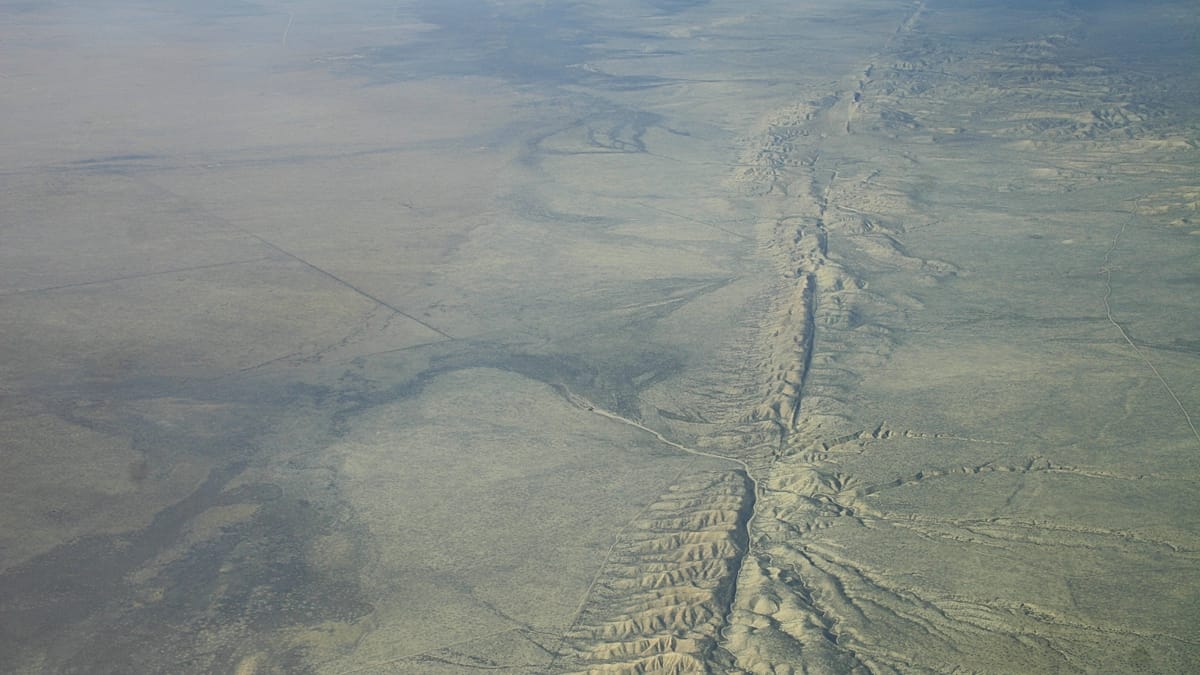
A new peer-reviewed study finds that tectonic stress on Southern California's San Andreas and San Jacinto fault systems has reached its highest levels in at least 1,000 years, with the San Jacinto-Bernardino section measuring 3.6 megapascals. The research, led by the University of Hawaiʻi at Mānoa and published in the Journal of Geophysical Research: Solid Earth, used a computer model drawing on geological data including radiocarbon dating and tree-ring records to reconstruct a millennium of earthquake history. The findings cannot predict when a major earthquake will occur but are intended to improve hazard assessments, inform building codes, and guide emergency preparedness in a region home to millions.