Study Finds Humans Have Inherent Preference for Counterclockwise Motion

A study published in Nature Communications found that people across cultures, ages, and physical characteristics consistently prefer to turn counterclockwise when walking freely. The finding emerged accidentally during COVID-19 pandemic social distancing research, when researchers noticed that 32 out of 33 experimental trials showed a counterclockwise bias in crowd movement. The cause remains unknown, but the results suggest a deep biomechanical or neurological asymmetry in humans that could inform the design of public spaces and crowd management strategies.
Researchers from the University of Navarra in Spain and the University of Tokyo conducted five experimental campaigns across Spain and Japan to investigate directional preferences in pedestrian movement. Using circular arenas, open schoolyards, and nursery schools, they measured collective polarization — a metric of rotational tendency — and found a consistent counterclockwise bias across nearly all conditions, with average polarization values of approximately 0.17 in the Spanish arena, 0.21 in the Spanish schoolyard, 0.12 in the Japanese arena, and a notably stronger 0.73 in nursery school children. The bias persisted regardless of handedness, footedness, eye dominance, sex, or cultural background, and was even observed when individuals walked alone in an enclosure, ruling out crowd dynamics as the primary driver. Children showed the strongest bias, suggesting age moderates the effect, while the cross-cultural replication in Japan — where pedestrians typically form lanes on the left rather than the right — ruled out learned social norms as the cause. Researchers have also eliminated eye dominance (tested via eye-patching), the Coriolis force, and Earth's magnetic field as explanations, leaving the precise biological mechanism an open question. The findings have practical implications for urban planning, public space design, and the modeling of crowd evacuations, and parallel the longstanding convention in athletics and motorsport of running or racing counterclockwise.
Data: Echeverría-Huarte et al., Nature Communications (2026) / ZME Science
Limitations & open questions
The study's own limitations are notable: the participant age range did not extend beyond the mid-30s, leaving open whether the counterclockwise bias weakens, reverses, or stabilizes in older adults. The sample is also geographically limited to Spain and Japan, and it remains unknown whether the effect generalizes to populations in the Southern Hemisphere, left-lane-driving cultures beyond Japan, or people with mobility impairments. The precise biomechanical or neurological mechanism has not been identified, and the researchers acknowledge that follow-up individual-level experiments are still needed to isolate the source of the asymmetry.
How coverage differed
The Guardian and The New York Times framed the story with a lighter, more humanizing touch — The Guardian opened with a Zoolander reference and emphasized the serendipitous nature of the discovery — while Nature News and Phys.org focused on the technical methodology and the study's challenge to prior theories about emergent crowd behavior. Popular outlets like ZME Science and Smithsonian emphasized practical applications and cultural curiosities such as supermarket design and sports, whereas the primary scientific source stressed the mechanistic novelty of individual rather than collective origins.
What different sources said
- Phys.orgCenter
People have an inherent preference for counterclockwise motion, study reveals
Nearly Everyone, Everywhere, Veers Left When Walking
Humans prefer to walk anticlockwise, scientists find – but reason is unclear
- Nature NewsCenter
Individual locomotor bias drives counterclockwise motion in pedestrian crowds
- ZME ScienceCenter
Strange Walking Experiment Found That Almost Everyone, Alone or in Crowds, Keeps Turning Counterclockwise
- ScienceAlertCenter
Scientists Discover a Strange Global Pattern in The Way Humans Walk
- Yahoo FinanceCenter
Scientists Discover a Strange Global Pattern in The Way Humans Walk
- Smithsonian MagazineCenter
Researchers Accidentally Discover That Humans Prefer to Turn Counterclockwise. But They Still Have No Idea Why
Related
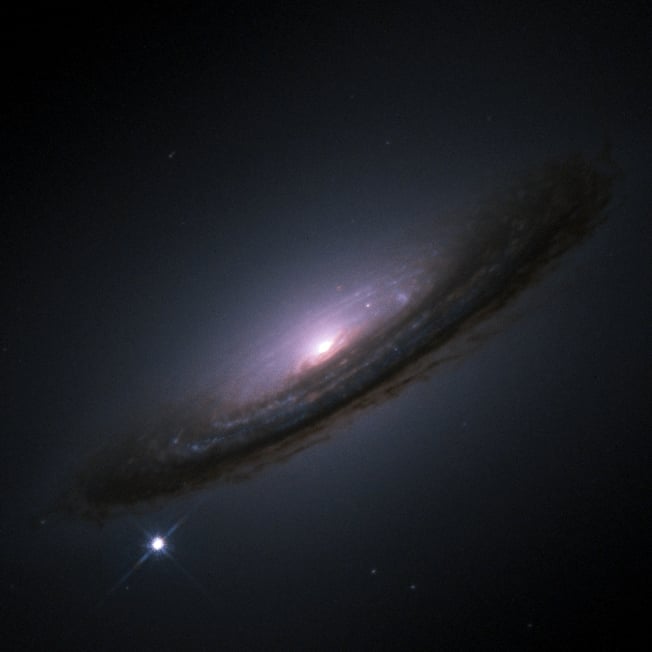
Nobel Laureates Rebut Study Claiming Universe's Expansion Is Slowing, Confirm Acceleration Continues
An international team of astrophysicists, including Nobel laureates Adam Riess and Brian Schmidt, has published a study in the Monthly Notices of the Royal Astronomical Society confirming that the universe's expansion is still accelerating. The rebuttal targets a late-2024 South Korean study that had claimed dark energy was weakening, a finding that would have overturned nearly three decades of cosmological understanding. The new study identifies two specific methodological errors in the earlier work, restoring confidence in the standard model of cosmic acceleration while leaving the deeper mystery of what dark energy actually is unresolved.

Study Finds Trees May Store Less Carbon Than Climate Models Predict
A new study published in Science Advances found that oak trees stop growing months before they stop photosynthesizing, meaning increased carbon uptake does not necessarily translate into more wood growth and long-term carbon storage. Researchers analyzed 137 sites across the US, finding that 26–36% of annual carbon uptake occurred after tree growth had already ceased, with drought and heat identified as key triggers for halting growth. The findings suggest that widely used climate models, which assume photosynthesis and growth are tightly linked, may be overestimating forests' future capacity to sequester carbon.
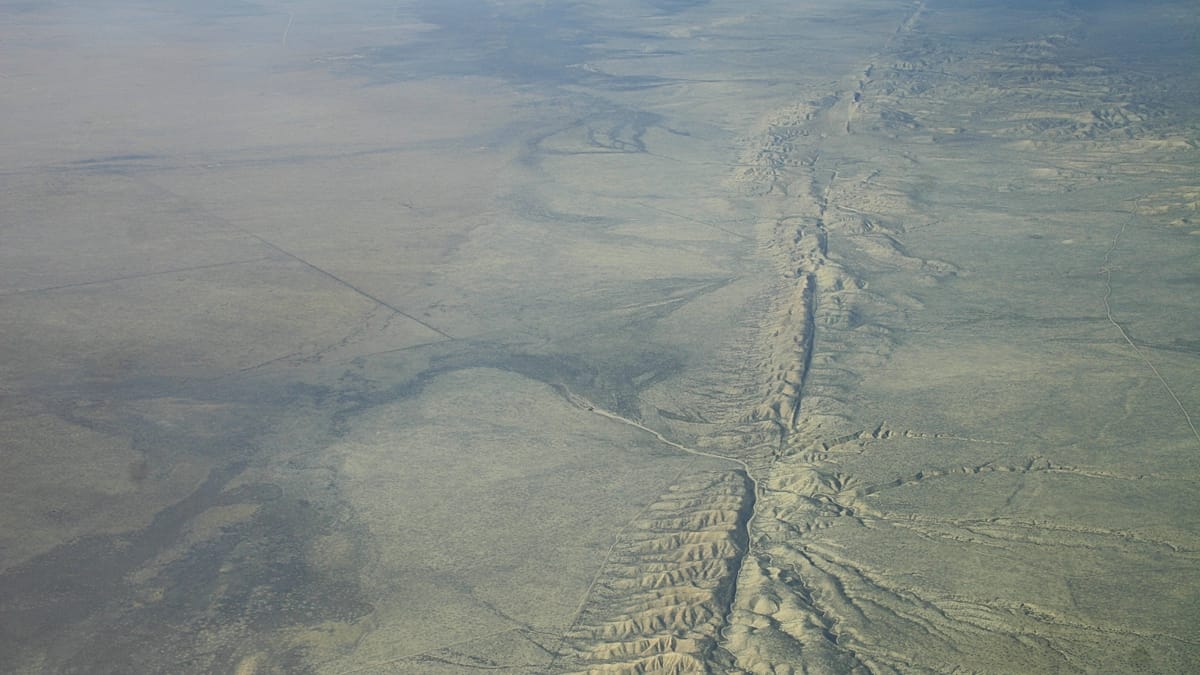
San Andreas Fault Stress Reaches Highest Level in 1,000 Years, Study Finds
A new peer-reviewed study finds that tectonic stress on Southern California's San Andreas and San Jacinto fault systems has reached its highest levels in at least 1,000 years, with the San Jacinto-Bernardino section measuring 3.6 megapascals. The research, led by the University of Hawaiʻi at Mānoa and published in the Journal of Geophysical Research: Solid Earth, used a computer model drawing on geological data including radiocarbon dating and tree-ring records to reconstruct a millennium of earthquake history. The findings cannot predict when a major earthquake will occur but are intended to improve hazard assessments, inform building codes, and guide emergency preparedness in a region home to millions.