Study Finds Extreme Coastal Flooding Now 12 Times More Likely Due to Rising Sea Levels

A new study published in Nature Climate Change finds that coastal flooding events historically expected once every 100 years are now, on average, about 12 times more likely to occur, with human-caused climate change accounting for a fourfold increase since 1900. Researchers at Tulane University and an international team analyzed tide gauge records from over 130 sites alongside climate model simulations to separate human, natural, and local land-movement factors. The findings signal that historical flood-frequency estimates are no longer reliable for infrastructure planning, and that coastal communities worldwide face significantly elevated and growing risk.
Research led by Sönke Dangendorf of Tulane University, published June 10 in Nature Climate Change, found that extreme coastal flooding events — defined as those with a 1-in-100-year historical probability — are now roughly 12 times more likely globally, with human-driven climate change responsible for approximately a fourfold increase since 1900. The study drew on long-term tide gauge records from more than 130 sites and climate model simulations to isolate the contributions of human activity, natural variability, and local land subsidence. At nearly half of the sites analyzed, what was once a 100-year flood now occurs at least once per decade; in Wellington, New Zealand, such an event now happens roughly twice per year, while in Manila, groundwater-driven land subsidence has amplified flood frequency more than 300-fold. The study's analysis runs through 2005, and the authors note their findings likely understate current risk given accelerating human contributions since then. A companion study published simultaneously in Science Advances found that climate change was responsible for approximately 58% of extreme flood days between 2000 and 2018, and has nearly tripled the number of days exceeding extreme flood thresholds since the 1970s. Although natural forces dominated sea-level changes earlier in the 20th century, human-caused warming has been the primary driver since the 1960s, with greenhouse gases from fossil fuel combustion identified as the dominant factor since the 1970s. Experts not involved in the research cautioned that existing coastal protections — including those in New Orleans — may be inadequate within the next few decades without sustained investment and forward-looking adaptation.
Limitations & open questions
The study's own authors acknowledge a key limitation: the analysis ends in 2005 due to insufficient attribution modeling for later years, meaning the reported increases almost certainly understate present-day flood risk. The studies also focus primarily on tide-gauge sites, which may not fully represent remote or data-sparse coastlines, particularly in the Global South where vulnerability is often highest. Additionally, the Nature Climate Change study did not fully disaggregate individual human forcing factors beyond identifying greenhouse gases as dominant, leaving some uncertainty about the relative contributions of other anthropogenic influences such as aerosols or land-use change.
How coverage differed
Phys.org and Euronews framed the story straightforwardly around the scientific findings and their infrastructure implications, with Phys.org giving notable emphasis to New Orleans as a positive model of resilience. The Washington Times, while accurately reporting the core findings, included a brief passage on renewable energy growth and the Trump administration's fossil fuel policies that the other outlets either omitted or treated more neutrally, subtly broadening the political context of the story.
What different sources said
- Washington TimesRight
Climate change makes once-rare coastal floods more likely, study says
- Phys.orgCenter
Extreme coastal flooding surges worldwide as rising seas rewrite 100-year odds
Millions of homes in London, Essex and Kent at risk of sinking as climate crisis worsens
- EuronewsCenter
Rare coastal floods now 12 times more likely – human-driven climate change is a major contributor
Related

Nobel Laureates Rebut Study Claiming Universe's Expansion Is Slowing, Confirm Acceleration Continues
An international team of astrophysicists, including Nobel laureates Adam Riess and Brian Schmidt, has published a study in the Monthly Notices of the Royal Astronomical Society confirming that the universe's expansion is still accelerating. The rebuttal targets a late-2024 South Korean study that had claimed dark energy was weakening, a finding that would have overturned nearly three decades of cosmological understanding. The new study identifies two specific methodological errors in the earlier work, restoring confidence in the standard model of cosmic acceleration while leaving the deeper mystery of what dark energy actually is unresolved.

Study Finds Trees May Store Less Carbon Than Climate Models Predict
A new study published in Science Advances found that oak trees stop growing months before they stop photosynthesizing, meaning increased carbon uptake does not necessarily translate into more wood growth and long-term carbon storage. Researchers analyzed 137 sites across the US, finding that 26–36% of annual carbon uptake occurred after tree growth had already ceased, with drought and heat identified as key triggers for halting growth. The findings suggest that widely used climate models, which assume photosynthesis and growth are tightly linked, may be overestimating forests' future capacity to sequester carbon.
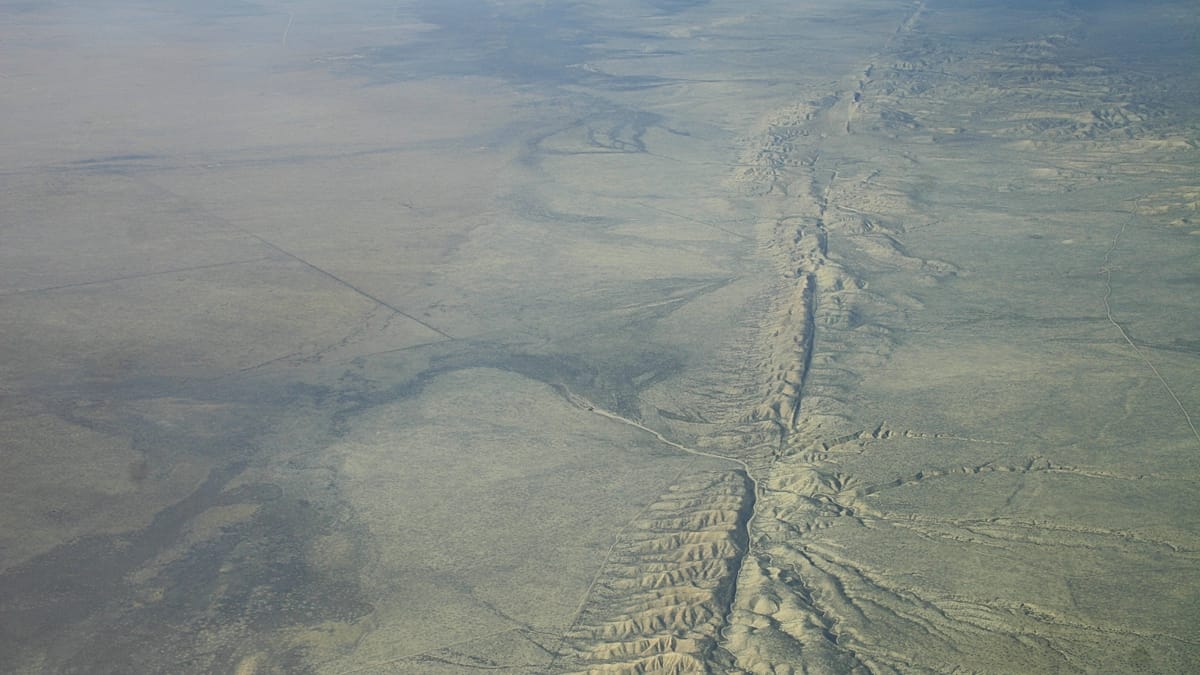
San Andreas Fault Stress Reaches Highest Level in 1,000 Years, Study Finds
A new peer-reviewed study finds that tectonic stress on Southern California's San Andreas and San Jacinto fault systems has reached its highest levels in at least 1,000 years, with the San Jacinto-Bernardino section measuring 3.6 megapascals. The research, led by the University of Hawaiʻi at Mānoa and published in the Journal of Geophysical Research: Solid Earth, used a computer model drawing on geological data including radiocarbon dating and tree-ring records to reconstruct a millennium of earthquake history. The findings cannot predict when a major earthquake will occur but are intended to improve hazard assessments, inform building codes, and guide emergency preparedness in a region home to millions.