Structural basis for chaperone-guided assembly of RNA-induced silencing complex revealed
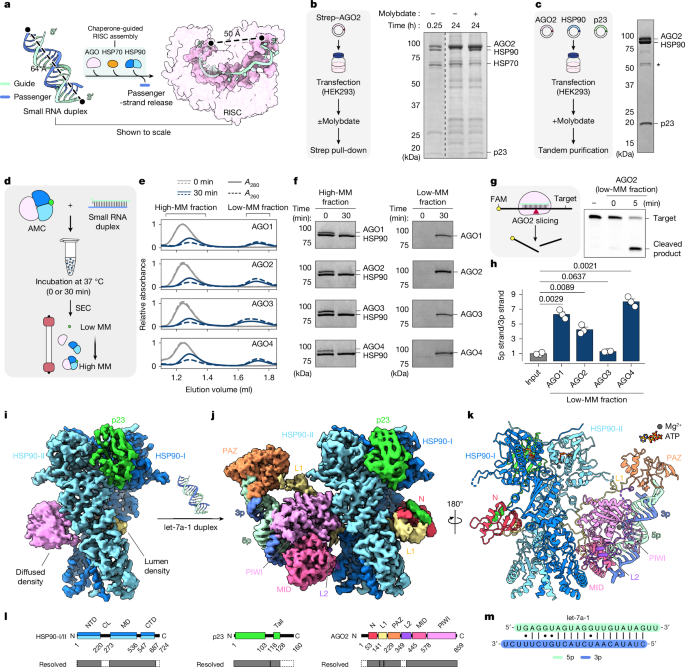
Researchers have determined the cryo-EM structure of the human AGO2–HSP70–HSP90–p23 chaperone complex (AMC) bound to a microRNA duplex, revealing the atomic-level mechanism by which molecular chaperones load small RNAs into the RNA-induced silencing complex (RISC). The study, published in Nature, shows that HSP90 holds AGO2 in an open, RNA-receptive conformation by engaging its L1 linker within the chaperone lumen, while p23 contacts the AGO2 N-terminal domain, and that duplex RNA bearing a 5′-phosphate and a rigid seed region is required for productive RISC assembly. These findings clarify a long-sought mechanistic step in gene silencing and have direct implications for the rational design of therapeutic siRNA and miRNA-based drugs.
A team led by V. Narry Kim and Soung-Hun Roh at Seoul National University and the Institute for Basic Science has solved cryo-EM structures of the human AGO2–HSP70–HSP90–p23 complex (AMC) in both RNA-free and let-7a-1 miRNA duplex-loaded states, deposited as PDB 9W5I and EMDB entries EMD-65663/65662. The structures show that HSP90 cradles the AGO2 L1 linker inside its lumen, keeping the protein in an expanded, open conformation that is incompatible with mature RISC but fully accessible to incoming double-stranded RNA. The co-chaperone p23 simultaneously contacts the AGO2 N-terminal domain, and together these interactions position the MID, PIWI, and PAZ domains on one face of the HSP90 dimer while the N domain sits on the opposite side, creating a wide RNA-binding cleft. Biochemical experiments with mutant AMCs and chemically modified RNA substrates demonstrate that a 5′-phosphate on the guide strand and a duplex length sufficient to span the MID-to-PAZ distance are essential for AGO2 folding and subsequent target slicing activity. The study also shows that AGO folding precedes passenger-strand removal, and that chemical modifications used in approved siRNA therapeutics such as inclisiran are compatible with chaperone-mediated loading, providing a structural rationale for optimizing next-generation RNAi drugs.
Limitations & open questions
The study characterizes the human AMC in vitro using purified components and HEK293T cell-derived complexes; whether the same structural intermediates exist at physiologically relevant concentrations and kinetics inside intact cells, or whether additional cellular factors modulate the process in vivo, is not addressed. The authors also note conformational heterogeneity in the PAZ domain and diffuse density outside the HSP90 lumen in the RNA-free state, indicating that some structural details of the pre-loading complex remain unresolved. The functional consequences of the observed chaperone interactions for AGO1, AGO3, and AGO4 paralogs are inferred from sequence conservation but not directly tested structurally.
What different sources said
- Nature NewsCenter
Structural basis for chaperone-guided assembly of RNA-induced silencing complex
Related
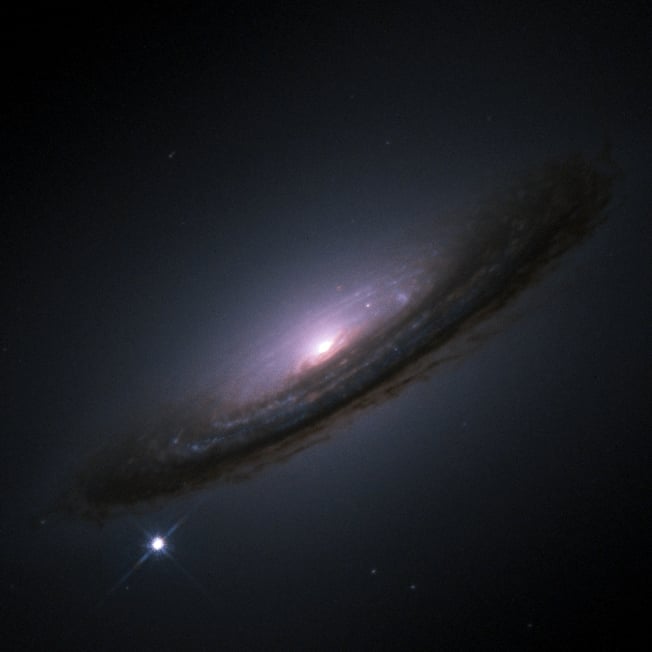
Nobel Laureates Rebut Study Claiming Universe's Expansion Is Slowing, Confirm Acceleration Continues
An international team of astrophysicists, including Nobel laureates Adam Riess and Brian Schmidt, has published a study in the Monthly Notices of the Royal Astronomical Society confirming that the universe's expansion is still accelerating. The rebuttal targets a late-2024 South Korean study that had claimed dark energy was weakening, a finding that would have overturned nearly three decades of cosmological understanding. The new study identifies two specific methodological errors in the earlier work, restoring confidence in the standard model of cosmic acceleration while leaving the deeper mystery of what dark energy actually is unresolved.

Study Finds Trees May Store Less Carbon Than Climate Models Predict
A new study published in Science Advances found that oak trees stop growing months before they stop photosynthesizing, meaning increased carbon uptake does not necessarily translate into more wood growth and long-term carbon storage. Researchers analyzed 137 sites across the US, finding that 26–36% of annual carbon uptake occurred after tree growth had already ceased, with drought and heat identified as key triggers for halting growth. The findings suggest that widely used climate models, which assume photosynthesis and growth are tightly linked, may be overestimating forests' future capacity to sequester carbon.
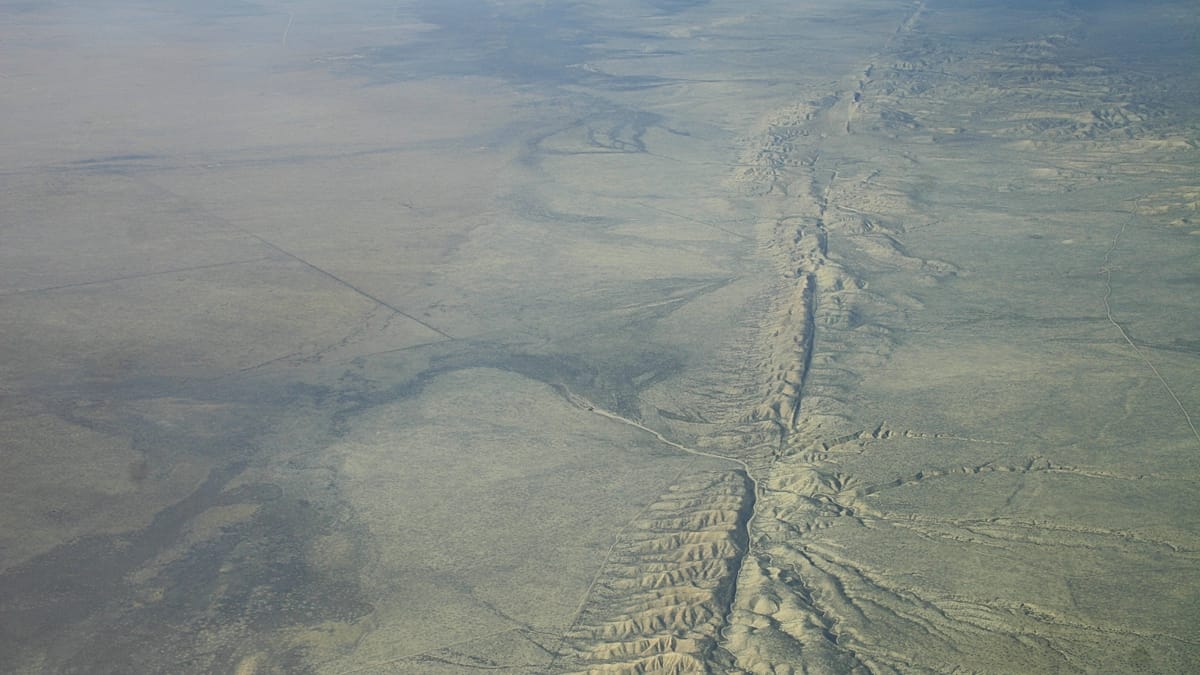
San Andreas Fault Stress Reaches Highest Level in 1,000 Years, Study Finds
A new peer-reviewed study finds that tectonic stress on Southern California's San Andreas and San Jacinto fault systems has reached its highest levels in at least 1,000 years, with the San Jacinto-Bernardino section measuring 3.6 megapascals. The research, led by the University of Hawaiʻi at Mānoa and published in the Journal of Geophysical Research: Solid Earth, used a computer model drawing on geological data including radiocarbon dating and tree-ring records to reconstruct a millennium of earthquake history. The findings cannot predict when a major earthquake will occur but are intended to improve hazard assessments, inform building codes, and guide emergency preparedness in a region home to millions.