Sea Cucumber Tissue Survives Years After Being Cut from the Body, Study Finds

Scientists have discovered that tissue fragments removed from scarlet sea cucumbers can continue to live, heal, and function independently for at least three years. The study, published in the peer-reviewed journal Science Advances, found that detached pieces of tube feet and tentacles absorbed nutrients, maintained immune and metabolic activity, and even responded to touch. Researchers say the findings challenge existing definitions of tissue life and could have significant implications for regenerative medicine and tissue engineering.
A team of Canadian scientists studying the scarlet sea cucumber has found that tissue fragments cut from the animal's body do not simply die but continue to function autonomously for years. In experiments, removed pieces of tube feet and tentacles healed wounds, absorbed nutrients directly from seawater, and maintained immune, metabolic, and cellular activity over a period of at least three years. Some isolated tentacles retained sensitivity to touch, indicating that a neural network remained intact within the detached tissue. Notably, the tissue survived not in sterile laboratory conditions but in natural running seawater — one of the most microbially diverse environments possible — which the researchers suggest may have actually supported the tissue's survival by providing organic matter and nutrients. The study's authors argue the results 'challenge conventional perceptions of tissue immortality' and call for 'a redefinition of what it means for tissue to be alive.' While immortal cell lines have been created in labs before, sustaining structurally intact animal tissue for years outside a controlled setting is considered far more difficult. The team believes the findings open a new class of ethical experimental model with broad applications in regenerative biology and biomedical research.
Limitations & open questions
The study does not clarify whether the detached tissue has any capacity to regenerate a whole organism, or what the upper limit of its survival duration might be. It is also unclear how broadly these findings apply to other sea cucumber species or to animals more generally.
What different sources said
- Yahoo FinanceCenter
'A redefinition of what it means ... to be alive': Sea cucumber tissue cut from the body still refuses to die
Related
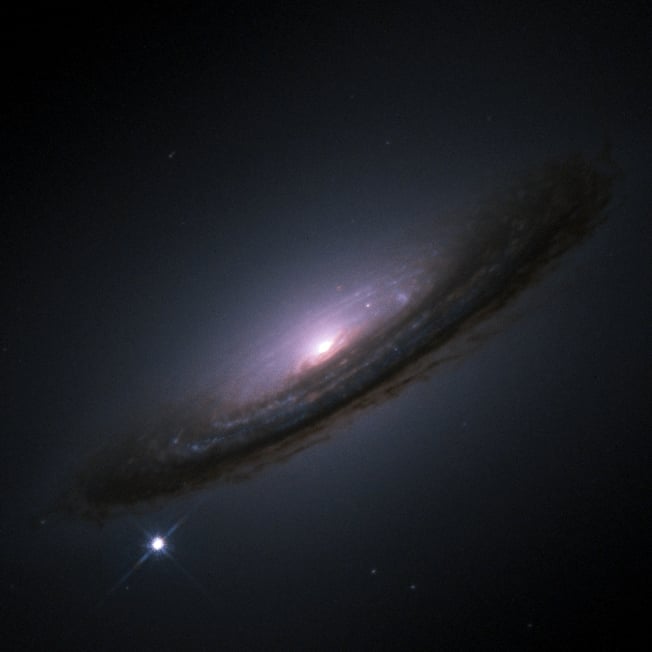
Nobel Laureates Rebut Study Claiming Universe's Expansion Is Slowing, Confirm Acceleration Continues
An international team of astrophysicists, including Nobel laureates Adam Riess and Brian Schmidt, has published a study in the Monthly Notices of the Royal Astronomical Society confirming that the universe's expansion is still accelerating. The rebuttal targets a late-2024 South Korean study that had claimed dark energy was weakening, a finding that would have overturned nearly three decades of cosmological understanding. The new study identifies two specific methodological errors in the earlier work, restoring confidence in the standard model of cosmic acceleration while leaving the deeper mystery of what dark energy actually is unresolved.
Study Finds Trees May Store Less Carbon Than Climate Models Predict
A new study published in Science Advances found that oak trees stop growing months before they stop photosynthesizing, meaning increased carbon uptake does not necessarily translate into more wood growth and long-term carbon storage. Researchers analyzed 137 sites across the US, finding that 26–36% of annual carbon uptake occurred after tree growth had already ceased, with drought and heat identified as key triggers for halting growth. The findings suggest that widely used climate models, which assume photosynthesis and growth are tightly linked, may be overestimating forests' future capacity to sequester carbon.
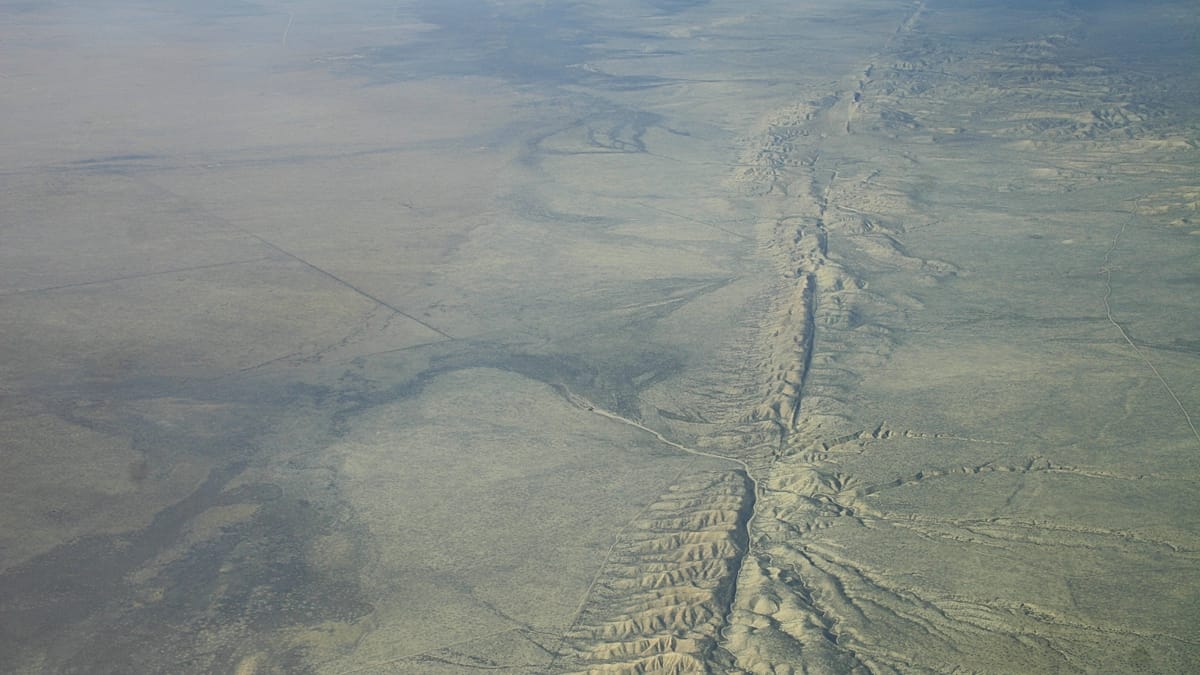
San Andreas Fault Stress Reaches Highest Level in 1,000 Years, Study Finds
A new peer-reviewed study finds that tectonic stress on Southern California's San Andreas and San Jacinto fault systems has reached its highest levels in at least 1,000 years, with the San Jacinto-Bernardino section measuring 3.6 megapascals. The research, led by the University of Hawaiʻi at Mānoa and published in the Journal of Geophysical Research: Solid Earth, used a computer model drawing on geological data including radiocarbon dating and tree-ring records to reconstruct a millennium of earthquake history. The findings cannot predict when a major earthquake will occur but are intended to improve hazard assessments, inform building codes, and guide emergency preparedness in a region home to millions.