Scientists Warn Trump Administration's Ocean Monitoring Cuts Could Severely Degrade Weather and El Niño Forecasts
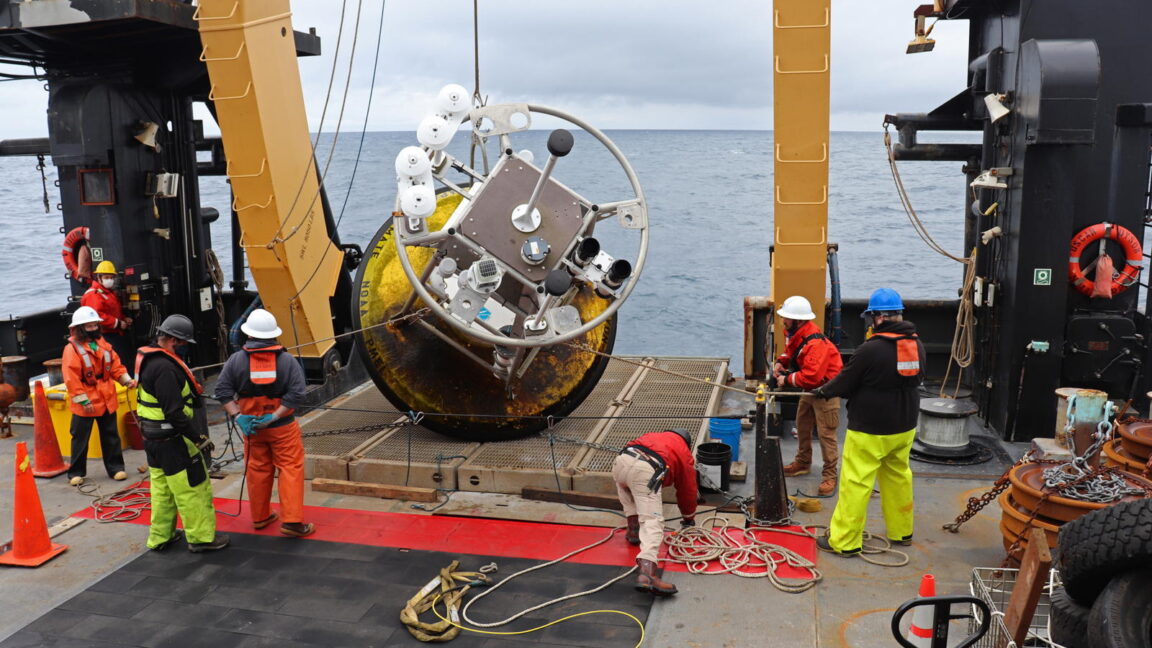
The Trump administration's National Science Foundation has begun removing hundreds of deep-sea instruments from four of five Ocean Observatories Initiative arrays, effectively dismantling a $368 million ocean monitoring program. The OOI has collected oceanographic data since 2016 across the Gulf of Alaska, the Pacific Northwest coast, the North Atlantic near Greenland, and off North Carolina, feeding critical data into global weather prediction and El Niño forecasting systems. Scientists warn the loss of US observations alone would produce a 163 percent increase in error for annual ocean heating rate estimates, degrading storm and cyclone early warning systems at a moment when an intense El Niño is expected this summer.
The National Science Foundation, acting under the Trump administration, announced on May 21 that it will remove all in-water arrays and infrastructure from four of the five currently operating Ocean Observatories Initiative sites over the next 15 months, with dismantling of the Coastal Endurance Array already underway. The OOI, a $368 million network of seafloor systems, underwater gliders, moored surface platforms, and hundreds of deep-sea instruments, has provided continuous oceanographic data since 2016 on ocean temperature, chemistry, currents, biological conditions, and phenomena including marine heatwaves, harmful algal blooms, and Atlantic Meridional Overturning Circulation activity. Research published last month in Nature Climate Change found that losing US observations would be worse than randomly losing 80 percent of all global ocean data, and would produce a 163 percent increase in error in annual ocean heating rate estimates that underpin weather prediction and El Niño forecasting. Scientists note the timing is particularly concerning as an intense El Niño event is predicted for summer 2025, with experts warning that degraded forecasts could cost farmers, insurers, and disaster responders across the US and South America who rely on El Niño outlooks for planning. NSF described the action as a 'descope' aligned with 'evolving scientific priorities,' and stated that all previously collected data will remain accessible, though it was unclear what monitoring capacity would remain. Researchers also raised concerns about the irreversible loss of institutional expertise needed to deploy complex deep-sea infrastructure, warning that rebuilding such capability would require significant reinvention. The European Union separately announced a $107 million ocean monitoring initiative called OceanEye, though officials noted it was long-planned and not a direct response to the US cuts.
Limitations & open questions
The sources do not specify which monitoring functions, if any, will be retained at the one OOI site not slated for dismantling (the Regional Cabled Array off the Pacific Northwest), nor whether any alternative US federal or private programs are planned to partially replace the lost data streams.
How coverage differed
Vox, republishing from The Guardian, framed the dismantling primarily through the lens of climate science loss and political motivation, with one researcher quoted saying 'this is about killing climate science research.' Eos (AGU) and Ars Technica offered more technically detailed and regionally specific coverage, with Ars Technica emphasizing impacts on Alaska's Indigenous coastal communities and the possibility that other nations, including China, could fill the data void.
What different sources said
- VoxLeft
Trump’s cuts at sea could make the coming super El Niño harder to predict
- Eos (AGU)Center
Trump Administration to Remove Hundreds of Deep-Ocean Observation Instruments, Dismantling $368 Million Program
- Ars TechnicaCenter
Alaskans will be flying blind after NSF decommissions ocean monitoring network
Related
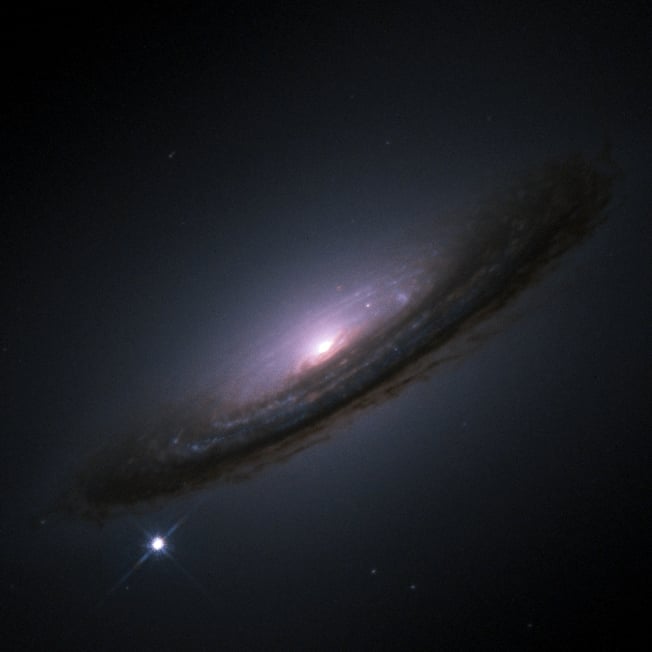
Nobel Laureates Rebut Study Claiming Universe's Expansion Is Slowing, Confirm Acceleration Continues
An international team of astrophysicists, including Nobel laureates Adam Riess and Brian Schmidt, has published a study in the Monthly Notices of the Royal Astronomical Society confirming that the universe's expansion is still accelerating. The rebuttal targets a late-2024 South Korean study that had claimed dark energy was weakening, a finding that would have overturned nearly three decades of cosmological understanding. The new study identifies two specific methodological errors in the earlier work, restoring confidence in the standard model of cosmic acceleration while leaving the deeper mystery of what dark energy actually is unresolved.

Study Finds Trees May Store Less Carbon Than Climate Models Predict
A new study published in Science Advances found that oak trees stop growing months before they stop photosynthesizing, meaning increased carbon uptake does not necessarily translate into more wood growth and long-term carbon storage. Researchers analyzed 137 sites across the US, finding that 26–36% of annual carbon uptake occurred after tree growth had already ceased, with drought and heat identified as key triggers for halting growth. The findings suggest that widely used climate models, which assume photosynthesis and growth are tightly linked, may be overestimating forests' future capacity to sequester carbon.
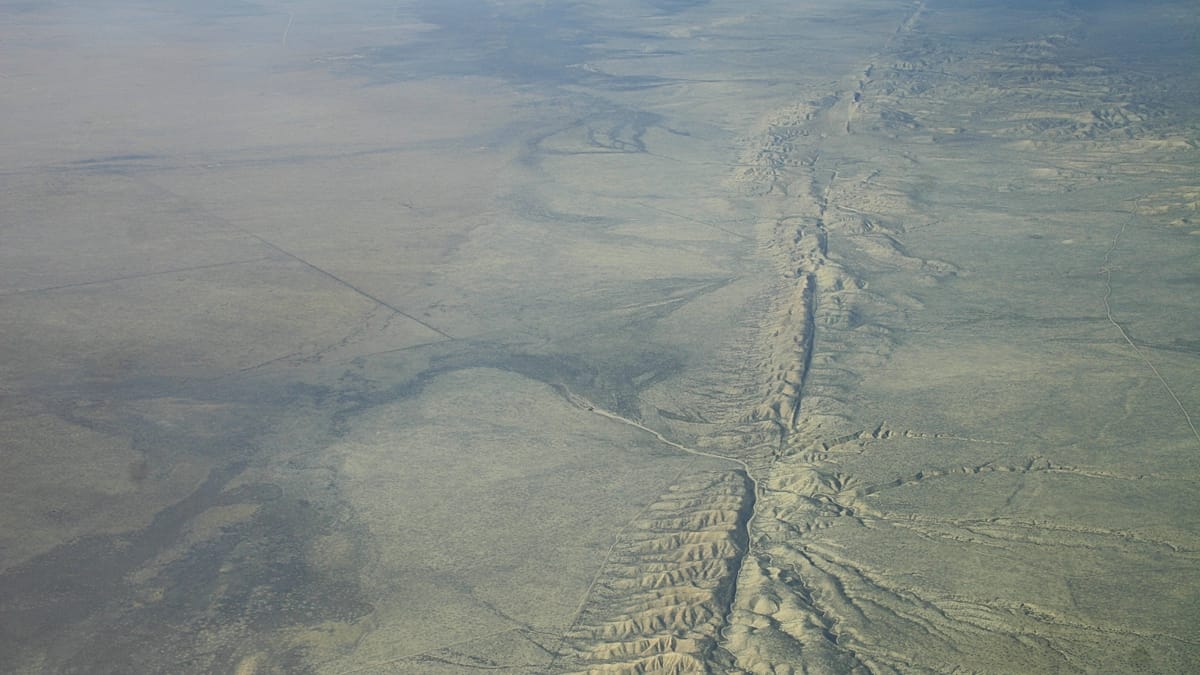
San Andreas Fault Stress Reaches Highest Level in 1,000 Years, Study Finds
A new peer-reviewed study finds that tectonic stress on Southern California's San Andreas and San Jacinto fault systems has reached its highest levels in at least 1,000 years, with the San Jacinto-Bernardino section measuring 3.6 megapascals. The research, led by the University of Hawaiʻi at Mānoa and published in the Journal of Geophysical Research: Solid Earth, used a computer model drawing on geological data including radiocarbon dating and tree-ring records to reconstruct a millennium of earthquake history. The findings cannot predict when a major earthquake will occur but are intended to improve hazard assessments, inform building codes, and guide emergency preparedness in a region home to millions.