Scientists' Striking Images Win Nature Photography Competition

Nature journal has announced the winners of its annual Scientists at Work photography competition, featuring images ranging from a neon-lit mosquito under UV light to a flock of endangered ibises guided by an ultralight aircraft. The contest highlights scientists conducting fieldwork and laboratory research across multiple continents and ecosystems. The winning images draw attention to conservation efforts, environmental threats like algal blooms, and disease research, demonstrating how scientific photography can bridge the gap between research and public engagement.
The journal Nature has revealed the winners of its 2025 Scientists at Work photo competition, recognizing images that capture researchers in the act of conducting science. The overall winner, taken by Gunnar Hartmann, an undergraduate at the University of Koblenz, documents a conservation mission in which the Waldrappteam guided 36 northern bald ibises — a species extinct in Europe for 400 years — along a 1,700-mile migratory route from Germany to Spain using an ultralight aircraft. Other winning images include an aerial shot of a toxic algal bloom in Ontario's Dog Lake by PhD student Allen Tian, an underwater photograph of a marine biologist sampling microbes from a wild whale shark off western Australia, and two divers studying coral metabolism inside a transparent incubation chamber in the Red Sea. A fifth winning image, shot at the University of Notre Dame, shows vector biologist Lee Haines examining a mosquito glowing neon pink and purple under UV light — part of research into compounds that could kill mosquitoes carrying diseases such as Zika, dengue, and West Nile virus. The competition underscores the role of scientific photography in making complex research accessible and emotionally resonant to the public.
Limitations & open questions
The article does not specify how many total entries were submitted to the competition or the full judging criteria used by Nature.
What different sources said
- NPR NewsLeft
From neon mosquitoes to winged migrations, top images captured by scientists
Related
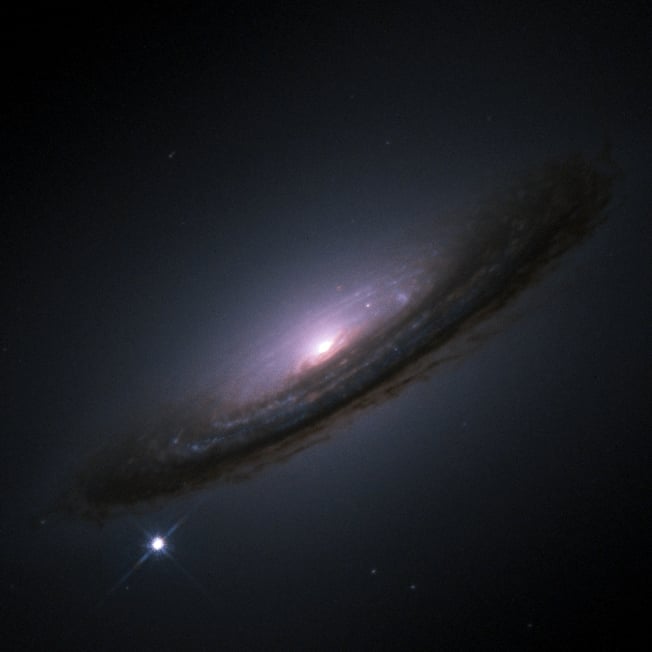
Nobel Laureates Rebut Study Claiming Universe's Expansion Is Slowing, Confirm Acceleration Continues
An international team of astrophysicists, including Nobel laureates Adam Riess and Brian Schmidt, has published a study in the Monthly Notices of the Royal Astronomical Society confirming that the universe's expansion is still accelerating. The rebuttal targets a late-2024 South Korean study that had claimed dark energy was weakening, a finding that would have overturned nearly three decades of cosmological understanding. The new study identifies two specific methodological errors in the earlier work, restoring confidence in the standard model of cosmic acceleration while leaving the deeper mystery of what dark energy actually is unresolved.
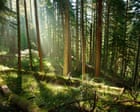
Study Finds Trees May Store Less Carbon Than Climate Models Predict
A new study published in Science Advances found that oak trees stop growing months before they stop photosynthesizing, meaning increased carbon uptake does not necessarily translate into more wood growth and long-term carbon storage. Researchers analyzed 137 sites across the US, finding that 26–36% of annual carbon uptake occurred after tree growth had already ceased, with drought and heat identified as key triggers for halting growth. The findings suggest that widely used climate models, which assume photosynthesis and growth are tightly linked, may be overestimating forests' future capacity to sequester carbon.
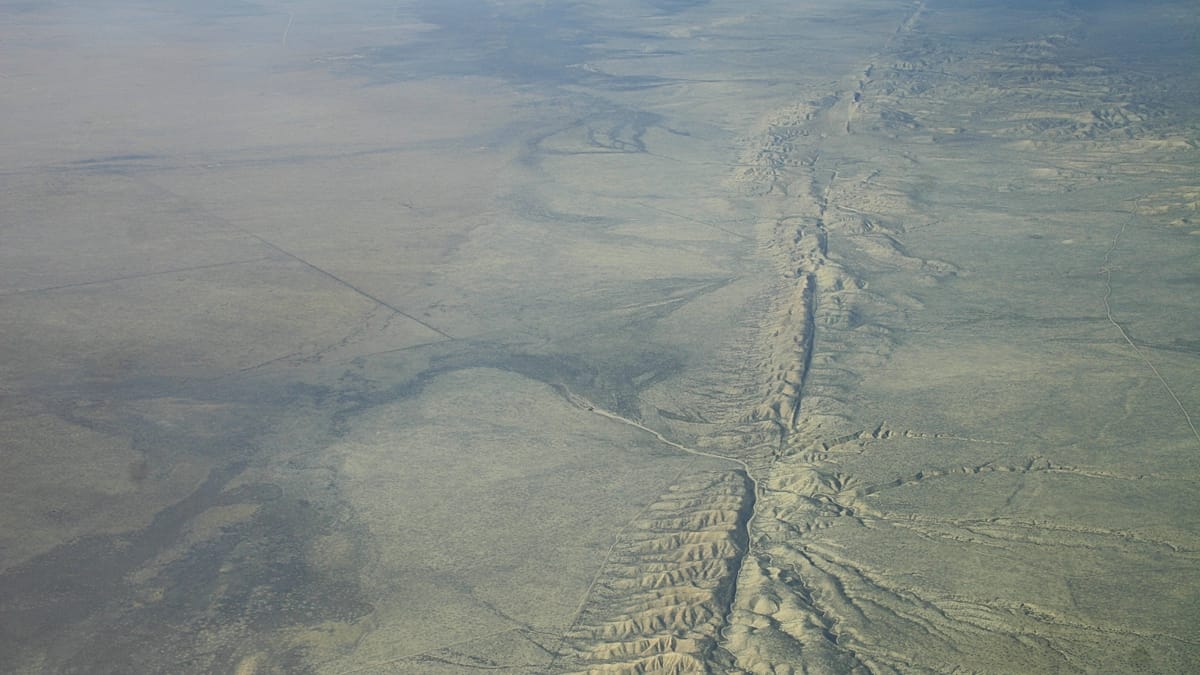
San Andreas Fault Stress Reaches Highest Level in 1,000 Years, Study Finds
A new peer-reviewed study finds that tectonic stress on Southern California's San Andreas and San Jacinto fault systems has reached its highest levels in at least 1,000 years, with the San Jacinto-Bernardino section measuring 3.6 megapascals. The research, led by the University of Hawaiʻi at Mānoa and published in the Journal of Geophysical Research: Solid Earth, used a computer model drawing on geological data including radiocarbon dating and tree-ring records to reconstruct a millennium of earthquake history. The findings cannot predict when a major earthquake will occur but are intended to improve hazard assessments, inform building codes, and guide emergency preparedness in a region home to millions.