Scientists Make Progress Understanding How Ice Forms at the Molecular Level
Researchers at the European X-ray Free Electron Laser Facility (XFEL) in Germany have captured the first microseconds of freezing in simple liquids, bringing experimental measurements and theoretical predictions closer together than ever before. For 150 years, classical nucleation theory has struggled to accurately predict freezing rates, with estimates sometimes differing from experiments by up to 20 orders of magnitude. Better understanding of freezing has direct implications for climate modeling, weather forecasting, and planetary science.
Scientists using the European XFEL — an underground particle accelerator near Hamburg that generates one of the world's most powerful X-ray laser beams — have made significant progress in understanding how pure liquids transition into solids, a problem that has confounded researchers for over a century. By firing ultrafast X-ray pulses at high-velocity jets of liquid krypton and argon cooling in a vacuum, the team captured X-ray diffraction patterns showing the liquids developing crystal structure within just a few hundred micrometres and a few microseconds. Their combined experimental and simulation results brought predicted nucleation rates to within 100–1,000 times of measured values — roughly 100 times closer to agreement than previous experiments had achieved. The core theoretical framework, classical nucleation theory (CNT), is extraordinarily sensitive to small changes in variables like surface tension and viscosity, meaning even minor differences in assumptions or experimental conditions can shift predicted freezing rates by tens of orders of magnitude. Researchers chose simpler Lennard-Jones liquids like krypton and argon as a starting point precisely because their molecular interactions are less complex than water's hydrogen-bonding network, allowing more consistent theoretical predictions. A key emerging insight is that disorder plays a larger role in the freezing process than previously appreciated. Improved understanding of nucleation could refine climate models — particularly predictions of ice formation in high-altitude clouds — and shed light on how Earth's solid inner core formed and what occurs inside other planets.
Limitations & open questions
The article does not specify whether the improved agreement between theory and experiment for krypton and argon has yet been extended to water or other complex liquids, leaving open how soon these advances might translate into practical improvements in climate or geophysical models. The work also does not address how heterogeneous nucleation — the dominant form in most real-world and atmospheric contexts — might be affected by these new insights.
What different sources said
- Nature NewsCenter
How ice forms is a mystery — now scientists are cracking the case
Related
Nobel Laureates Rebut Study Claiming Universe's Expansion Is Slowing, Confirm Acceleration Continues
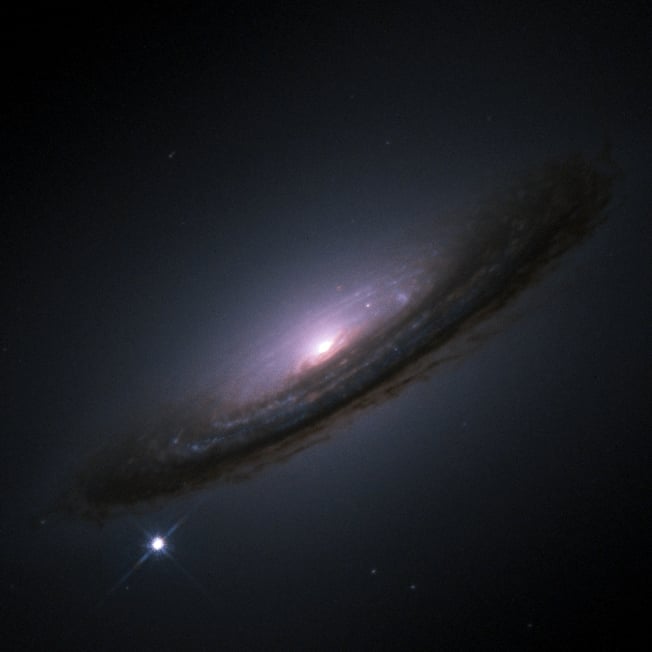
An international team of astrophysicists, including Nobel laureates Adam Riess and Brian Schmidt, has published a study in the Monthly Notices of the Royal Astronomical Society confirming that the universe's expansion is still accelerating. The rebuttal targets a late-2024 South Korean study that had claimed dark energy was weakening, a finding that would have overturned nearly three decades of cosmological understanding. The new study identifies two specific methodological errors in the earlier work, restoring confidence in the standard model of cosmic acceleration while leaving the deeper mystery of what dark energy actually is unresolved.

Study Finds Trees May Store Less Carbon Than Climate Models Predict
A new study published in Science Advances found that oak trees stop growing months before they stop photosynthesizing, meaning increased carbon uptake does not necessarily translate into more wood growth and long-term carbon storage. Researchers analyzed 137 sites across the US, finding that 26–36% of annual carbon uptake occurred after tree growth had already ceased, with drought and heat identified as key triggers for halting growth. The findings suggest that widely used climate models, which assume photosynthesis and growth are tightly linked, may be overestimating forests' future capacity to sequester carbon.
San Andreas Fault Stress Reaches Highest Level in 1,000 Years, Study Finds
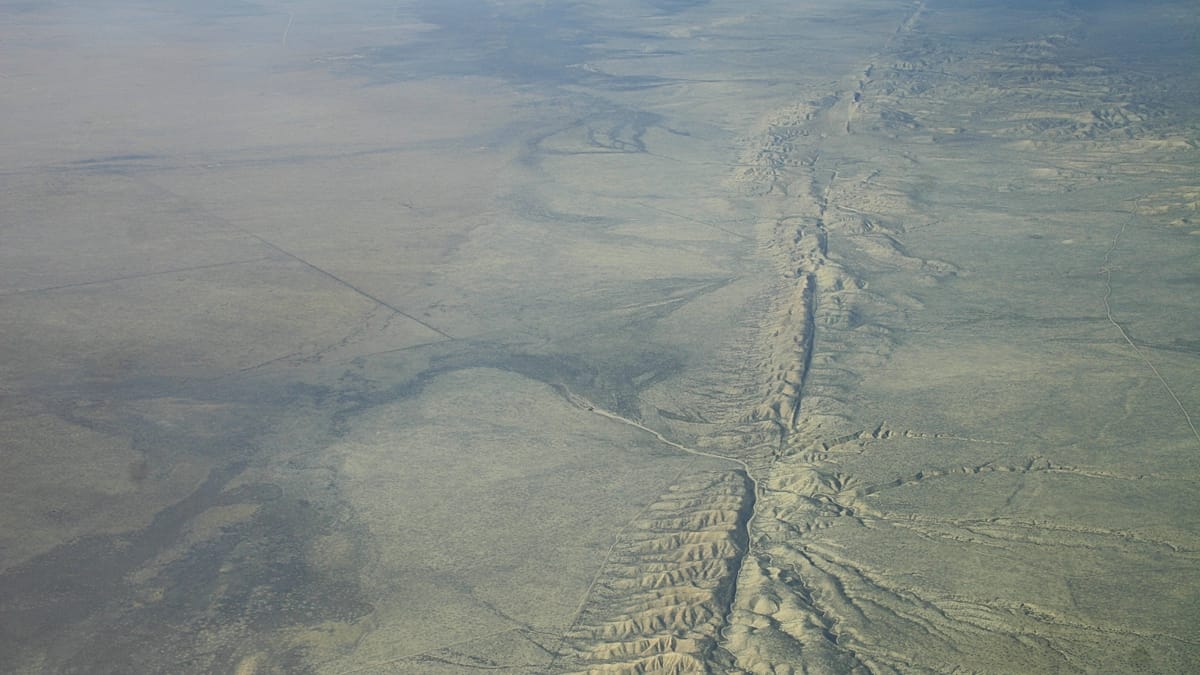
A new peer-reviewed study finds that tectonic stress on Southern California's San Andreas and San Jacinto fault systems has reached its highest levels in at least 1,000 years, with the San Jacinto-Bernardino section measuring 3.6 megapascals. The research, led by the University of Hawaiʻi at Mānoa and published in the Journal of Geophysical Research: Solid Earth, used a computer model drawing on geological data including radiocarbon dating and tree-ring records to reconstruct a millennium of earthquake history. The findings cannot predict when a major earthquake will occur but are intended to improve hazard assessments, inform building codes, and guide emergency preparedness in a region home to millions.