Scientists discover vast 5.3-million-year-old whale necropolis in the deep Indian Ocean

Chinese-led scientists have discovered the world's largest, deepest, and oldest known whale graveyard in the Diamantina Fracture Zone of the southeastern Indian Ocean, containing 485 fossil and active whale-fall sites at depths reaching 7,001 meters. The necropolis stretches roughly 1,200 kilometers, with fossil bones dated by strontium isotope analysis to as far back as 5.3 million years, and supports thriving ecosystems of jellyfish, brittle stars, bone-boring worms, and many suspected undescribed species. The find, published June 10 in Nature, reshapes understanding of deep-sea biodiversity, whale evolution, and carbon sequestration at hadal depths.
Researchers from China's Institute of Deep-Sea Science and Engineering, the University of Pisa, and New Zealand's National Institute of Water and Atmosphere conducted 32 dives in 2023 aboard the crewed submersible Fendouzhe, discovering 476 fossilized whale remains and five active whale-fall ecosystems along a 1,200-kilometer corridor of the Diamantina Fracture Zone, at depths between 4,616 and 7,001 meters. The deepest active whale-fall site, at 6,789 meters, surpasses all previously recorded active sites, while the oldest fossils date to 5.26 million years ago—spanning the Early Pliocene to the present. Underwater imagery confirmed that whale bones are colonized by brittle stars, crinoids, sponges, bone-boring Osedax worms, and chemosymbiotic bivalves, with many organisms suspected to be new to science; the first record of the sea daisy genus Xyloplax on a whale fall was also documented. Scientists identified fossils of known beaked whale species alongside a newly described extinct species, Pterocetus diamantinae, and estimated that the zone could harbor more than 10 million whale carcasses in total, representing roughly 6.7 million tonnes of sequestered carbon. Preservation over millions of years is attributed to the hyper-dense rostra of beaked whales, extremely low sedimentation rates, and protective ferromanganese oxide coatings on the bones. Researchers hypothesize that the zone's V-shaped topography funnels carcasses to the trench floor, and that the site may function as a biogeographic stepping stone connecting chemosynthetic communities across the deep ocean.
Limitations & open questions
The study's own acknowledged limitations include that only approximately 0.25 square miles of the necropolis were directly surveyed, making the extrapolated estimate of over 10 million carcasses highly uncertain. The precise mechanisms driving whale mortality specifically in this corridor remain unresolved, and the full taxonomic identity of the many suspected new species observed has not yet been established. Additionally, the long-term carbon sequestration estimates assume average body mass and lipid content figures that may not reflect the full species diversity present at the site.
What different sources said
- New ScientistCenter
Millions of fossil whale bones found in deep-ocean ‘necropolis’
- Washington TimesRight
5 questions about the ancient whale graveyard discovered in the Indian Ocean
- Live ScienceCenter
Scientists discover 5 million-year-old whale graveyard stretching for hundreds of miles in the Indian Ocean
- BBC WorldCenter
Whale graveyard dating back five million years discovered
- New York PostRight
Scientists discover deep whale graveyard with bones dating over 5 million years old
- The Straits TimesCenter
World’s largest whale graveyard discovered by Chinese scientists
- Yahoo FinanceCenter
Scientists Have Detected Something Deeply Alarming at the Bottom of the Ocean
- France 24Center
World’s largest, deepest, oldest whale graveyard discovered in Indian Ocean
- ABC AustraliaCenter
World's biggest whale graveyard found in Indian Ocean off Australia
- Nature NewsCenter
Whale graveyard discovered 7km under the sea
- IFLScienceCenter
In 2007, The World's Longest-Living Mammal Was Found With A 100-Year-Old Harpoon Still Inside It
- EuronewsCenter
Scientists discover where whales go to die
- AP NewsCenter
Scientists discover a deep whale graveyard that is teeming with life
- Phys.orgCenter
Newfound 'whale necropolis' reveals 5.3 million years of seafloor life
- Scientific AmericanCenter
Largest whale ‘graveyard’ discovered, with skeletons spanning 5 million years
- Science (AAAS)Center
Immense whale ‘graveyard’ discovered in the deep sea
- CBS NewsCenter
World's largest whale graveyard found by sub at bottom of ocean
- KTALnews.comCenter
Scientists discover a deep whale graveyard that is teeming with life
- The Seattle TimesCenter
Scientists discover a deep whale graveyard that is teeming with life
- Seattlepi.comCenter
Scientists discover a deep whale graveyard that is teeming with life
- South China Morning PostCenter
For 5 million years, whales have come to this place in the Indian Ocean to die
- Smithsonian MagazineCenter
Scientists Discover the World's Largest, Deepest Whale Graveyard, Where Cetacean Remains Have Been Piling Up for Five Million Years
Related
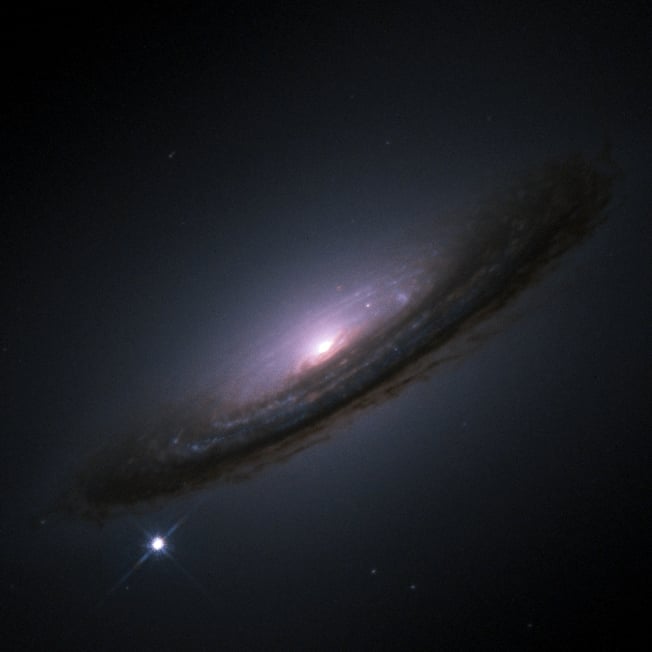
Nobel Laureates Rebut Study Claiming Universe's Expansion Is Slowing, Confirm Acceleration Continues
An international team of astrophysicists, including Nobel laureates Adam Riess and Brian Schmidt, has published a study in the Monthly Notices of the Royal Astronomical Society confirming that the universe's expansion is still accelerating. The rebuttal targets a late-2024 South Korean study that had claimed dark energy was weakening, a finding that would have overturned nearly three decades of cosmological understanding. The new study identifies two specific methodological errors in the earlier work, restoring confidence in the standard model of cosmic acceleration while leaving the deeper mystery of what dark energy actually is unresolved.

Study Finds Trees May Store Less Carbon Than Climate Models Predict
A new study published in Science Advances found that oak trees stop growing months before they stop photosynthesizing, meaning increased carbon uptake does not necessarily translate into more wood growth and long-term carbon storage. Researchers analyzed 137 sites across the US, finding that 26–36% of annual carbon uptake occurred after tree growth had already ceased, with drought and heat identified as key triggers for halting growth. The findings suggest that widely used climate models, which assume photosynthesis and growth are tightly linked, may be overestimating forests' future capacity to sequester carbon.
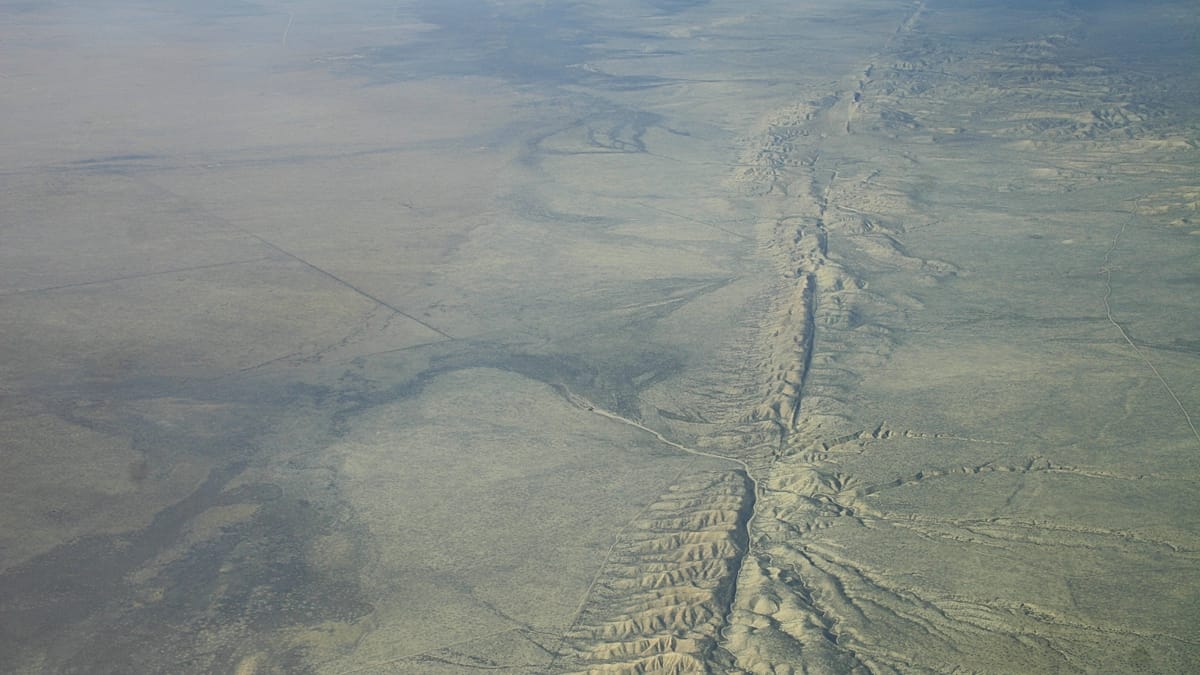
San Andreas Fault Stress Reaches Highest Level in 1,000 Years, Study Finds
A new peer-reviewed study finds that tectonic stress on Southern California's San Andreas and San Jacinto fault systems has reached its highest levels in at least 1,000 years, with the San Jacinto-Bernardino section measuring 3.6 megapascals. The research, led by the University of Hawaiʻi at Mānoa and published in the Journal of Geophysical Research: Solid Earth, used a computer model drawing on geological data including radiocarbon dating and tree-ring records to reconstruct a millennium of earthquake history. The findings cannot predict when a major earthquake will occur but are intended to improve hazard assessments, inform building codes, and guide emergency preparedness in a region home to millions.