Rocky Mountain ski resorts experience worst season in four decades amid record-low snowfall

Rocky Mountain ski resorts, including Vail and Breckenridge, saw visitor numbers drop 24 percent in the 2025-2026 season — the steepest decline in four decades outside of the pandemic. The region experienced its worst snowfall season on record, with snowpack in Colorado, New Mexico, Utah, and Wyoming running 32 to 53 percent below the previous record low. The collapse in snow threatens not just the ski industry but also the broader water supply for the western United States, with 60 to 70 percent of the region's water coming from snowmelt.
Vail Resorts CEO Robert Katz told investors Monday that the 2025-2026 ski season was the worst on record for snowfall in the Rocky Mountains, driving a 24 percent industry-wide decline in resort visits — the largest drop in 40 years, excluding the pandemic year of 2020. CFO Angela Korch reported that Vail Resorts' own revenue fell 7 percent compared to the prior year. Scientists attribute the historically low snowfall to unusually warm winter temperatures linked to climate change, with a researcher from the Western Regional Climate Center noting that snow was only falling at the highest elevations in December before conditions turned dry and warm through January. A 'snow-eater' heatwave in March then caused abrupt and rapid early snowmelt, compounding an already severe snow drought, according to NOAA. Bare, dirt-exposed slopes and reservoir shorelines with dramatically receded water levels visually underscore the scale of the crisis. The consequences extend well beyond ski tourism: USDA data shows that 60 to 70 percent of the northwestern U.S. water supply depends on snowpack melt, raising concerns about long-term water availability. Katz acknowledged deep uncertainty about the industry's future, stating it is 'hard to know with certainty how any of this will play out.'
Limitations & open questions
Neither source details what adaptation strategies — such as snowmaking infrastructure investment, geographic diversification, or season-extension technologies — Vail Resorts or the broader ski industry is pursuing in response to worsening snow conditions. Long-term projections for Rocky Mountain snowpack under various climate scenarios are also absent.
How coverage differed
The Independent frames the story primarily through a climate change lens, emphasizing scientific attribution and downstream water supply risks. Yahoo Finance's headline focuses on the business and competitive implications for Vail Resorts specifically, framing the snowfall crisis as a threat to the company's economic moat.
What different sources said
- The IndependentLeft
Ski resorts in Rocky Mountains saw worst season in four decades due to lack of snow
- Yahoo FinanceCenter
Melted Moat: Why Vail Resorts’ Business Model Is Flailing After a Brutal Winter
Related

Nobel Laureates Rebut Study Claiming Universe's Expansion Is Slowing, Confirm Acceleration Continues
An international team of astrophysicists, including Nobel laureates Adam Riess and Brian Schmidt, has published a study in the Monthly Notices of the Royal Astronomical Society confirming that the universe's expansion is still accelerating. The rebuttal targets a late-2024 South Korean study that had claimed dark energy was weakening, a finding that would have overturned nearly three decades of cosmological understanding. The new study identifies two specific methodological errors in the earlier work, restoring confidence in the standard model of cosmic acceleration while leaving the deeper mystery of what dark energy actually is unresolved.

Study Finds Trees May Store Less Carbon Than Climate Models Predict
A new study published in Science Advances found that oak trees stop growing months before they stop photosynthesizing, meaning increased carbon uptake does not necessarily translate into more wood growth and long-term carbon storage. Researchers analyzed 137 sites across the US, finding that 26–36% of annual carbon uptake occurred after tree growth had already ceased, with drought and heat identified as key triggers for halting growth. The findings suggest that widely used climate models, which assume photosynthesis and growth are tightly linked, may be overestimating forests' future capacity to sequester carbon.
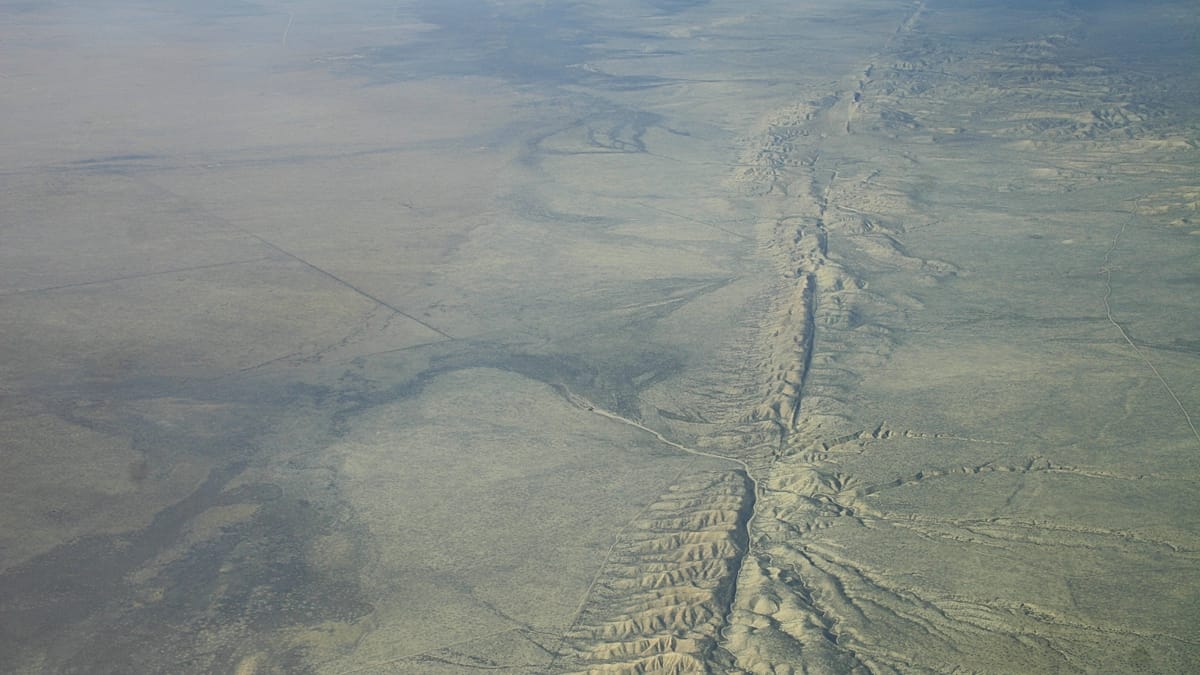
San Andreas Fault Stress Reaches Highest Level in 1,000 Years, Study Finds
A new peer-reviewed study finds that tectonic stress on Southern California's San Andreas and San Jacinto fault systems has reached its highest levels in at least 1,000 years, with the San Jacinto-Bernardino section measuring 3.6 megapascals. The research, led by the University of Hawaiʻi at Mānoa and published in the Journal of Geophysical Research: Solid Earth, used a computer model drawing on geological data including radiocarbon dating and tree-ring records to reconstruct a millennium of earthquake history. The findings cannot predict when a major earthquake will occur but are intended to improve hazard assessments, inform building codes, and guide emergency preparedness in a region home to millions.