Researchers Propose Mechanism for Tiny Black Holes to Form from 'Spacetime Crystals'
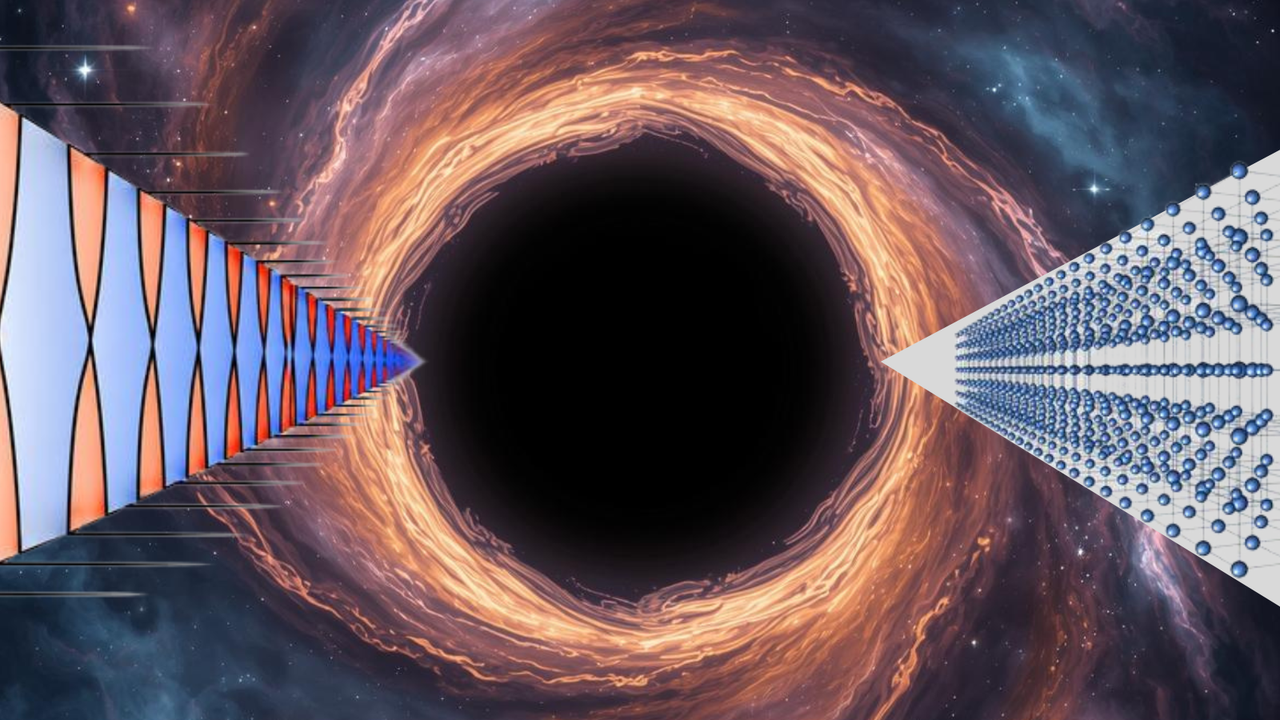
Researchers from Goethe University Frankfurt and TU Wien have produced the first exact analytical solution describing how spacetime can organize into a crystal-like structure and collapse into a microscopic black hole. The phenomenon, known as critical collapse, had been observed in computer simulations since 1993 but had never before been described with a precise mathematical formula. The breakthrough could deepen understanding of primordial black holes and provide a new analytical tool for studying some of the hardest problems in gravitational physics.
A team of physicists from Goethe University Frankfurt and the Vienna University of Technology (TU Wien) has published the first pen-and-paper, exact analytical solutions to Einstein's equations describing a process called critical collapse, in which spacetime organizes into a repeating, crystal-like pattern before potentially collapsing into a tiny black hole. The research, published in the May 2026 edition of Physical Review Letters, addresses a puzzle that has persisted since 1993, when numerical simulations first revealed that black hole formation near a critical threshold follows precise mathematical rules, hinting at a deeper underlying theory. The team's key methodological innovation was to examine the problem in the limit of infinitely many spatial dimensions, a counterintuitive approach that simplifies the mathematics of gravity and allowed hidden relationships to emerge. According to the researchers, a spacetime crystal sits at an unstable tipping point: a tiny injection of energy can push it to either disperse into radiation or collapse into a black hole, analogous to supercooled water crystallizing into ice with the slightest perturbation. The resulting black holes would be microscopic — potentially as small as a medium-sized asteroid in mass — and would rapidly evaporate by emitting Hawking radiation. The team notes that their formulas were surprisingly compact given the complexity of prior numerical simulations, which required thousands of CPU hours. While the work does not confirm the existence of primordial black holes, it provides a rigorous theoretical framework for understanding how they might have formed in the dense conditions of the early universe.
Limitations & open questions
The study's own authors acknowledge that their infinite-dimensional approach must still be translated back into realistic four-dimensional spacetime models, and that the various conjectures about spacetime crystal behavior remain to be verified. The paper does not address whether the predicted microscopic black holes are detectable with any current or planned instrument, leaving the observational pathway to confirming this mechanism entirely open.
What different sources said
- Space.comCenter
Strange 'spacetime crystals' could give birth to tiny black holes
- SciTechDailyCenter
The Strange “Spacetime Crystal” That Can Suddenly Turn Into a Black Hole
Related
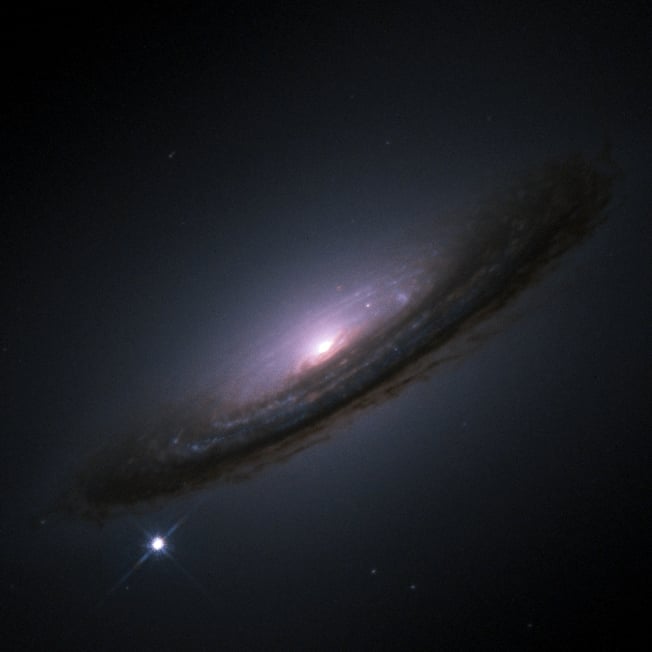
Nobel Laureates Rebut Study Claiming Universe's Expansion Is Slowing, Confirm Acceleration Continues
An international team of astrophysicists, including Nobel laureates Adam Riess and Brian Schmidt, has published a study in the Monthly Notices of the Royal Astronomical Society confirming that the universe's expansion is still accelerating. The rebuttal targets a late-2024 South Korean study that had claimed dark energy was weakening, a finding that would have overturned nearly three decades of cosmological understanding. The new study identifies two specific methodological errors in the earlier work, restoring confidence in the standard model of cosmic acceleration while leaving the deeper mystery of what dark energy actually is unresolved.

Study Finds Trees May Store Less Carbon Than Climate Models Predict
A new study published in Science Advances found that oak trees stop growing months before they stop photosynthesizing, meaning increased carbon uptake does not necessarily translate into more wood growth and long-term carbon storage. Researchers analyzed 137 sites across the US, finding that 26–36% of annual carbon uptake occurred after tree growth had already ceased, with drought and heat identified as key triggers for halting growth. The findings suggest that widely used climate models, which assume photosynthesis and growth are tightly linked, may be overestimating forests' future capacity to sequester carbon.
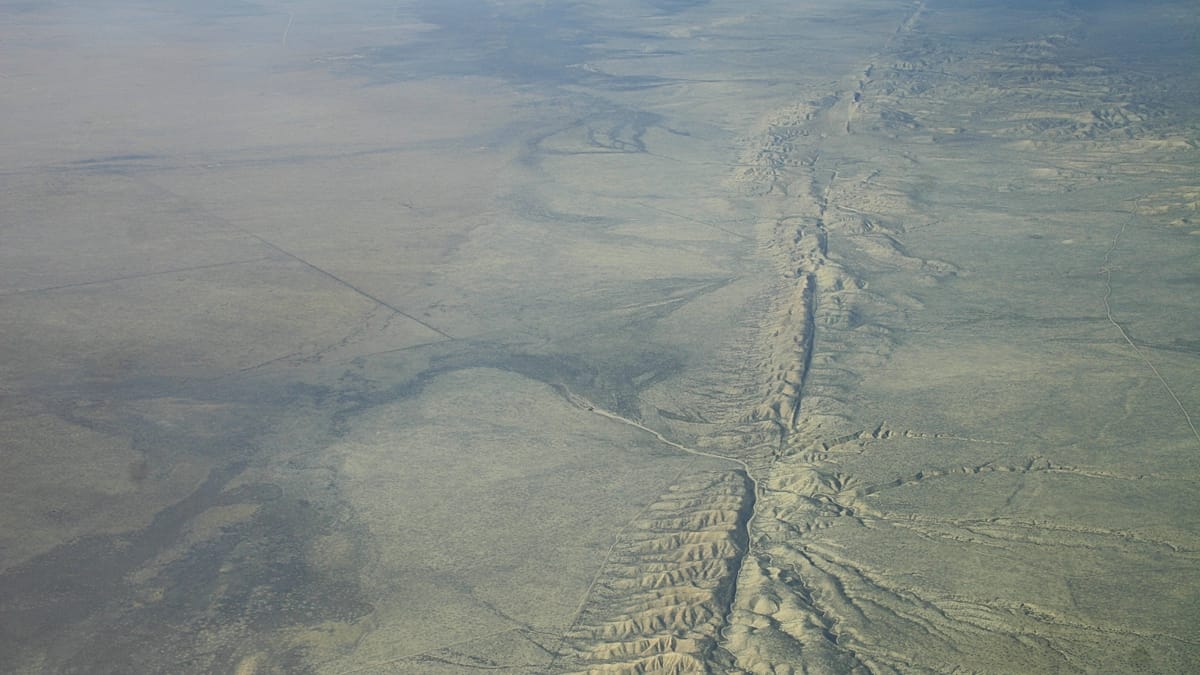
San Andreas Fault Stress Reaches Highest Level in 1,000 Years, Study Finds
A new peer-reviewed study finds that tectonic stress on Southern California's San Andreas and San Jacinto fault systems has reached its highest levels in at least 1,000 years, with the San Jacinto-Bernardino section measuring 3.6 megapascals. The research, led by the University of Hawaiʻi at Mānoa and published in the Journal of Geophysical Research: Solid Earth, used a computer model drawing on geological data including radiocarbon dating and tree-ring records to reconstruct a millennium of earthquake history. The findings cannot predict when a major earthquake will occur but are intended to improve hazard assessments, inform building codes, and guide emergency preparedness in a region home to millions.