Rare Great White Shark Sighting Documented in Mediterranean Sea
Volunteer divers from Ghost Diving and Healthy Seas filmed what is believed to be the first underwater video of a Great White shark in the Mediterranean Sea, encountering the large adult male just three metres away while clearing ghost fishing nets near a shipwreck in the Strait of Sicily. The Mediterranean population of Great White sharks is classified as critically endangered, largely due to illegal fishing, accidental capture, and habitat loss. Scientists and conservationists say the sighting is scientifically valuable and hope it will spur governments to establish marine protected areas in the region.
Volunteer technical diver Derk Remmers captured rare close-up footage of a Great White shark (Carcharodon carcharias) in the Strait of Sicily between Tunisia and Sicily in May 2026, during a dive to remove abandoned 'ghost' fishing nets from a shipwreck. The encounter, described by Remmers as 'pretty special,' saw the large adult male swim within three metres of the divers before turning back out of apparent curiosity and then disappearing. The footage is considered the first of its kind recorded underwater in the Mediterranean, where the species has lived for millions of years but is now critically endangered due to overfishing, illegal fishing, and habitat degradation. Researcher Carlo Cattano of the Stazione Zoologica Anton Dohrn noted that most existing knowledge of Mediterranean Great Whites comes from dead specimens caught in fishing operations, making behavioral observations like this exceptionally valuable. Scientists stressed there is no cause for public alarm, as the shark was spotted far offshore. Conservationists used the occasion — timed around World Oceans Day — to call on governments and the fishing industry to reduce net abandonment and to create marine protected areas. An estimated 640,000 nets are lost or discarded at sea globally each year, trapping and killing marine life including sea turtles and large fish.
Limitations & open questions
The exact current population estimate for Great White sharks in the Mediterranean varies across sources (described as 'a few hundred' by The Independent but not quantified by others), and no peer-reviewed study on this specific sighting has yet been published.
How coverage differed
The Independent framed the story with emphasis on the divers' emotional reaction and the ghost net crisis, while Wired provided the most scientific depth, contextualizing the shark's ecological role and conservation status. Al Jazeera's coverage was brief and focused on the viral spread of the video rather than its scientific significance.
What different sources said
- WiredLeft
Great White Sharks Have Been in the Mediterranean Sea for Millions of Years—but Sightings Are Incredibly Rare
- The IndependentLeft
Great White shark filmed in the Mediterranean for the first time by stunned divers
- Al JazeeraLeft
New video of great white shark in Mediterranean goes viral
- BBCCenter
Rare footage captured of Great White shark in Mediterranean Sea
Related

Nobel Laureates Rebut Study Claiming Universe's Expansion Is Slowing, Confirm Acceleration Continues
An international team of astrophysicists, including Nobel laureates Adam Riess and Brian Schmidt, has published a study in the Monthly Notices of the Royal Astronomical Society confirming that the universe's expansion is still accelerating. The rebuttal targets a late-2024 South Korean study that had claimed dark energy was weakening, a finding that would have overturned nearly three decades of cosmological understanding. The new study identifies two specific methodological errors in the earlier work, restoring confidence in the standard model of cosmic acceleration while leaving the deeper mystery of what dark energy actually is unresolved.

Study Finds Trees May Store Less Carbon Than Climate Models Predict
A new study published in Science Advances found that oak trees stop growing months before they stop photosynthesizing, meaning increased carbon uptake does not necessarily translate into more wood growth and long-term carbon storage. Researchers analyzed 137 sites across the US, finding that 26–36% of annual carbon uptake occurred after tree growth had already ceased, with drought and heat identified as key triggers for halting growth. The findings suggest that widely used climate models, which assume photosynthesis and growth are tightly linked, may be overestimating forests' future capacity to sequester carbon.
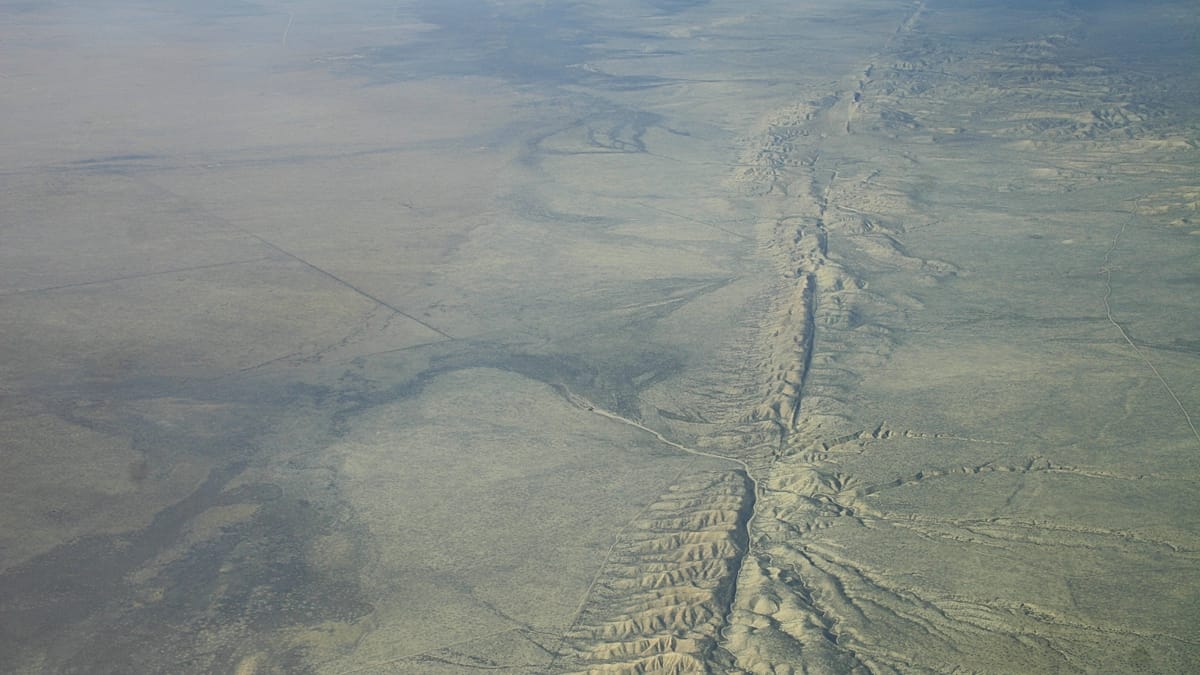
San Andreas Fault Stress Reaches Highest Level in 1,000 Years, Study Finds
A new peer-reviewed study finds that tectonic stress on Southern California's San Andreas and San Jacinto fault systems has reached its highest levels in at least 1,000 years, with the San Jacinto-Bernardino section measuring 3.6 megapascals. The research, led by the University of Hawaiʻi at Mānoa and published in the Journal of Geophysical Research: Solid Earth, used a computer model drawing on geological data including radiocarbon dating and tree-ring records to reconstruct a millennium of earthquake history. The findings cannot predict when a major earthquake will occur but are intended to improve hazard assessments, inform building codes, and guide emergency preparedness in a region home to millions.