Pharmaceutical Companies Turn to Space for Drug Development in Microgravity

Two distinct approaches to producing pharmaceuticals in space are advancing simultaneously: commercial companies are crystallizing drugs in low Earth orbit to improve their quality and delivery, while UC San Diego researchers have demonstrated a method for growing and harvesting medicines from living plants under simulated space conditions. The commercial orbital manufacturing sector, backed by firms like Redwire's SpaceMD and Varda Space Industries, is already working with major pharmaceutical companies including Eli Lilly, Bristol Myers Squibb, and United Therapeutics, while the plant-based approach targets long-duration deep-space missions where resupply is impossible. Both developments reflect a broader push to move pharmaceutical innovation beyond Earth as the space economy matures.
The pharmaceutical applications of space are expanding along two parallel tracks. In low Earth orbit, companies like SpaceMD and Varda Space Industries are exploiting microgravity to grow more uniform, higher-quality drug crystals — a process that can reduce the viscosity of complex biologics, enabling at-home injections instead of lengthy hospital infusions. SpaceMD has already tested 37 drug compounds using its PIL-BOX micro-laboratory units and holds royalty agreements with major pharma partners, while Varda operates autonomous 300-kilogram manufacturing satellites with re-entry pods and is planning to nearly double its flight cadence. Merck's earlier ISS experiments with its cancer drug Keytruda provided a proof of concept: space-grown antibody crystals were more uniform and stable, ultimately informing an injectable formulation that received FDA approval in 2025. Separately, UC San Diego engineers published research in npj Science of Plants demonstrating that cowpea mosaic virus — a compound with demonstrated anti-tumor properties — can be repeatedly harvested from living plants under simulated microgravity, temperature swings, and oxidative stress without destroying the plants, using only a vacuum extraction and centrifuge process. Counterintuitively, some space-like stressors increased yields because stressed plants become more susceptible to the plant virus used to produce the compound. Both approaches face significant hurdles: the commercial orbital sector must contend with expensive and limited re-entry infrastructure and the impending retirement of the ISS, while the plant-based method remains a proof of concept requiring deeper understanding of plant biology in true microgravity before it could be deployed on a crewed mission.
Limitations & open questions
Neither source addresses the regulatory pathway in the United States for drugs manufactured in orbit beyond a brief mention of FDA approval for Merck's injectable Keytruda; the specific requirements for certifying space-manufactured drugs at scale remain unclear. The cost per kilogram of returning materials from orbit — a key economic variable for commercial viability — is referenced qualitatively but not quantified. For the UC San Diego plant study, key limitations include that experiments used simulated rather than actual microgravity, and the interaction between rocket launch stresses on plant genetic material is still under investigation.
How coverage differed
CNBC frames space pharma primarily as a commercial and investment opportunity, emphasizing industry partnerships, revenue models, and the broader trillion-dollar space economy. ZME Science focuses on the scientific and humanitarian rationale — particularly the challenge of medication degradation on long-duration missions — with a more cautious, research-oriented tone.
What different sources said
- CNBCCenter
The space race is coming for pharma: Why drug development is heading to lower Earth orbit
- ZME ScienceCenter
Astronauts Could Grow Their Own Medicines in Space Using Plants
Related

Nobel Laureates Rebut Study Claiming Universe's Expansion Is Slowing, Confirm Acceleration Continues
An international team of astrophysicists, including Nobel laureates Adam Riess and Brian Schmidt, has published a study in the Monthly Notices of the Royal Astronomical Society confirming that the universe's expansion is still accelerating. The rebuttal targets a late-2024 South Korean study that had claimed dark energy was weakening, a finding that would have overturned nearly three decades of cosmological understanding. The new study identifies two specific methodological errors in the earlier work, restoring confidence in the standard model of cosmic acceleration while leaving the deeper mystery of what dark energy actually is unresolved.

Study Finds Trees May Store Less Carbon Than Climate Models Predict
A new study published in Science Advances found that oak trees stop growing months before they stop photosynthesizing, meaning increased carbon uptake does not necessarily translate into more wood growth and long-term carbon storage. Researchers analyzed 137 sites across the US, finding that 26–36% of annual carbon uptake occurred after tree growth had already ceased, with drought and heat identified as key triggers for halting growth. The findings suggest that widely used climate models, which assume photosynthesis and growth are tightly linked, may be overestimating forests' future capacity to sequester carbon.
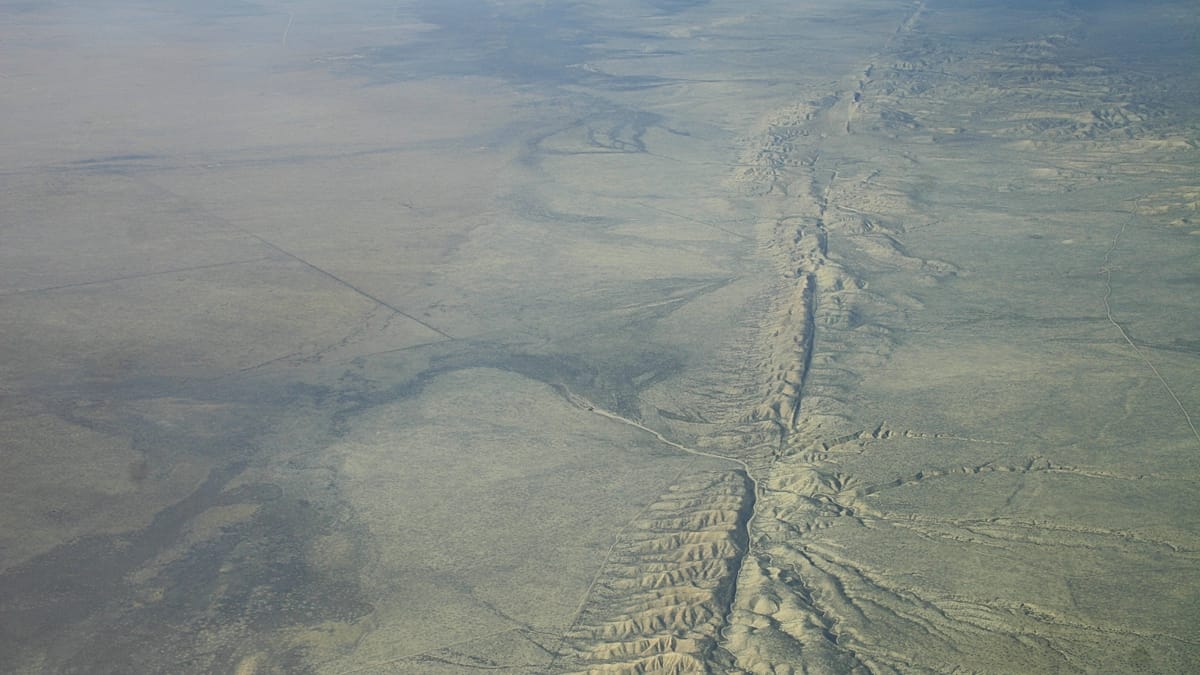
San Andreas Fault Stress Reaches Highest Level in 1,000 Years, Study Finds
A new peer-reviewed study finds that tectonic stress on Southern California's San Andreas and San Jacinto fault systems has reached its highest levels in at least 1,000 years, with the San Jacinto-Bernardino section measuring 3.6 megapascals. The research, led by the University of Hawaiʻi at Mānoa and published in the Journal of Geophysical Research: Solid Earth, used a computer model drawing on geological data including radiocarbon dating and tree-ring records to reconstruct a millennium of earthquake history. The findings cannot predict when a major earthquake will occur but are intended to improve hazard assessments, inform building codes, and guide emergency preparedness in a region home to millions.