New Study Suggests Ancient Humans Transported Stonehenge's Altar Stone 700 Kilometers Across Britain
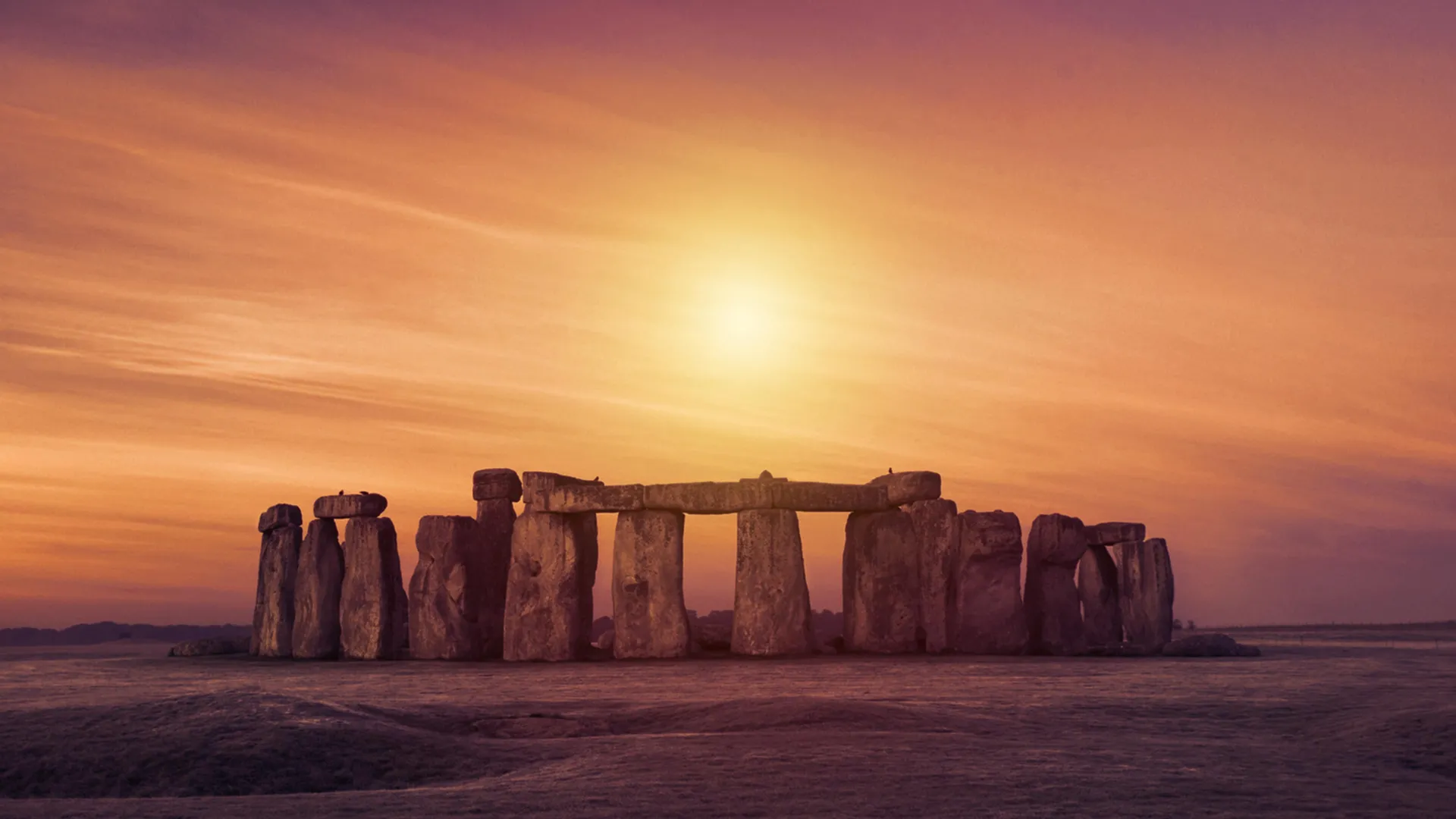
A study led by Curtin University researchers finds that Stonehenge's six-ton Altar Stone was almost certainly transported by Neolithic people from northeast Scotland — roughly 700 kilometers away — rather than by glacial ice. The research combined zircon mineral grain dating, which traced the stone most closely to Caithness on the Scottish mainland, with computer modeling of the British-Irish Ice Sheet during the Last Glacial Maximum, showing no viable glacial pathway to Salisbury Plain. The findings suggest a level of prehistoric planning, coordination, and long-distance organization greater than previously recognized, and the study has been published in the Journal of Quaternary Science.
Published in the Journal of Quaternary Science, the Curtin University-led study builds on a 2024 finding that identified the Altar Stone — a 6.6-ton block of grayish-green sandstone lying at the center of Stonehenge — as originating in the Orcadian Basin of northeast Scotland, approximately 700 kilometers from Salisbury Plain. The new research refined that origin to Caithness, at the very tip of the Scottish mainland, using analysis of zircon crystals visible under high-resolution microscopy. Ice sheet modeling of the Last Glacial Maximum showed that glaciers from Caithness predominantly flowed northeast, away from Stonehenge, with only a narrower southeastern path potentially reaching Dogger Bank — a now-submerged landmass in the North Sea that once connected Britain to continental Europe. However, Dogger Bank was already beneath rising seas roughly 8,000 years ago, thousands of years before Stonehenge's construction began around 2620–2480 BCE, making a purely glacial delivery implausible. Even if glaciers had moved the stone partway, people would still have needed to transport it approximately 400 kilometers from Dogger Bank to Salisbury Plain. Researchers envision a staged journey combining overland hauling with river and coastal transport, requiring substantial labor, route knowledge, and inter-community coordination. The team, which included collaborators from Sheffield Hallam University, the University of Sheffield, Wessex Archaeology, and the University of Bristol, plans to continue narrowing the stone's precise source location and tracing the likely prehistoric transport routes.
Limitations & open questions
The study establishes that human transport was required but does not yet identify the precise overland or coastal route taken. The researchers acknowledge that the exact source site within Caithness has not been pinpointed, and the mechanisms by which a six-ton stone could have been moved — whether by sledge, raft, roller, or other means — remain speculative.
How coverage differed
Science Daily, Yahoo Finance, and ScienceAlert reported the findings in straightforward scientific terms, emphasizing the methodological rigor and collaborative nature of the research. The New York Post adopted a more sensationalized tone — using phrases like 'rolling stone,' 'Sisyphean challenge,' and comparisons to an 'ancient Atlas Stones contest' — and included a colorful analogy about choosing marble for kitchen countertops, framing the story as entertainment as much as science.
What different sources said
- New York PostRight
Mystery of Stonehenge’s 13,000-pound Altar Stone may be solved as new research reveals how it traveled 450 miles
- Science DailyCenter
Stonehenge's most mysterious stone traveled 700 kilometers across Britain
- Yahoo FinanceCenter
Massive Stonehenge megalith likely hauled over 400 miles by prehistoric people, not glaciers
- ScienceAlertCenter
Stonehenge's Altar Stone Mystery Points to an Epic Human Journey
- Nature NewsCenter
Briefing Chat: The epic journey of Stonehenge’s central stone
Related
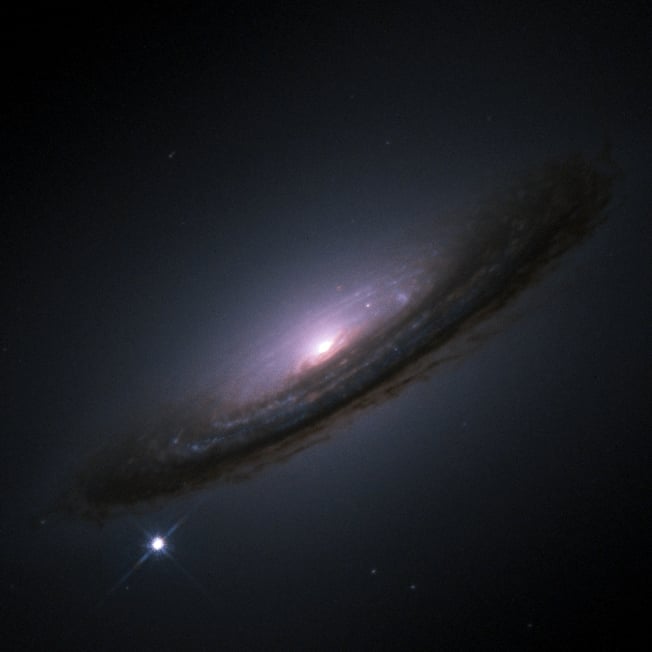
Nobel Laureates Rebut Study Claiming Universe's Expansion Is Slowing, Confirm Acceleration Continues
An international team of astrophysicists, including Nobel laureates Adam Riess and Brian Schmidt, has published a study in the Monthly Notices of the Royal Astronomical Society confirming that the universe's expansion is still accelerating. The rebuttal targets a late-2024 South Korean study that had claimed dark energy was weakening, a finding that would have overturned nearly three decades of cosmological understanding. The new study identifies two specific methodological errors in the earlier work, restoring confidence in the standard model of cosmic acceleration while leaving the deeper mystery of what dark energy actually is unresolved.

Study Finds Trees May Store Less Carbon Than Climate Models Predict
A new study published in Science Advances found that oak trees stop growing months before they stop photosynthesizing, meaning increased carbon uptake does not necessarily translate into more wood growth and long-term carbon storage. Researchers analyzed 137 sites across the US, finding that 26–36% of annual carbon uptake occurred after tree growth had already ceased, with drought and heat identified as key triggers for halting growth. The findings suggest that widely used climate models, which assume photosynthesis and growth are tightly linked, may be overestimating forests' future capacity to sequester carbon.
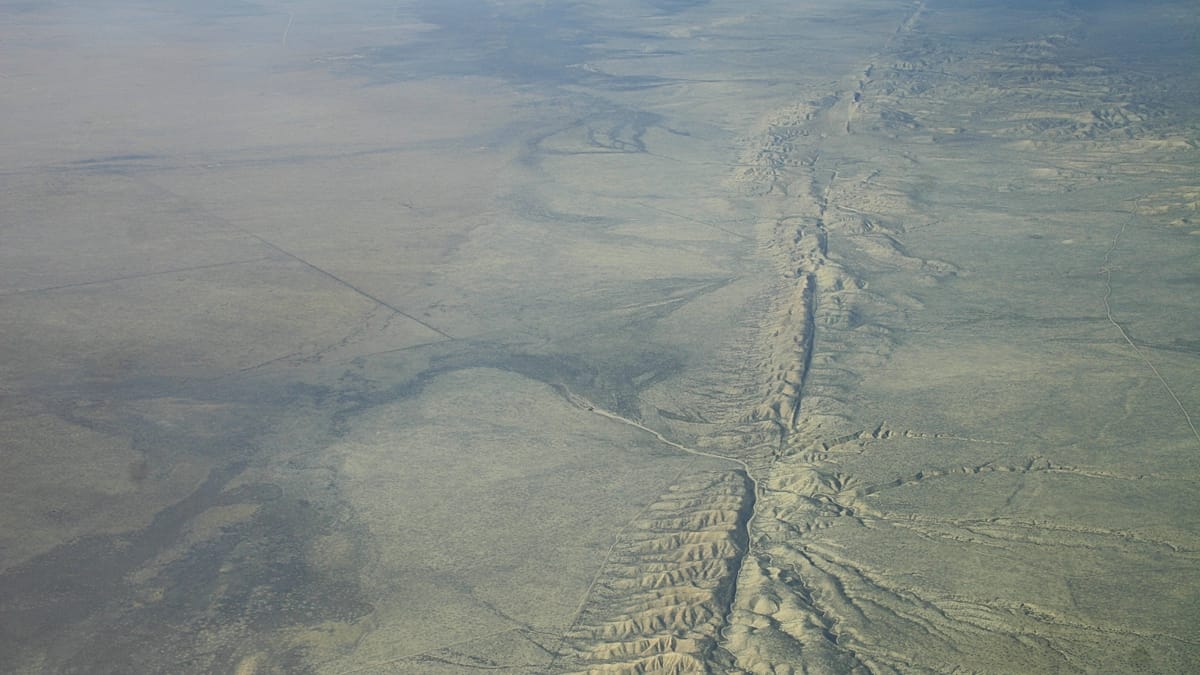
San Andreas Fault Stress Reaches Highest Level in 1,000 Years, Study Finds
A new peer-reviewed study finds that tectonic stress on Southern California's San Andreas and San Jacinto fault systems has reached its highest levels in at least 1,000 years, with the San Jacinto-Bernardino section measuring 3.6 megapascals. The research, led by the University of Hawaiʻi at Mānoa and published in the Journal of Geophysical Research: Solid Earth, used a computer model drawing on geological data including radiocarbon dating and tree-ring records to reconstruct a millennium of earthquake history. The findings cannot predict when a major earthquake will occur but are intended to improve hazard assessments, inform building codes, and guide emergency preparedness in a region home to millions.