New Glenn Explosion Provides Safety Officials With Rare Data on Methane Rocket Blast Damage
A New Glenn rocket exploded during a static fire test at Cape Canaveral on May 28, 2026, destroying the launch pad and shattering windows at a hangar roughly a mile away. The incident is the largest explosion at the Eastern Range, providing safety officials with unprecedented real-world data on methane-fueled rocket blasts. The data will help refine blast danger zones as Cape Canaveral prepares for a projected fivefold increase in annual launches by 2036.
Blue Origin's New Glenn rocket, the largest ever launched from Cape Canaveral's Eastern Range, exploded during a static fire test on May 28, 2026, destroying the launch vehicle, its transporter-erector, and much of Launch Complex 36. No personnel were injured, as all workers had been evacuated from the Blast Danger Area — a zone spanning roughly 7,174 feet in diameter — before fueling began. The explosion shattered windows at a Space Force hangar used as a museum about a mile from the pad and damaged a weather balloon facility; Blue Origin is financially responsible for those repairs. Space Force Col. Brian Chatman described the data collected as 'phenomenal,' noting that sensors inside Blue Origin's integration facility and across the range captured overpressure measurements that will be fed into blast models. Currently, the Space Force applies a conservative 100 percent TNT blast equivalency to methane-liquid oxygen rockets, maintaining wide keep-out zones, but officials expect this data to eventually allow those zones to shrink. The incident is particularly significant because Cape Canaveral is preparing for a dramatic expansion, with SpaceX, Blue Origin, ULA, Stoke Space, and Relativity Space all operating or developing methane-fueled rockets within a narrow stretch of coastline, and launch projections reaching up to 500 per year by 2036.
Limitations & open questions
The root cause of the New Glenn explosion has not yet been reported by either source. Additionally, no timeline has been given for when the blast data will be formally incorporated into updated safety models.
How coverage differed
Ars Technica focused on the regulatory and operational implications for the spaceport — blast danger zones, competing launch operators, and Space Force policy — while The Conversation took a more educational angle, explaining why methane was chosen over hydrogen as a rocket fuel and contextualizing the explosion within basic chemistry. Neither outlet framed the event negatively toward Blue Origin beyond factual reporting.
What different sources said
- Ars TechnicaCenter
Safety officials finally have a good idea of what a big rocket explosion can do
- The ConversationCenter
Methane rocket fuel is easier to handle and convenient but, as Blue Origin saw, it can be very explosive
Related
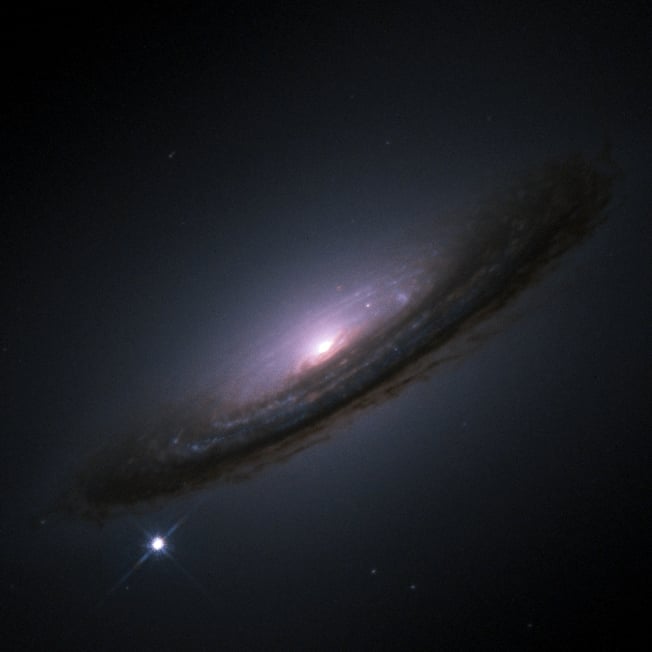
Nobel Laureates Rebut Study Claiming Universe's Expansion Is Slowing, Confirm Acceleration Continues
An international team of astrophysicists, including Nobel laureates Adam Riess and Brian Schmidt, has published a study in the Monthly Notices of the Royal Astronomical Society confirming that the universe's expansion is still accelerating. The rebuttal targets a late-2024 South Korean study that had claimed dark energy was weakening, a finding that would have overturned nearly three decades of cosmological understanding. The new study identifies two specific methodological errors in the earlier work, restoring confidence in the standard model of cosmic acceleration while leaving the deeper mystery of what dark energy actually is unresolved.

Study Finds Trees May Store Less Carbon Than Climate Models Predict
A new study published in Science Advances found that oak trees stop growing months before they stop photosynthesizing, meaning increased carbon uptake does not necessarily translate into more wood growth and long-term carbon storage. Researchers analyzed 137 sites across the US, finding that 26–36% of annual carbon uptake occurred after tree growth had already ceased, with drought and heat identified as key triggers for halting growth. The findings suggest that widely used climate models, which assume photosynthesis and growth are tightly linked, may be overestimating forests' future capacity to sequester carbon.
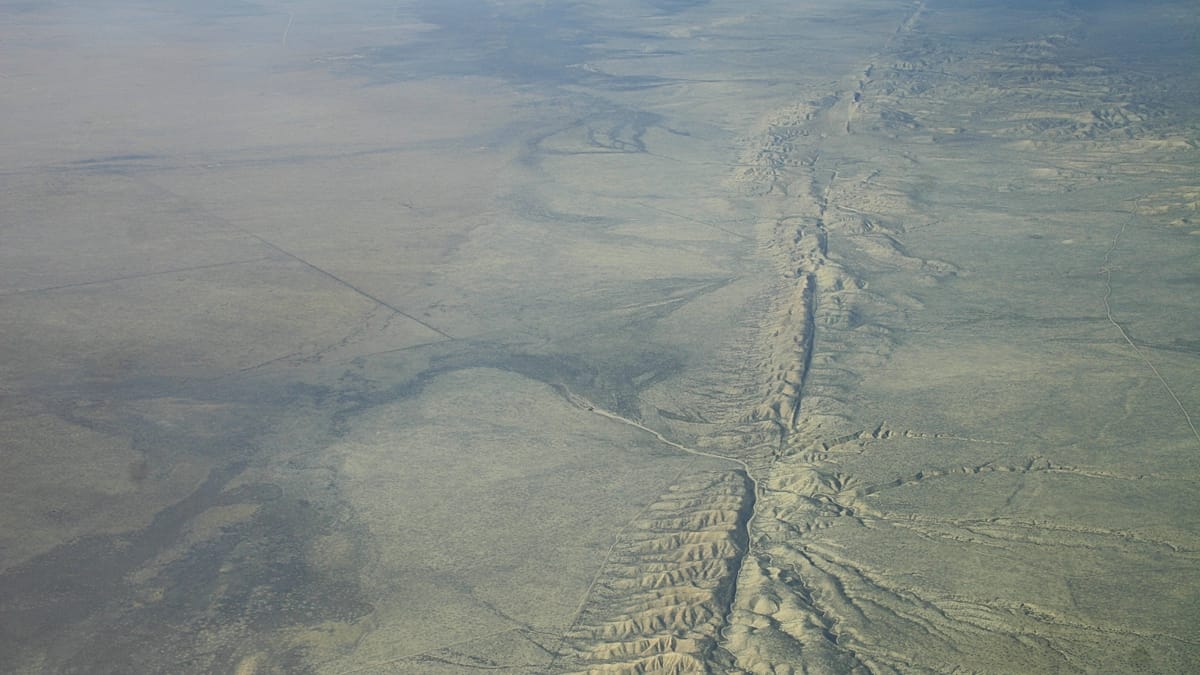
San Andreas Fault Stress Reaches Highest Level in 1,000 Years, Study Finds
A new peer-reviewed study finds that tectonic stress on Southern California's San Andreas and San Jacinto fault systems has reached its highest levels in at least 1,000 years, with the San Jacinto-Bernardino section measuring 3.6 megapascals. The research, led by the University of Hawaiʻi at Mānoa and published in the Journal of Geophysical Research: Solid Earth, used a computer model drawing on geological data including radiocarbon dating and tree-ring records to reconstruct a millennium of earthquake history. The findings cannot predict when a major earthquake will occur but are intended to improve hazard assessments, inform building codes, and guide emergency preparedness in a region home to millions.