NASA's INCUS Mission Progresses Toward 2027 Launch
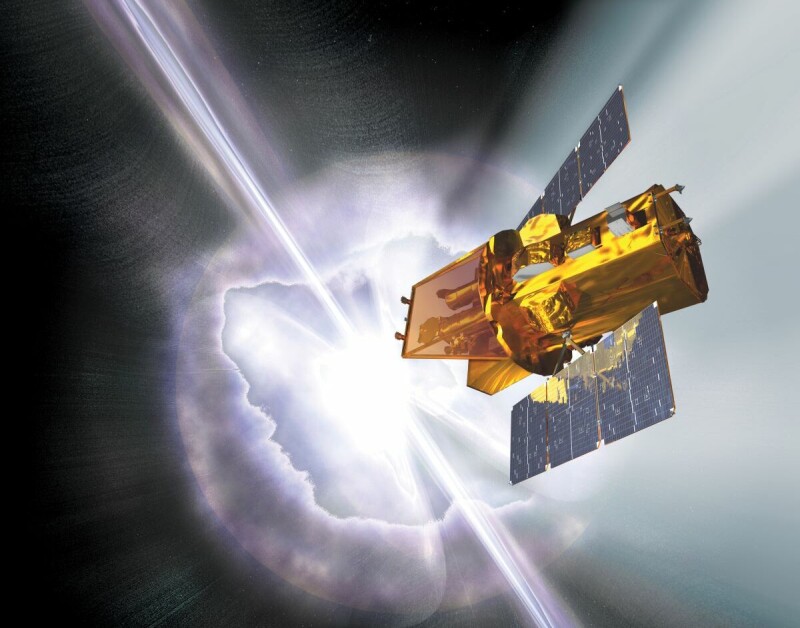
Two of NASA's three INCUS SmallSats have completed assembly and testing ahead of a 2027 launch, while a separate robotic spacecraft designed to boost the decaying Swift observatory has been installed atop its Pegasus XL rocket for an imminent launch. INCUS will make the first space-based survey of tropical convective storm dynamics from low Earth orbit, and the Swift rescue mission aims to reboost the $500 million observatory whose orbit has decayed significantly due to heightened solar activity. Both missions highlight NASA's expanding use of small, specialized spacecraft to address urgent scientific and operational needs.
NASA's INCUS (Investigation of Convective Updrafts) mission has cleared a major milestone, with two of its three nearly identical SmallSats completing vibration and thermal vacuum testing at Blue Canyon Technologies in Lafayette, Colorado. Testing on the third satellite is expected to finish no earlier than September 2026, with all three slated for shipment to NASA's Wallops Flight Facility in Virginia ahead of a 2027 launch. Flying in tight formation in low Earth orbit — separated by 30 and 90 seconds respectively — the satellites will use JPL-built spaceborne radars and a microwave radiometer to measure convective mass flux, helping scientists understand where, when, and why tropical storms form. Separately, Katalyst Space's LINK robotic servicing spacecraft, intended to rescue NASA's Neil Gehrels Swift Observatory, has been integrated atop a Northrop Grumman Pegasus XL rocket at Wallops, with launch expected within weeks from Kwajalein Atoll in the South Pacific. Swift's orbit has decayed from roughly 373 miles to about 249 miles due to elevated solar activity, and without a reboost the observatory faces an uncontrolled reentry within months. If LINK's mission succeeds, it could establish a template for extending the lives of other aging spacecraft, including the Hubble Space Telescope, whose orbit is also gradually decaying.
Limitations & open questions
The articles do not detail the total mission cost or funding breakdown for INCUS beyond noting it falls under NASA's Earth Venture Mission-3 acquisition. For the Swift rescue, the articles do not clarify the precise rendezvous and docking mechanism LINK will use, or what happens to LINK after a successful reboost.
How coverage differed
The Register framed the Swift rescue primarily through the lens of urgency and high-stakes risk, emphasizing political context such as budget cuts and the rejected SpaceX Dragon proposal, while Space.com took a more descriptive, photo-driven approach focused on the technical novelty of the four-vehicle mission architecture. Both were factually consistent but differed in editorial emphasis.
What different sources said
- NASACenter
NASA to Preview Katalyst Mission to Boost Swift Spacecraft’s Orbit
- The RegisterCenter
Race against re-entry: Swift's would-be saviour straps itself to a rocket
- Phys.orgCenter
NASA's INCUS mission on road to launch, study storms from space
- Space.comCenter
Satellite-boosting spacecraft inside air-launched rocket | Space photo of the day for June 12, 2026
Related
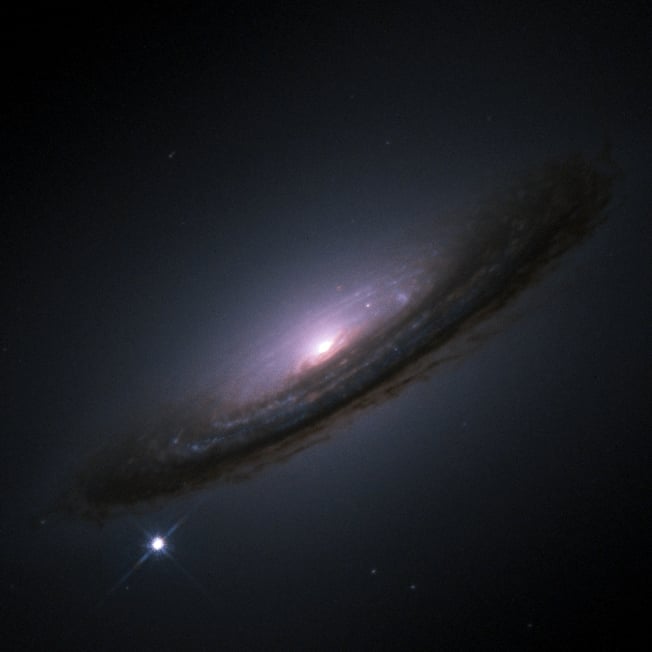
Nobel Laureates Rebut Study Claiming Universe's Expansion Is Slowing, Confirm Acceleration Continues
An international team of astrophysicists, including Nobel laureates Adam Riess and Brian Schmidt, has published a study in the Monthly Notices of the Royal Astronomical Society confirming that the universe's expansion is still accelerating. The rebuttal targets a late-2024 South Korean study that had claimed dark energy was weakening, a finding that would have overturned nearly three decades of cosmological understanding. The new study identifies two specific methodological errors in the earlier work, restoring confidence in the standard model of cosmic acceleration while leaving the deeper mystery of what dark energy actually is unresolved.

Study Finds Trees May Store Less Carbon Than Climate Models Predict
A new study published in Science Advances found that oak trees stop growing months before they stop photosynthesizing, meaning increased carbon uptake does not necessarily translate into more wood growth and long-term carbon storage. Researchers analyzed 137 sites across the US, finding that 26–36% of annual carbon uptake occurred after tree growth had already ceased, with drought and heat identified as key triggers for halting growth. The findings suggest that widely used climate models, which assume photosynthesis and growth are tightly linked, may be overestimating forests' future capacity to sequester carbon.
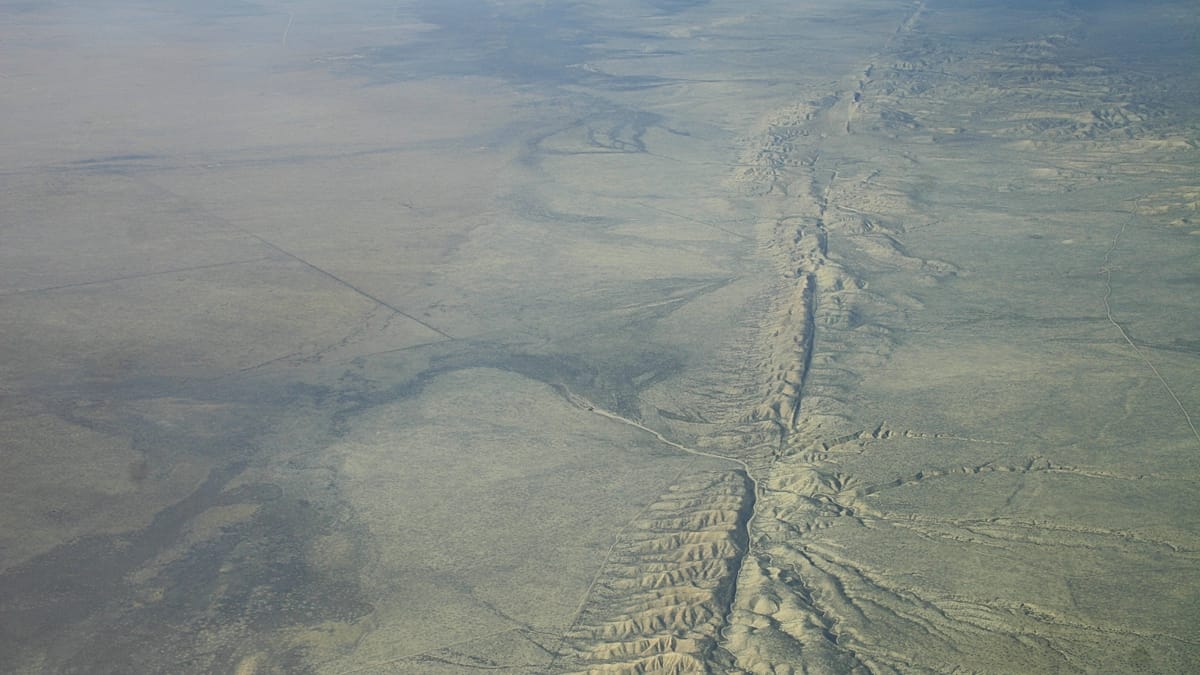
San Andreas Fault Stress Reaches Highest Level in 1,000 Years, Study Finds
A new peer-reviewed study finds that tectonic stress on Southern California's San Andreas and San Jacinto fault systems has reached its highest levels in at least 1,000 years, with the San Jacinto-Bernardino section measuring 3.6 megapascals. The research, led by the University of Hawaiʻi at Mānoa and published in the Journal of Geophysical Research: Solid Earth, used a computer model drawing on geological data including radiocarbon dating and tree-ring records to reconstruct a millennium of earthquake history. The findings cannot predict when a major earthquake will occur but are intended to improve hazard assessments, inform building codes, and guide emergency preparedness in a region home to millions.