NASA's Habitable Worlds Observatory: Study Determines Spectral Resolution Needed to Detect Life Signs on Distant Planets
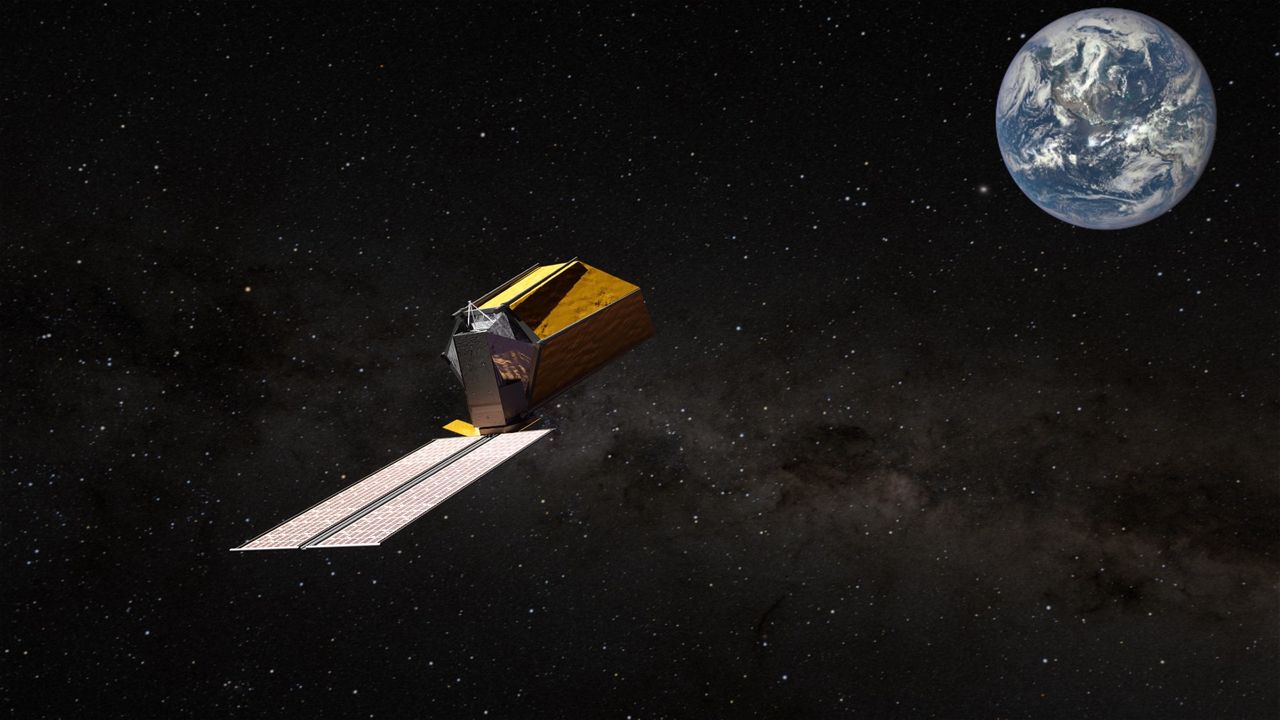
A new study published on arXiv has determined the minimum spectral resolution requirements for NASA's Habitable Worlds Observatory (HWO) to detect biosignatures on Earth-like exoplanets. The research modeled how HWO would observe Earth across different geological eras, finding that resolving powers of approximately 140 in visible light, 7 in ultraviolet, and 70 in near-infrared are needed to reliably identify biological signatures. These findings provide concrete engineering targets for a mission that, alongside the European Space Agency's proposed Large Interferometer For Exoplanets (LIFE), could represent humanity's first systematic search for life beyond Earth.
A study posted to the arXiv preprint server by a large international team has quantified the spectral resolution requirements for NASA's Habitable Worlds Observatory (HWO), a planned flagship space telescope designed to directly image Earth-like planets and analyze their atmospheres for biosignatures. The researchers simulated HWO observations of Earth across its geological history — from the oxygen-poor Archean era through the Proterozoic to the oxygen-rich Phanerozoic — generating synthetic spectra across resolving powers from 20 to 5,000 and running them through atmospheric retrieval algorithms. They found that detecting molecular oxygen requires a visible-light resolving power of about 140, ozone can be identified at an ultraviolet resolving power as low as 7, and a near-infrared resolving power of at least 40 — ideally around 70 — is needed to distinguish carbon dioxide from carbon monoxide and avoid misidentifying a volcanically active dead planet as a living one. The study also identified key engineering constraints: reducing detector dark current by roughly a factor of ten would be necessary to push oxygen detection significantly beyond baseline, and higher resolution for oxygen would approximately double the exposure time needed for water vapor detection. The authors note their absolute exposure time estimates carry an uncertainty of around 20 percent and caution that even confident detection of multiple biosignatures would not constitute definitive proof of life. HWO is being developed in parallel with ESA's proposed LIFE mission — a space-based mid-infrared nulling interferometer — which together are described as offering complementary and synergistic capabilities for characterizing potentially habitable worlds.
Limitations & open questions
The study models biosignature detection based on Earth's own atmospheric history, which assumes life elsewhere would produce similar spectral signatures; the limitations of this Earth-centric framework for detecting genuinely alien biochemistries are not fully addressed. Additionally, neither source specifies a projected launch date or confirmed budget for HWO, leaving the timeline for realizing these engineering targets unclear.
What different sources said
- arXiv astro-phCenter
Characterizing Earth analogs may require a moderate or high-resolution spectrograph
- Space.comCenter
NASA is building a new space telescope to search for life on nearby planets. What would it see on ancient Earth?
Related
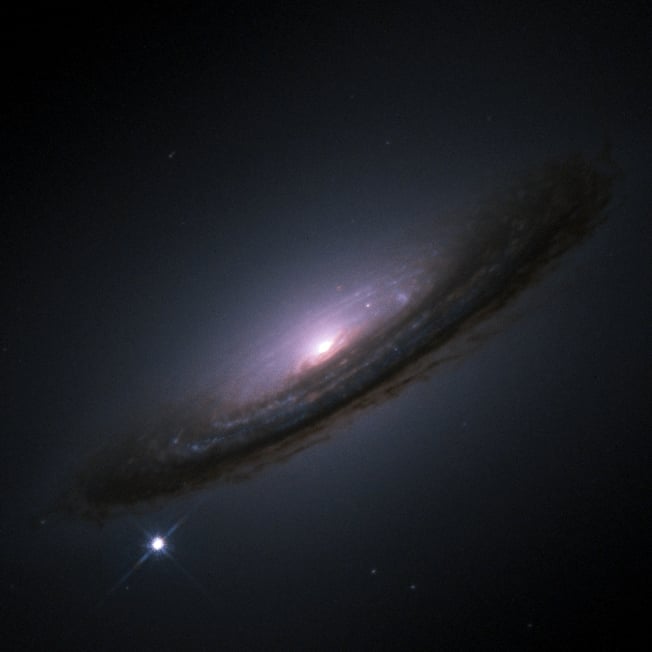
Nobel Laureates Rebut Study Claiming Universe's Expansion Is Slowing, Confirm Acceleration Continues
An international team of astrophysicists, including Nobel laureates Adam Riess and Brian Schmidt, has published a study in the Monthly Notices of the Royal Astronomical Society confirming that the universe's expansion is still accelerating. The rebuttal targets a late-2024 South Korean study that had claimed dark energy was weakening, a finding that would have overturned nearly three decades of cosmological understanding. The new study identifies two specific methodological errors in the earlier work, restoring confidence in the standard model of cosmic acceleration while leaving the deeper mystery of what dark energy actually is unresolved.

Study Finds Trees May Store Less Carbon Than Climate Models Predict
A new study published in Science Advances found that oak trees stop growing months before they stop photosynthesizing, meaning increased carbon uptake does not necessarily translate into more wood growth and long-term carbon storage. Researchers analyzed 137 sites across the US, finding that 26–36% of annual carbon uptake occurred after tree growth had already ceased, with drought and heat identified as key triggers for halting growth. The findings suggest that widely used climate models, which assume photosynthesis and growth are tightly linked, may be overestimating forests' future capacity to sequester carbon.
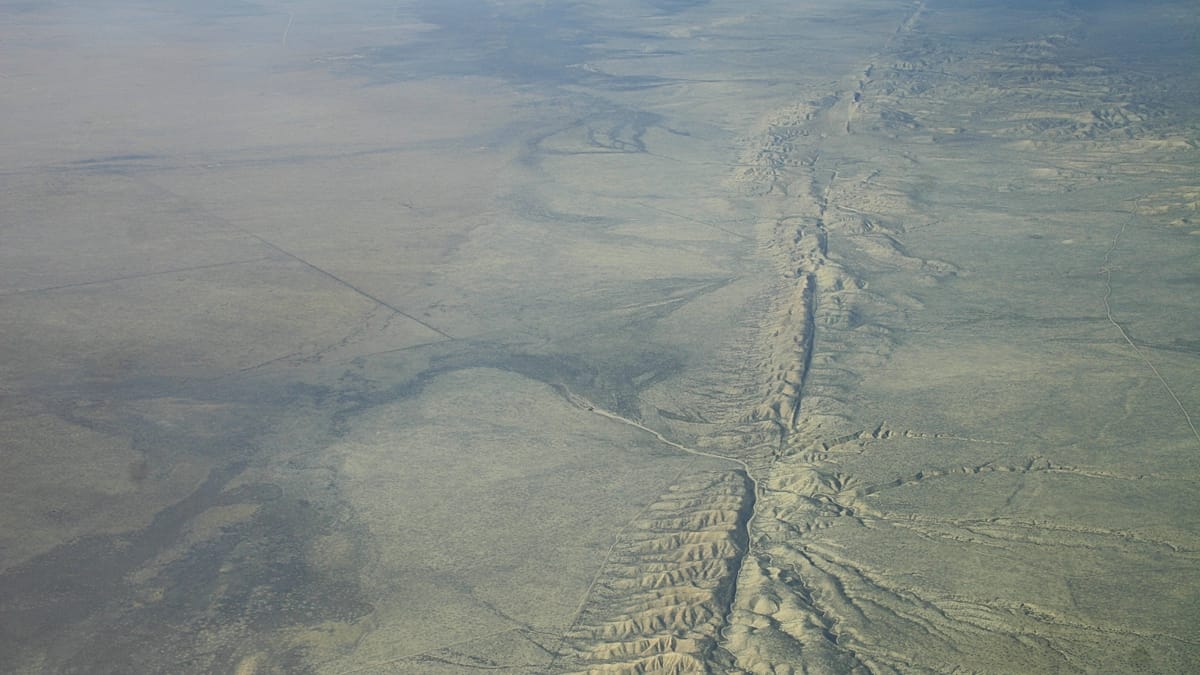
San Andreas Fault Stress Reaches Highest Level in 1,000 Years, Study Finds
A new peer-reviewed study finds that tectonic stress on Southern California's San Andreas and San Jacinto fault systems has reached its highest levels in at least 1,000 years, with the San Jacinto-Bernardino section measuring 3.6 megapascals. The research, led by the University of Hawaiʻi at Mānoa and published in the Journal of Geophysical Research: Solid Earth, used a computer model drawing on geological data including radiocarbon dating and tree-ring records to reconstruct a millennium of earthquake history. The findings cannot predict when a major earthquake will occur but are intended to improve hazard assessments, inform building codes, and guide emergency preparedness in a region home to millions.