NASA Captures Tyndall Glacier's Rapid Retreat in Southern Patagonia

An astronaut aboard the International Space Station captured images of Tyndall Glacier in southern Chile on May 10, 2026, showing ice fragments calved from its terminus floating on the expanding Lago Geikie. The glacier, part of the Southern Patagonian Icefield — the largest ice mass in the Southern Hemisphere outside Antarctica — has lost 2.2 kilometers in length since November 2022 and has been retreating since the end of the Little Ice Age roughly 150 years ago. The images highlight the ongoing acceleration of glacial retreat in Patagonia and demonstrate the value of orbital observations for monitoring remote glaciers.
On May 10, 2026, a member of the ISS Expedition 74 crew photographed Tyndall Glacier in southern Chile using a Nikon Z9 camera with a 560mm lens, capturing icebergs calved from the glacier's terminus drifting across Lago Geikie. Glaciologist Mauri Pelto of Nichols College noted that austral autumn 2026 was a period of active, if incremental, calving retreat at Tyndall and several neighboring glaciers. The glacier has shed 2.2 kilometers of length since November 2022, following roughly a decade of limited retreat but significant thinning, with a major calving event in March–April 2023 marking a turning point. Lago Geikie itself only formed around 1940 as the glacier retreated, and has been expanding ever since; a separate eastern outlet into Lago Tyndall was severed entirely by 2010 due to ice thinning. Pelto used shadow data from the ISS photograph to estimate that the glacier's ice cliff stands 30–40 meters above the lake surface. The heavily crevassed calving front produces many smaller icebergs rather than large tabular ones, and Pelto forecasts a burst of iceberg production in the coming austral fall. The glacier's retreat has also exposed ichthyosaur-bearing bedrock along its eastern edge.
Limitations & open questions
The articles do not quantify the total volume or area loss of Tyndall Glacier over its full retreat history, nor do they address how its rate of retreat compares to regional or global glacier loss averages. The role of specific climate drivers — such as changes in precipitation, sea surface temperatures, or regional warming trends — in accelerating the recent calving is not discussed.
What different sources said
Related
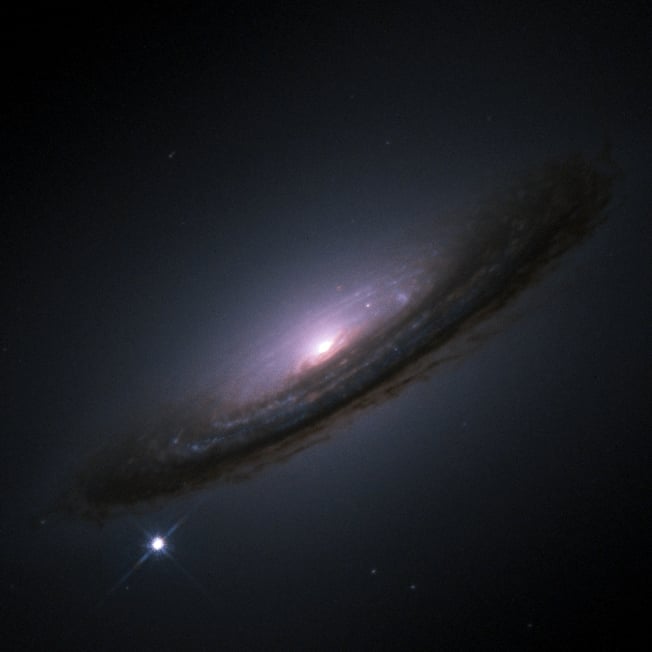
Nobel Laureates Rebut Study Claiming Universe's Expansion Is Slowing, Confirm Acceleration Continues
An international team of astrophysicists, including Nobel laureates Adam Riess and Brian Schmidt, has published a study in the Monthly Notices of the Royal Astronomical Society confirming that the universe's expansion is still accelerating. The rebuttal targets a late-2024 South Korean study that had claimed dark energy was weakening, a finding that would have overturned nearly three decades of cosmological understanding. The new study identifies two specific methodological errors in the earlier work, restoring confidence in the standard model of cosmic acceleration while leaving the deeper mystery of what dark energy actually is unresolved.
Study Finds Trees May Store Less Carbon Than Climate Models Predict
A new study published in Science Advances found that oak trees stop growing months before they stop photosynthesizing, meaning increased carbon uptake does not necessarily translate into more wood growth and long-term carbon storage. Researchers analyzed 137 sites across the US, finding that 26–36% of annual carbon uptake occurred after tree growth had already ceased, with drought and heat identified as key triggers for halting growth. The findings suggest that widely used climate models, which assume photosynthesis and growth are tightly linked, may be overestimating forests' future capacity to sequester carbon.
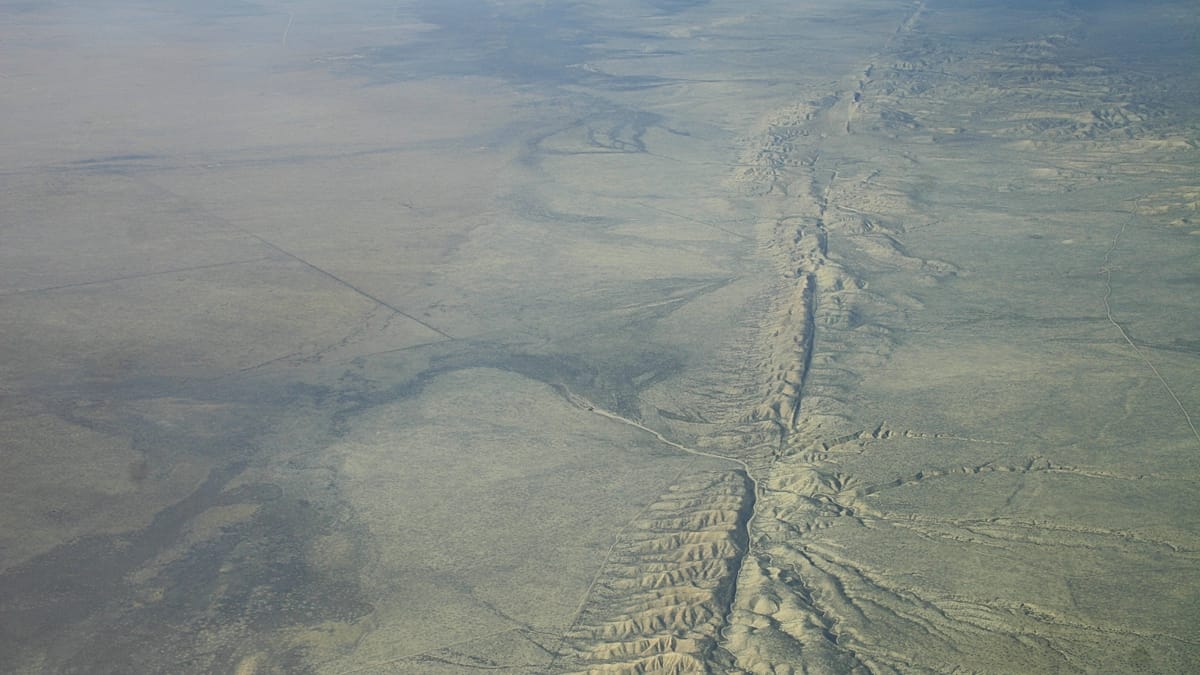
San Andreas Fault Stress Reaches Highest Level in 1,000 Years, Study Finds
A new peer-reviewed study finds that tectonic stress on Southern California's San Andreas and San Jacinto fault systems has reached its highest levels in at least 1,000 years, with the San Jacinto-Bernardino section measuring 3.6 megapascals. The research, led by the University of Hawaiʻi at Mānoa and published in the Journal of Geophysical Research: Solid Earth, used a computer model drawing on geological data including radiocarbon dating and tree-ring records to reconstruct a millennium of earthquake history. The findings cannot predict when a major earthquake will occur but are intended to improve hazard assessments, inform building codes, and guide emergency preparedness in a region home to millions.