MIT-Developed Dual-Mode Propulsion System to Undergo In-Space Testing
MIT researchers have demonstrated that a single propellant, ASCENT, can power both chemical and electrospray electric thrusters on small satellites, eliminating the need for separate fuel systems. The finding, published in the Journal of Propulsion and Power, builds on U.S. Air Force fuel research and will be tested in space aboard NASA's Green Propulsion Dual Mode CubeSat, scheduled to launch no earlier than November 2025. The technology could significantly expand the capabilities of small satellites, potentially enabling missions as far as Mars or the asteroid belt.
Engineers at MIT's Space Propulsion Laboratory have shown that ASCENT (Advanced Spacecraft Energetic Non-Toxic Propellant), an ionic liquid fuel originally developed by the U.S. Air Force as a safer alternative to hydrazine, can successfully power miniature electrospray thrusters in addition to the chemical thrusters it was designed for. Ground tests conducted on a magnetic levitation platform inside a vacuum chamber demonstrated that ASCENT performed comparably to conventional ionic liquid propellants, generating enough thrust to spin a CubeSat and operating continuously for up to 100 hours. The key advantage is that a single shared fuel tank could replace the separate propellant systems previously required for chemical and electric propulsion, reducing weight and complexity on small spacecraft. NASA's Green Propulsion Dual Mode mission — a briefcase-sized CubeSat carrying one chemical thruster and four electrospray thrusters, all fed from one tank — will provide the first in-space validation of this concept when it launches in November. If successful, the technology could enable CubeSats to make long, fuel-efficient interplanetary journeys using electric thrusters, then switch to chemical thrusters for rapid maneuvers near a destination such as Mars or the asteroid belt. Closer to Earth, the dual-mode system could also allow satellite constellations to reposition quickly in response to fast-moving weather events.
Limitations & open questions
The study does not address the long-term degradation of ASCENT in electrospray thrusters compared to conventional ionic liquid propellants, nor does it quantify the specific impulse or efficiency trade-offs between ASCENT and standard electrospray fuels under extended operation.
What different sources said
- Space.comCenter
Thruster breakthrough? New 2-in-1 propulsion system is about to get an in-space test
- Science DailyCenter
MIT’s new spacecraft engine could send tiny satellites to Mars
Related
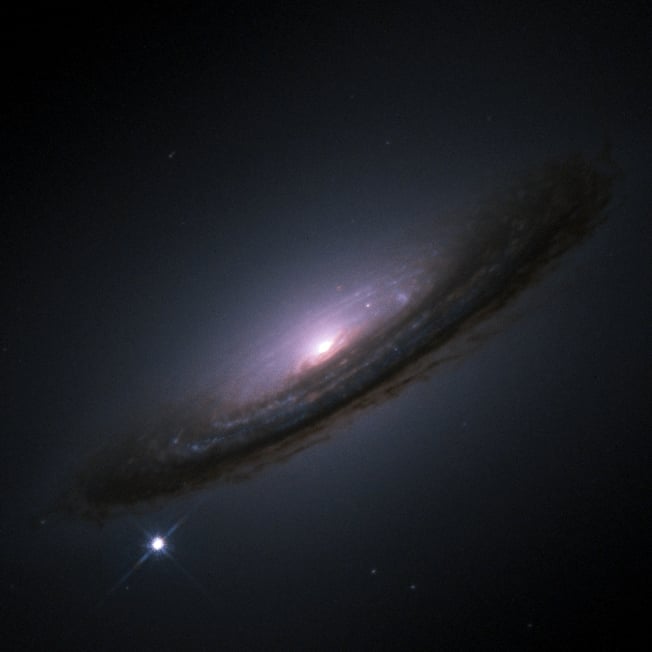
Nobel Laureates Rebut Study Claiming Universe's Expansion Is Slowing, Confirm Acceleration Continues
An international team of astrophysicists, including Nobel laureates Adam Riess and Brian Schmidt, has published a study in the Monthly Notices of the Royal Astronomical Society confirming that the universe's expansion is still accelerating. The rebuttal targets a late-2024 South Korean study that had claimed dark energy was weakening, a finding that would have overturned nearly three decades of cosmological understanding. The new study identifies two specific methodological errors in the earlier work, restoring confidence in the standard model of cosmic acceleration while leaving the deeper mystery of what dark energy actually is unresolved.

Study Finds Trees May Store Less Carbon Than Climate Models Predict
A new study published in Science Advances found that oak trees stop growing months before they stop photosynthesizing, meaning increased carbon uptake does not necessarily translate into more wood growth and long-term carbon storage. Researchers analyzed 137 sites across the US, finding that 26–36% of annual carbon uptake occurred after tree growth had already ceased, with drought and heat identified as key triggers for halting growth. The findings suggest that widely used climate models, which assume photosynthesis and growth are tightly linked, may be overestimating forests' future capacity to sequester carbon.
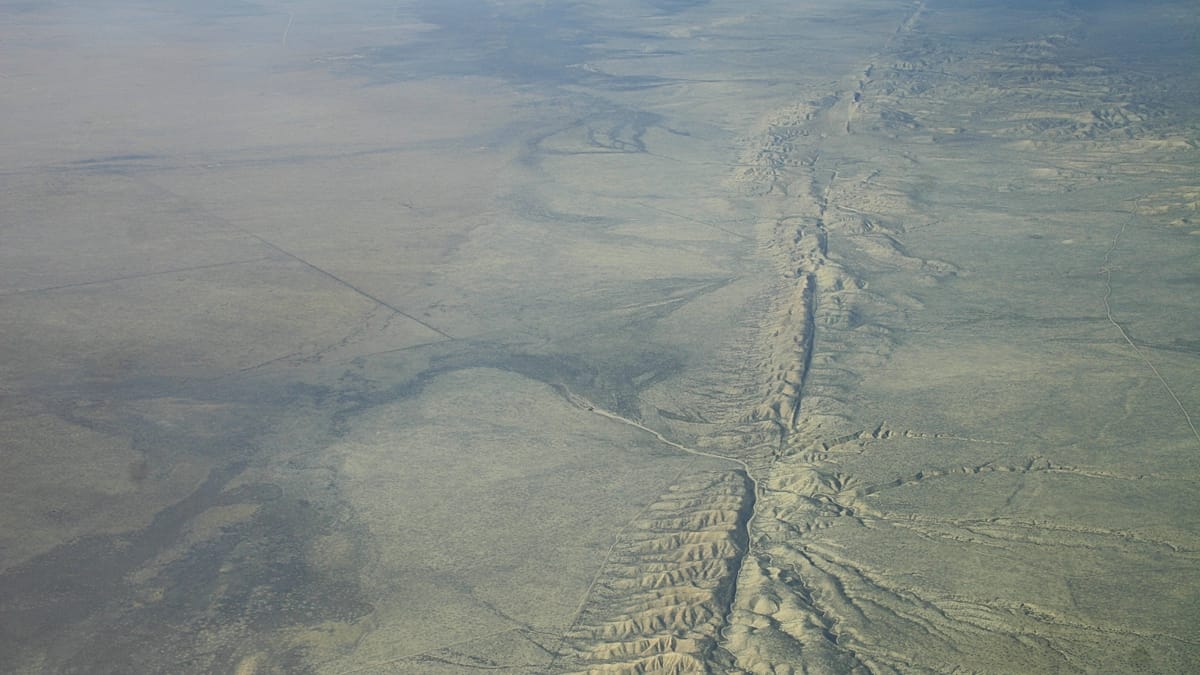
San Andreas Fault Stress Reaches Highest Level in 1,000 Years, Study Finds
A new peer-reviewed study finds that tectonic stress on Southern California's San Andreas and San Jacinto fault systems has reached its highest levels in at least 1,000 years, with the San Jacinto-Bernardino section measuring 3.6 megapascals. The research, led by the University of Hawaiʻi at Mānoa and published in the Journal of Geophysical Research: Solid Earth, used a computer model drawing on geological data including radiocarbon dating and tree-ring records to reconstruct a millennium of earthquake history. The findings cannot predict when a major earthquake will occur but are intended to improve hazard assessments, inform building codes, and guide emergency preparedness in a region home to millions.