Laser Phase Plate Technology Achieves Sharper Cryo-EM Protein Images After 15 Years of Development
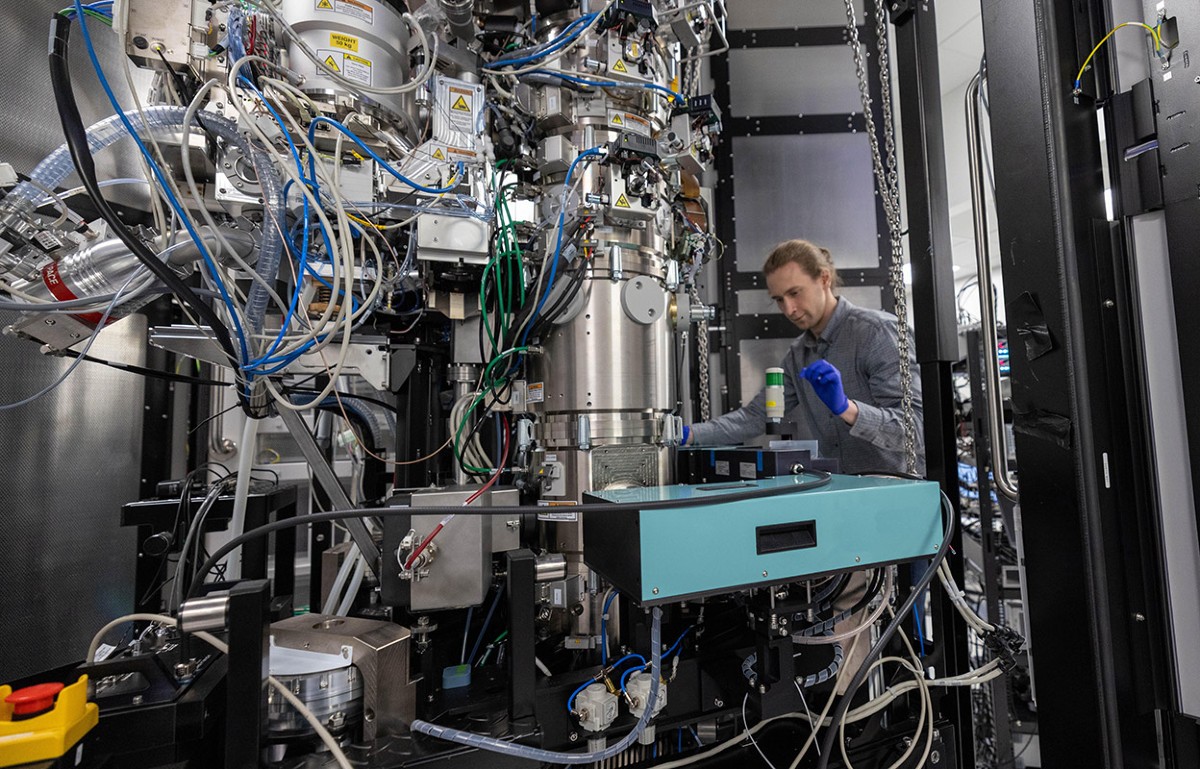
UC Berkeley physicists have successfully integrated a laser phase plate into a cryo-electron microscope, producing significantly sharper images of small proteins including hemoglobin, as reported in a June 11 Science publication. The technology adapts a phase-contrast principle — first applied to light microscopy in the 1930s and awarded a Nobel Prize in 1953 — to electron microscopy by using an extraordinarily intense focused laser to shift the phase of non-scattered electrons and boost image contrast. The advance could extend cryo-EM to the roughly 90% of human proteins currently too small for the technique to resolve clearly, with major implications for drug discovery and cellular biology.
A team led by UC Berkeley physicist Holger Müller has demonstrated a working laser phase plate (LPP) for cryoelectron microscopy (cryo-EM), publishing results in Science on June 11, 2026, alongside a separate preprint from Biohub describing a complementary dual-laser design. The laser phase plate works by focusing an extraordinarily intense continuous-wave laser — amplified to roughly 75 kilowatts by bouncing more than 10,000 times between ultra-smooth mirrored surfaces — onto the electron beam, selectively shifting the phase of non-scattered background electrons and thereby boosting contrast for small biological molecules. Side-by-side images of nanoparticles and hemoglobin with the phase plate on versus off show visibly sharper, higher-contrast results, and 3D reconstructed density maps confirm improved structural resolution. Current cryo-EM struggles with proteins smaller than about 70 kilodaltons — encompassing roughly 90% of the human proteome — while the LPP has already enabled imaging down to 50 kilodaltons, with the team targeting 17 kilodaltons in future work. The technology is expected to be especially transformative for cryoelectron tomography (cryo-ET), which assembles 3D images of proteins within their native cellular environment, a task that demands dramatic contrast improvements to distinguish individual molecules amid the crowded interior of a cell. Both the Berkeley group and Biohub are collaborating with Thermo Fisher Scientific, the dominant manufacturer of cryo-EM instruments, to develop next-generation systems. The development took 15 years from initial proposal to working demonstration, overcoming widespread skepticism in the structural biology community about whether the required laser intensities could ever be achieved.
Limitations & open questions
The study's own limitations include that imaging down to 17 kilodaltons — the stated near-term goal — has not yet been demonstrated; current results reach 50 kilodaltons, still above the threshold needed to cover the full human proteome. It is also unclear how quickly or affordably the laser phase plate can be integrated into commercial cryo-EM instruments at scale, or whether the ultra-precise mirror components can be manufactured reliably outside a specialized research setting.
How coverage differed
Both Phys.org and Nature News cover the story factually and neutrally. Phys.org provides more technical depth and direct quotes from the researchers, while Nature News emphasizes the long-standing community skepticism and the broader debate over feasibility, framing the publication as a vindication of the optimists. Neither outlet shows meaningful political or ideological framing differences.
What different sources said
- Phys.orgCenter
Physicists introduce phase contrast to electron microscopy, delivering sharper images of our body's tiniest proteins
- Nature NewsCenter
An innovative technology boosts image quality for protein structures
Related
Nobel Laureates Rebut Study Claiming Universe's Expansion Is Slowing, Confirm Acceleration Continues
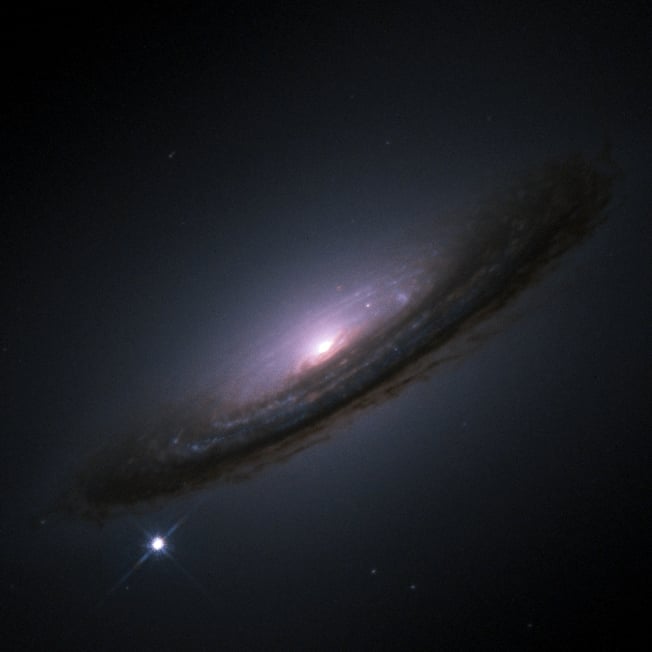
An international team of astrophysicists, including Nobel laureates Adam Riess and Brian Schmidt, has published a study in the Monthly Notices of the Royal Astronomical Society confirming that the universe's expansion is still accelerating. The rebuttal targets a late-2024 South Korean study that had claimed dark energy was weakening, a finding that would have overturned nearly three decades of cosmological understanding. The new study identifies two specific methodological errors in the earlier work, restoring confidence in the standard model of cosmic acceleration while leaving the deeper mystery of what dark energy actually is unresolved.

Study Finds Trees May Store Less Carbon Than Climate Models Predict
A new study published in Science Advances found that oak trees stop growing months before they stop photosynthesizing, meaning increased carbon uptake does not necessarily translate into more wood growth and long-term carbon storage. Researchers analyzed 137 sites across the US, finding that 26–36% of annual carbon uptake occurred after tree growth had already ceased, with drought and heat identified as key triggers for halting growth. The findings suggest that widely used climate models, which assume photosynthesis and growth are tightly linked, may be overestimating forests' future capacity to sequester carbon.
San Andreas Fault Stress Reaches Highest Level in 1,000 Years, Study Finds
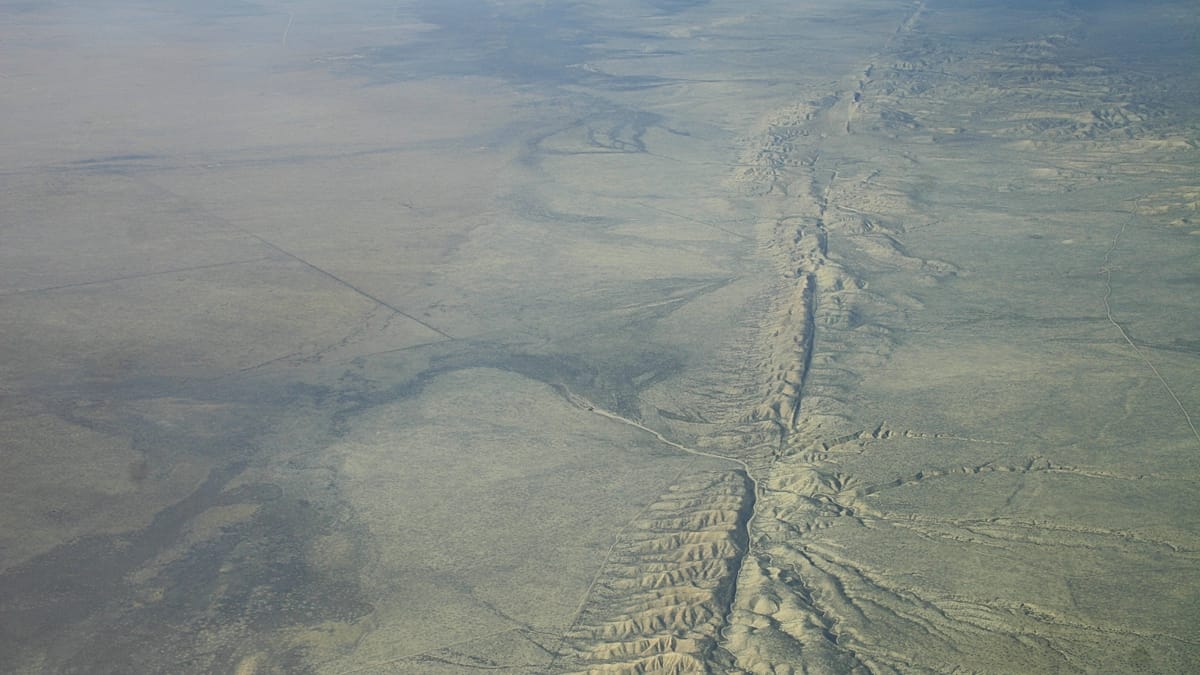
A new peer-reviewed study finds that tectonic stress on Southern California's San Andreas and San Jacinto fault systems has reached its highest levels in at least 1,000 years, with the San Jacinto-Bernardino section measuring 3.6 megapascals. The research, led by the University of Hawaiʻi at Mānoa and published in the Journal of Geophysical Research: Solid Earth, used a computer model drawing on geological data including radiocarbon dating and tree-ring records to reconstruct a millennium of earthquake history. The findings cannot predict when a major earthquake will occur but are intended to improve hazard assessments, inform building codes, and guide emergency preparedness in a region home to millions.