Lab-grown 'T. rex leather' handbag unveiled in Amsterdam, but scientists question dinosaur authenticity
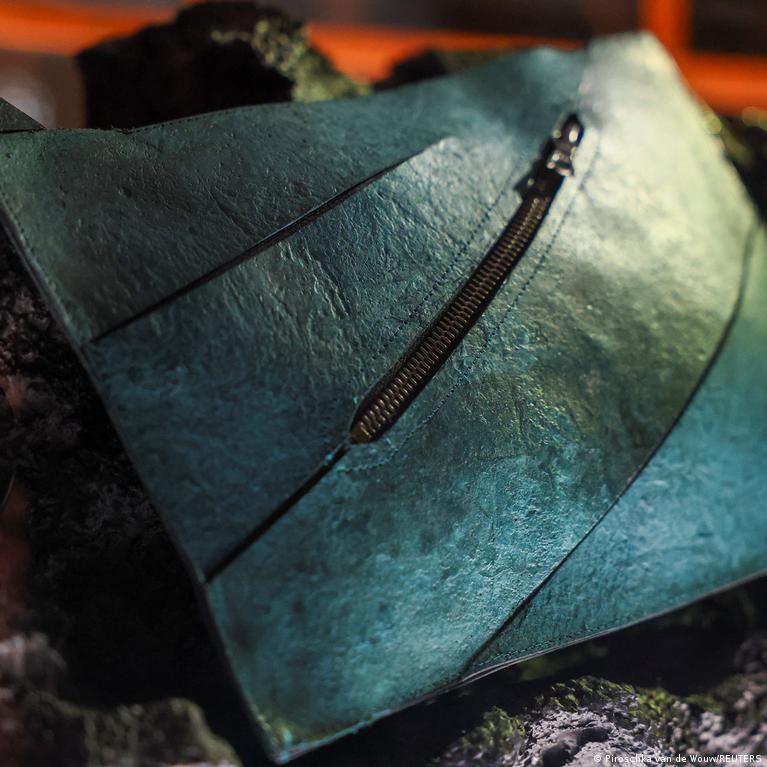
A handbag made from purported lab-grown Tyrannosaurus rex leather failed to sell at Paris auction house Drouot on June 11, with bids reaching only around $150,000 against an expected price of over $500,000. The teal clutch, designed by Polish label Enfin Leve and unveiled at Amsterdam's Artis Zoo Museum in April, was created using collagen traces from a T. rex femur found in Montana, reconstructed with AI and largely based on chicken proteins. The auction result raises questions about market appetite for high-concept biotech luxury goods, while scientists debate whether the material contains any genuine dinosaur-derived content at all.
The world's first handbag marketed as 'T. rex leather' went unsold at the Hôtel Drouot auction house in Paris on June 11, after bids fell well short of the €300,000–€500,000 ($347,000–$578,000) estimate set by auctioneer Alexandre Giquello. The teal clutch bag, designed by Polish fashion label Enfin Leve and developed with The Organoid Company, Lab-Grown Leather Ltd., and ad agency VML, was unveiled in April alongside a dinosaur skeleton at Amsterdam's Artis Zoo Museum. According to its creators, the leather was produced by extracting collagen traces from a T. rex femur discovered in Montana roughly 25 years ago, using phylogenetic analysis and AI to reconstruct a protein sequence, inserting that sequence into a bioleather cell line, and sustainably tanning the resulting skin — a nine-step process far more complex than conventional bovine leather production. However, independent scientists have raised serious doubts: paleoproteomics researcher Jan Dekker of the University of Turin told Deutsche Welle that proteins are unlikely to survive 66 million years, and that even if the original fragments were genuine, approximately 90% of the reconstructed protein sequence would derive from chicken rather than dinosaur. Professor Che Connon of Newcastle University, who led the tissue engineering work, has pushed back against skeptics, insisting the process is scientifically valid and that all steps have been proven. The auction's failure to meet its reserve suggests the luxury market was not yet convinced of the bag's value, despite the project's ambition to break new ground in biotech fashion.
Limitations & open questions
The identity and provenance of the specific Montana T. rex fossil used — and whether its collagen fragments have been independently verified as dinosaur-derived in peer-reviewed literature — is not confirmed across any of the sources.
How coverage differed
The New York Post framed the auction prospectively and enthusiastically, emphasizing the bag's novelty and the lead researcher's confidence while treating scientific skepticism as a minor footnote. Deutsche Welle, by contrast, centered its coverage on expert doubts about the material's authenticity, quoting a specialist who called it 'more chicken than anything else,' offering a notably more cautious scientific assessment.
What different sources said
- South China Morning PostCenter
Bag made from ‘T. rex leather’ fails to sell at Paris auction
- The Straits TimesCenter
First leather bag made from T-Rex cells fails to sell at Paris auction
- Deutsche WelleCenter
Lab-grown Tyrannosaurus leather: More chicken than dinosaur?
- New York PostRight
Bona fide T. rex leather purse is going up for auction — and it could fetch $500K
Related
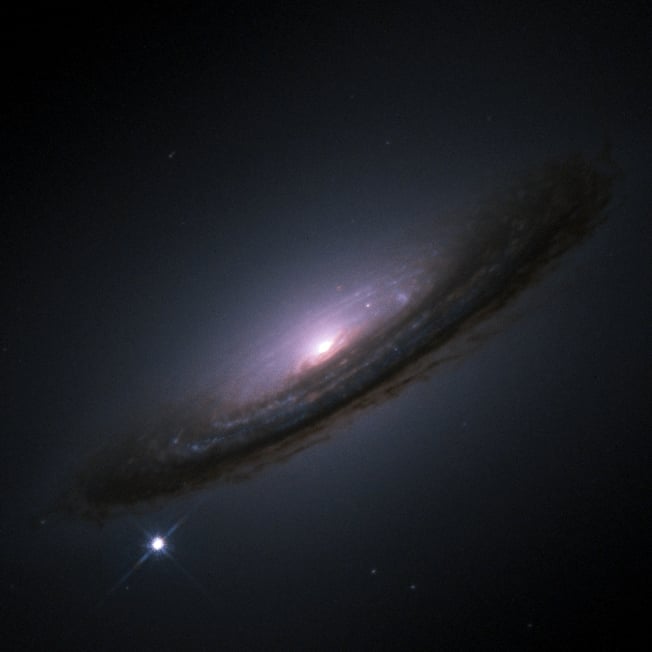
Nobel Laureates Rebut Study Claiming Universe's Expansion Is Slowing, Confirm Acceleration Continues
An international team of astrophysicists, including Nobel laureates Adam Riess and Brian Schmidt, has published a study in the Monthly Notices of the Royal Astronomical Society confirming that the universe's expansion is still accelerating. The rebuttal targets a late-2024 South Korean study that had claimed dark energy was weakening, a finding that would have overturned nearly three decades of cosmological understanding. The new study identifies two specific methodological errors in the earlier work, restoring confidence in the standard model of cosmic acceleration while leaving the deeper mystery of what dark energy actually is unresolved.
Study Finds Trees May Store Less Carbon Than Climate Models Predict
A new study published in Science Advances found that oak trees stop growing months before they stop photosynthesizing, meaning increased carbon uptake does not necessarily translate into more wood growth and long-term carbon storage. Researchers analyzed 137 sites across the US, finding that 26–36% of annual carbon uptake occurred after tree growth had already ceased, with drought and heat identified as key triggers for halting growth. The findings suggest that widely used climate models, which assume photosynthesis and growth are tightly linked, may be overestimating forests' future capacity to sequester carbon.
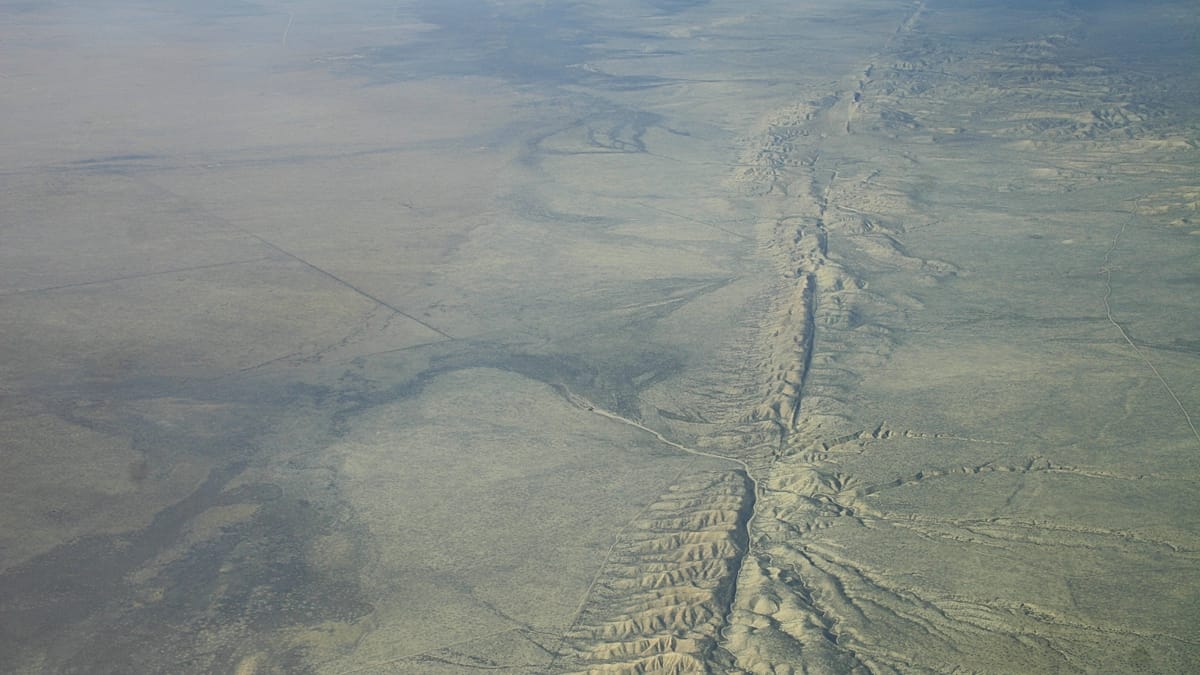
San Andreas Fault Stress Reaches Highest Level in 1,000 Years, Study Finds
A new peer-reviewed study finds that tectonic stress on Southern California's San Andreas and San Jacinto fault systems has reached its highest levels in at least 1,000 years, with the San Jacinto-Bernardino section measuring 3.6 megapascals. The research, led by the University of Hawaiʻi at Mānoa and published in the Journal of Geophysical Research: Solid Earth, used a computer model drawing on geological data including radiocarbon dating and tree-ring records to reconstruct a millennium of earthquake history. The findings cannot predict when a major earthquake will occur but are intended to improve hazard assessments, inform building codes, and guide emergency preparedness in a region home to millions.