Kansas Boy Discovers 15-Foot Tylosaurus Fossil During Geology Field Trip

Corbin Bullard, then 11, discovered a nearly complete 15-foot Tylosaurus skeleton protruding from rock at a Kansas quarry during a September 2025 Sedgwick County 4-H Geology Club field trip. The marine reptile, an apex predator of the Cretaceous Period, has been dated to the Smoky Hill Chalk formation and is approximately 85 million years old. The find is notable both for its completeness—including skull and most of the skeleton—and for being made by a child with no prior expectation of a major discovery.
Corbin Bullard spotted several large vertebrae protruding from the ground at a quarry during a geology club outing in September 2025, when he was 11 years old. Over three subsequent excavation trips, each involving a three-hour drive each way, Bullard and fellow club members carefully uncovered nearly the entire skeleton of a Tylosaurus—a massive marine reptile that lived roughly 82 to 87 million years ago during the Cretaceous Period. The fossil, which measures more than 15 feet in length, includes the animal's skull and most of its skeleton, making it an unusually complete specimen. Photos from the site show the articulated vertebral column stretching well beyond the boy's body length, and the skull—laid out with a 30 cm ruler for scale—appears to span roughly 60 to 70 centimeters with large conical teeth visible. The specimen has been attributed to the Smoky Hill Chalk formation, a fossil-rich geological layer spanning parts of Kansas. Bullard, now 12 and preparing to enter seventh grade, has named the mosasaur 'Harry' and has been giving public presentations about the discovery; he plans to display the skull at the Sedgwick County Fair in July. His mother credited the 4-H geology club's access to permitted dig sites and expert guidance as essential to making the find possible.
Limitations & open questions
It is unclear which institution or paleontologist has formally assessed or will curate the fossil long-term, and whether any peer-reviewed documentation of the specimen is planned. The legal ownership status of the fossil—given it was found on a quarry property—is not addressed in any source.
What different sources said
- Phys.orgCenter
Fossil discovery shows the interaction between giant marine reptiles
- New York PostRight
Kansas boy discovers 15-foot marine reptile fossil from 85 million years ago during geology field trip
- Yahoo FinanceCenter
Photos: Boy discovers rare, prehistoric fossil during field trip in Kansas
Related

Nobel Laureates Rebut Study Claiming Universe's Expansion Is Slowing, Confirm Acceleration Continues
An international team of astrophysicists, including Nobel laureates Adam Riess and Brian Schmidt, has published a study in the Monthly Notices of the Royal Astronomical Society confirming that the universe's expansion is still accelerating. The rebuttal targets a late-2024 South Korean study that had claimed dark energy was weakening, a finding that would have overturned nearly three decades of cosmological understanding. The new study identifies two specific methodological errors in the earlier work, restoring confidence in the standard model of cosmic acceleration while leaving the deeper mystery of what dark energy actually is unresolved.
Study Finds Trees May Store Less Carbon Than Climate Models Predict
A new study published in Science Advances found that oak trees stop growing months before they stop photosynthesizing, meaning increased carbon uptake does not necessarily translate into more wood growth and long-term carbon storage. Researchers analyzed 137 sites across the US, finding that 26–36% of annual carbon uptake occurred after tree growth had already ceased, with drought and heat identified as key triggers for halting growth. The findings suggest that widely used climate models, which assume photosynthesis and growth are tightly linked, may be overestimating forests' future capacity to sequester carbon.
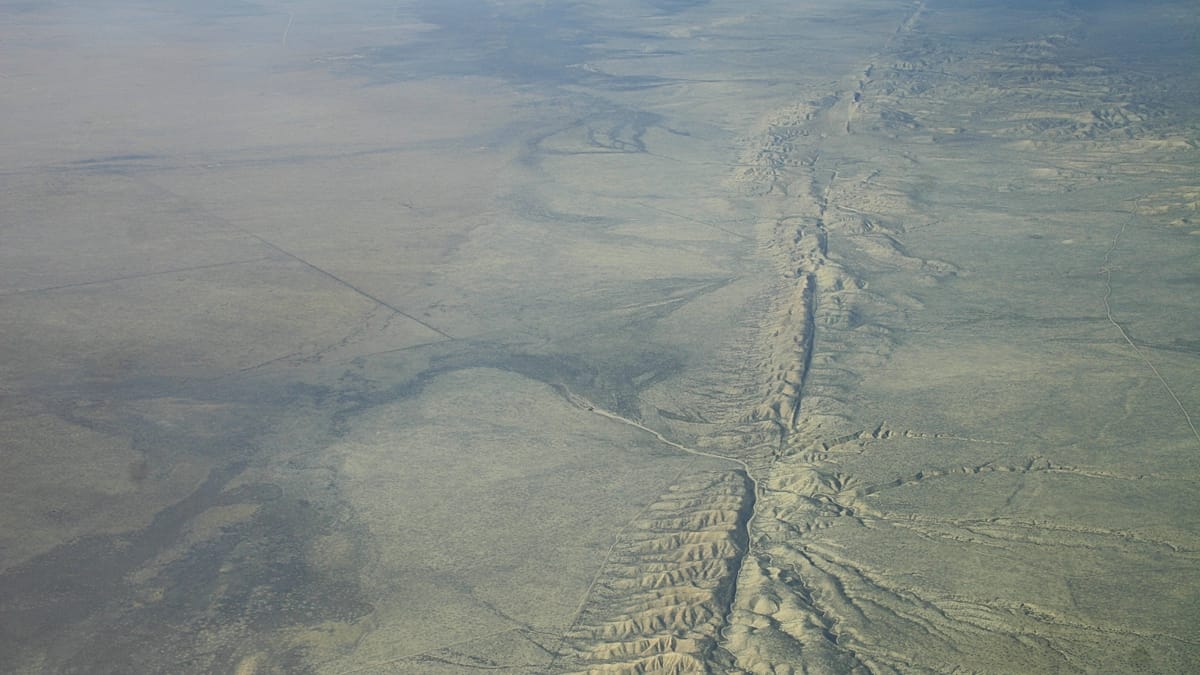
San Andreas Fault Stress Reaches Highest Level in 1,000 Years, Study Finds
A new peer-reviewed study finds that tectonic stress on Southern California's San Andreas and San Jacinto fault systems has reached its highest levels in at least 1,000 years, with the San Jacinto-Bernardino section measuring 3.6 megapascals. The research, led by the University of Hawaiʻi at Mānoa and published in the Journal of Geophysical Research: Solid Earth, used a computer model drawing on geological data including radiocarbon dating and tree-ring records to reconstruct a millennium of earthquake history. The findings cannot predict when a major earthquake will occur but are intended to improve hazard assessments, inform building codes, and guide emergency preparedness in a region home to millions.