Jupiter and Venus Reach Close Conjunction in June 2026, Creating Spectacular Celestial Display
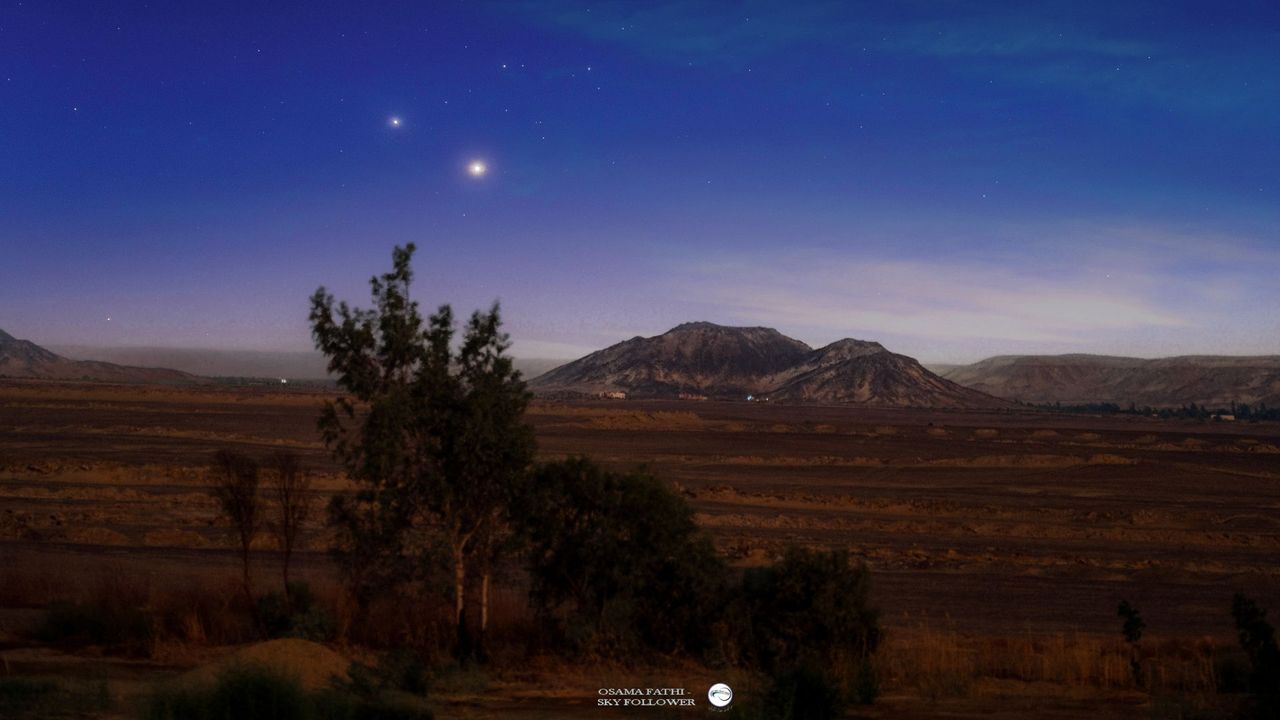
Jupiter and Venus reached their closest approach — within about 1.6 degrees of each other — in the western twilight sky on June 8–9, 2026, drawing crowds and astrophotographers around the globe. The event, occurring in the constellation Gemini, was one of the most visually striking planetary conjunctions in recent years, with Mercury also faintly visible nearby. Beginning June 11, Mercury is set to join Venus and Jupiter in a five-night 'planet parade' visible to the naked eye after sunset.
The Venus-Jupiter conjunction of June 8–9, 2026 brought the two brightest planets in the night sky within approximately 1.6 degrees of each other in the constellation Gemini, creating a widely photographed celestial spectacle visible from every inhabited continent. Astrophotographers captured the pairing above landmarks ranging from the ancient Avebury stone circles in the UK and the Golden Gate Bridge in San Francisco to the skylines of Kuwait City, Skopje, and Shenzhen. In Lucknow, India, the Indira Gandhi Planetarium set up telescopes and astrophotography stations, drawing around 2,500 visitors who also observed Jupiter's four Galilean moons — Io, Europa, Ganymede, and Callisto. Mercury was also faintly visible lower on the horizon throughout the event, and the waning crescent moon posed no significant interference with viewing. According to NASA, Mercury will formally join Venus and Jupiter in a 'planet parade' visible in the western sky from June 11 through June 15, with the best viewing window being 30 to 45 minutes after local sunset. Observers with telescopes could also see Venus as a gibbous disk at roughly 80 percent illumination and Mercury at approximately a half-moon phase. A similarly close Venus-Jupiter conjunction is not expected until November 10, 2028, when the planets will be separated by about 0.8 degrees.
How coverage differed
All five sources covered the event neutrally and celebratorily; Space.com and EarthSky focused on community astrophotography submissions, the Times of India emphasized local public engagement in Lucknow, and Yahoo Finance and Mashable framed the story around the upcoming Mercury-inclusive planet parade, but none showed meaningful ideological or framing divergence.
What different sources said
- Space.comCenter
Jupiter and Venus looked spectacular in this week's planetary conjunction. Here are our favorite photos
- Yahoo FinanceCenter
Mercury, Venus, Jupiter to form 5-night planet parade. When to look up
- EarthSkyCenter
Venus-Jupiter conjunction 2026. Wow! Best photos here
- Times of IndiaCenter
Eyes on sky witness Jupiter, Venus rendezvous
- Mashable IndiaCenter
Mercury Venus & Jupiter In Planetary Parade Tonight; Here's How To Catch The Mini Alignment
Related
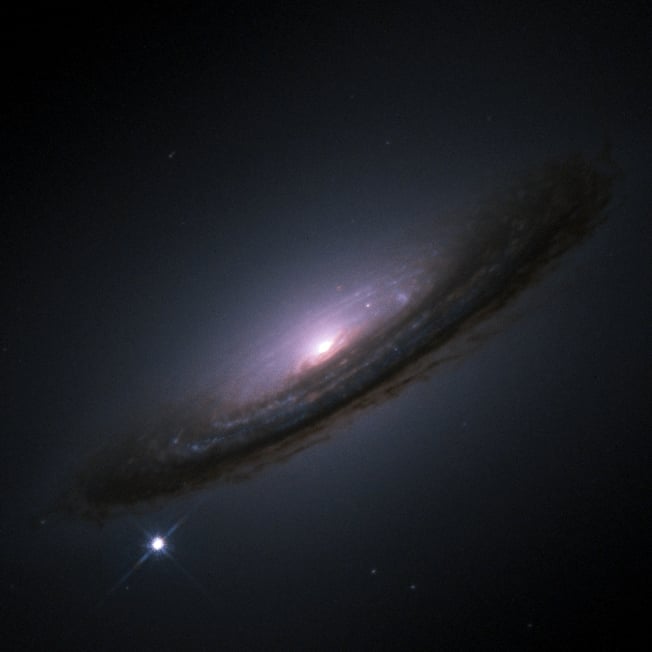
Nobel Laureates Rebut Study Claiming Universe's Expansion Is Slowing, Confirm Acceleration Continues
An international team of astrophysicists, including Nobel laureates Adam Riess and Brian Schmidt, has published a study in the Monthly Notices of the Royal Astronomical Society confirming that the universe's expansion is still accelerating. The rebuttal targets a late-2024 South Korean study that had claimed dark energy was weakening, a finding that would have overturned nearly three decades of cosmological understanding. The new study identifies two specific methodological errors in the earlier work, restoring confidence in the standard model of cosmic acceleration while leaving the deeper mystery of what dark energy actually is unresolved.
Study Finds Trees May Store Less Carbon Than Climate Models Predict
A new study published in Science Advances found that oak trees stop growing months before they stop photosynthesizing, meaning increased carbon uptake does not necessarily translate into more wood growth and long-term carbon storage. Researchers analyzed 137 sites across the US, finding that 26–36% of annual carbon uptake occurred after tree growth had already ceased, with drought and heat identified as key triggers for halting growth. The findings suggest that widely used climate models, which assume photosynthesis and growth are tightly linked, may be overestimating forests' future capacity to sequester carbon.
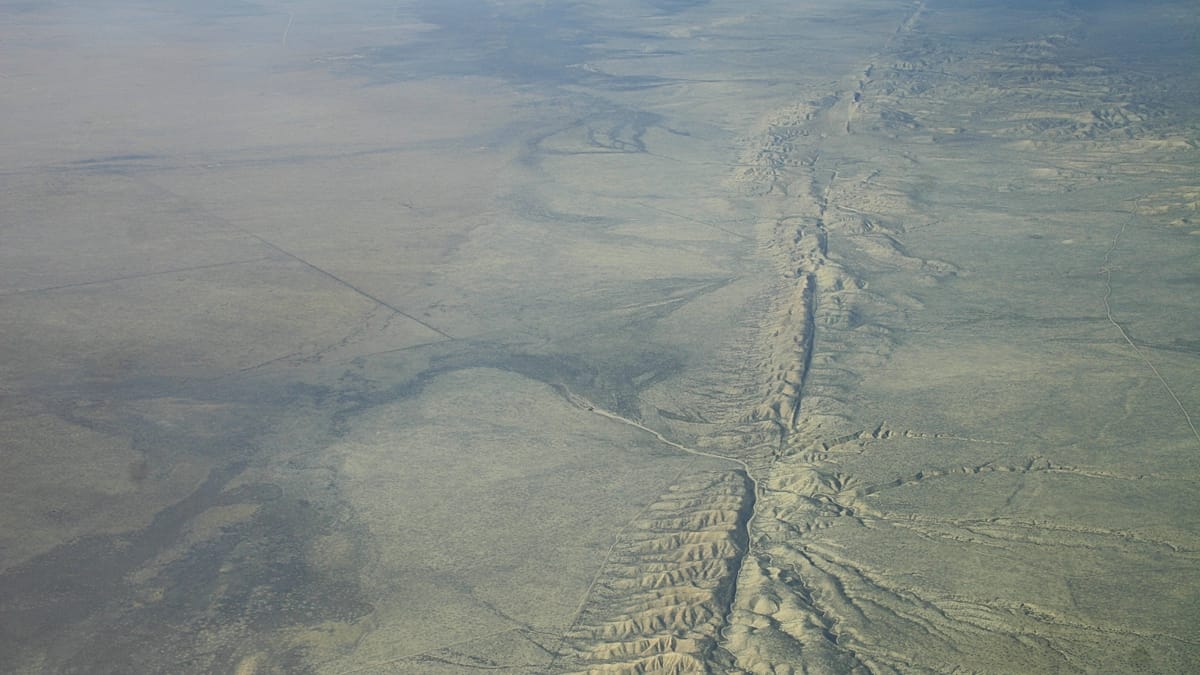
San Andreas Fault Stress Reaches Highest Level in 1,000 Years, Study Finds
A new peer-reviewed study finds that tectonic stress on Southern California's San Andreas and San Jacinto fault systems has reached its highest levels in at least 1,000 years, with the San Jacinto-Bernardino section measuring 3.6 megapascals. The research, led by the University of Hawaiʻi at Mānoa and published in the Journal of Geophysical Research: Solid Earth, used a computer model drawing on geological data including radiocarbon dating and tree-ring records to reconstruct a millennium of earthquake history. The findings cannot predict when a major earthquake will occur but are intended to improve hazard assessments, inform building codes, and guide emergency preparedness in a region home to millions.