Japan's SLIM Moon Lander Crash Investigated by Experimental Ball-Shaped Rover
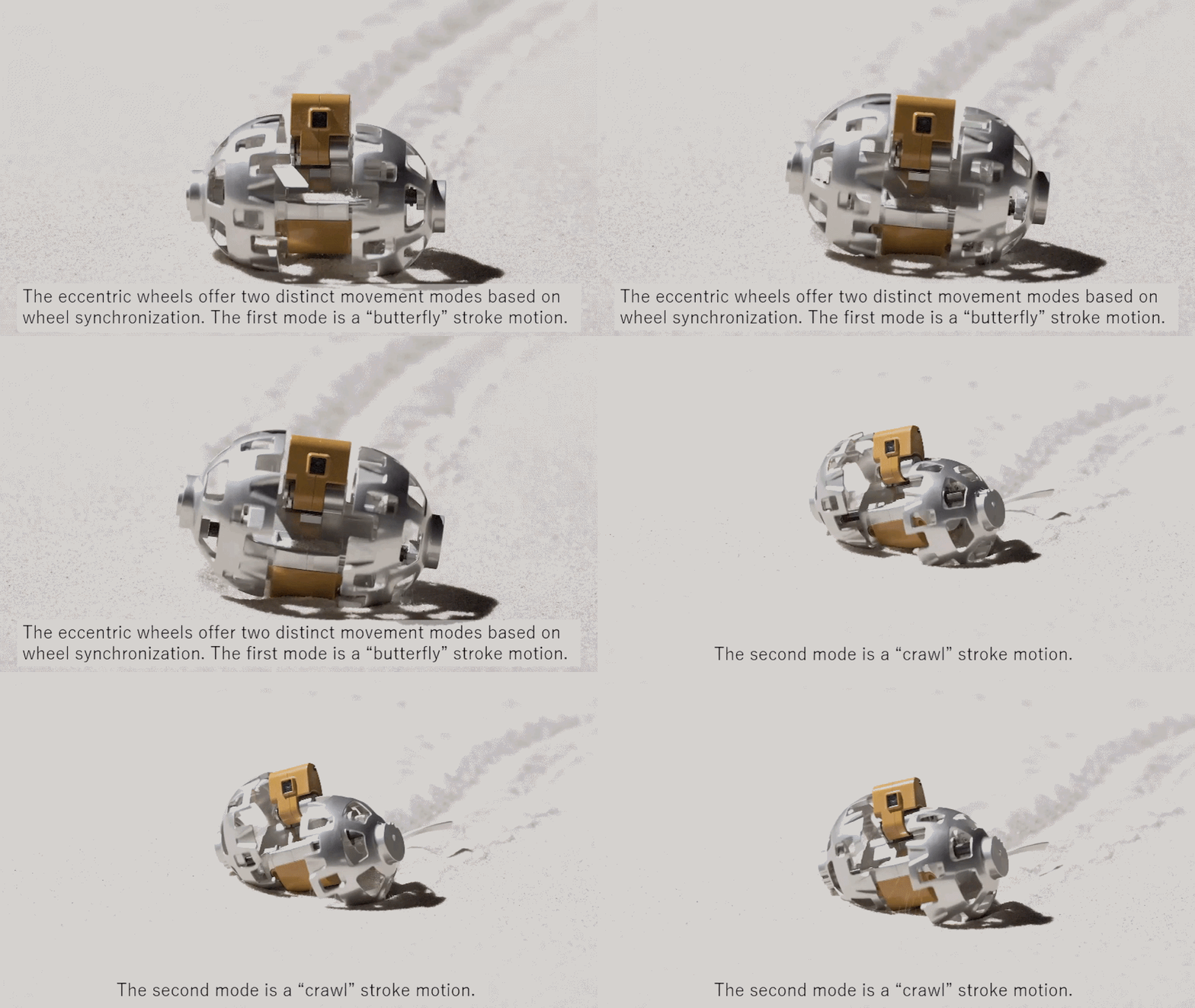
A new study published in Science Robotics details how SORA-Q (LEV-2), a palm-sized spherical rover developed by JAXA, Sony, Doshisha University, and toy company Takara-TOMY, autonomously explored the lunar surface for roughly 100 minutes following Japan's SLIM landing in January 2024. The baseball-sized robot transformed from a sphere into a two-wheeled rover, captured 12 high-resolution images of the upside-down SLIM lander and its surroundings, and relayed data to Earth via a companion rover, LEV-1. The mission demonstrated that extremely compact robotic platforms can conduct autonomous surface operations and could serve as flexible, low-cost sidekicks for future planetary exploration.
SORA-Q, officially designated Lunar Excursion Vehicle 2 (LEV-2), landed on the Moon on January 19, 2024, aboard JAXA's Smart Lander for Investigating Moon (SLIM) mission. Measuring just 80 millimeters (about 3 inches) in diameter and weighing approximately 250 grams, the rover transformed from a compact sphere into a two-wheeled vehicle using a rotating internal shaft and off-center wheel rotation technology borrowed from commercial toy design — a collaboration with Takara-TOMY, co-owner of the Transformers brand. As shown in mission diagrams, SORA-Q was deployed before SLIM's touchdown, then expanded and navigated autonomously around the lander, which had face-planted due to a thruster failure and landed with its solar arrays facing the wrong direction. The rover captured 12 high-resolution images and transmitted them to Earth through LEV-1, a companion hopping robot, without relying on direct ground teleoperation. SORA-Q operated for approximately 100–108 minutes before losing communication with LEV-1, likely due to LEV-1's battery depletion or damage from its hopping motion. Some data was lost during transmission. The study concludes that small rovers like SORA-Q could complement larger rovers by accessing cramped environments such as craters and vents, and that distributed robotic systems combining large and small platforms could enable more flexible and cost-effective space missions.
Limitations & open questions
The study's own limitations include data loss during transmission and the premature end of communications before SORA-Q's expected operational lifetime, leaving some uncertainty about the rover's final status and the completeness of the dataset. The paper does not fully resolve whether LEV-1's failure was due to battery depletion or physical damage from hopping, and the long-term implications of the toy-derived transformation mechanism for reliability in harsher or longer missions remain untested.
What different sources said
- Phys.orgCenter
How a shape-shifting tiny rover inspired by Japanese toys autonomously explored the moon
- Live ScienceCenter
See the 'crawling,' ball-shaped robot that rolled around the moon during Japan's historic first landing
- Scientific AmericanCenter
Meet LEV-2, a baseball-sized and absurdly cute moon robot
- GizmodoCenter
Two Years Later, We’re Finally Learning How a Transformers-Inspired Rover Fared on the Moon
- Space.comCenter
How Japanese scientists sent a real-life Transformer to the moon
Related
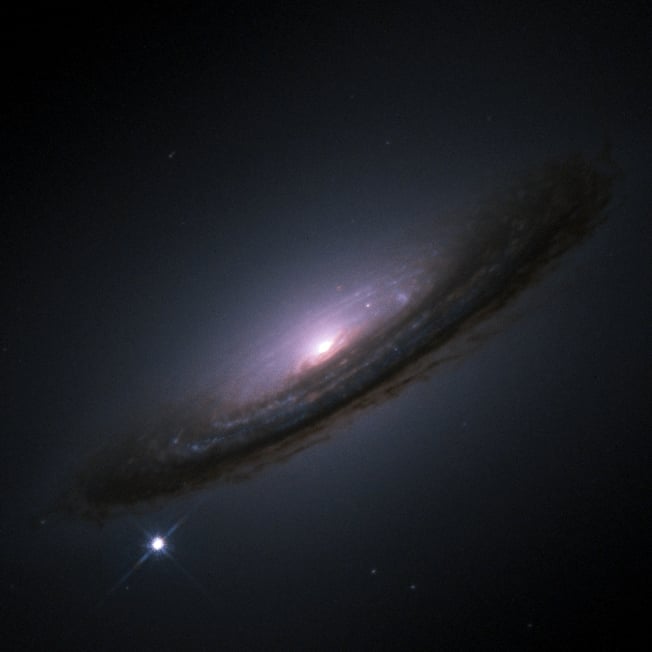
Nobel Laureates Rebut Study Claiming Universe's Expansion Is Slowing, Confirm Acceleration Continues
An international team of astrophysicists, including Nobel laureates Adam Riess and Brian Schmidt, has published a study in the Monthly Notices of the Royal Astronomical Society confirming that the universe's expansion is still accelerating. The rebuttal targets a late-2024 South Korean study that had claimed dark energy was weakening, a finding that would have overturned nearly three decades of cosmological understanding. The new study identifies two specific methodological errors in the earlier work, restoring confidence in the standard model of cosmic acceleration while leaving the deeper mystery of what dark energy actually is unresolved.

Study Finds Trees May Store Less Carbon Than Climate Models Predict
A new study published in Science Advances found that oak trees stop growing months before they stop photosynthesizing, meaning increased carbon uptake does not necessarily translate into more wood growth and long-term carbon storage. Researchers analyzed 137 sites across the US, finding that 26–36% of annual carbon uptake occurred after tree growth had already ceased, with drought and heat identified as key triggers for halting growth. The findings suggest that widely used climate models, which assume photosynthesis and growth are tightly linked, may be overestimating forests' future capacity to sequester carbon.
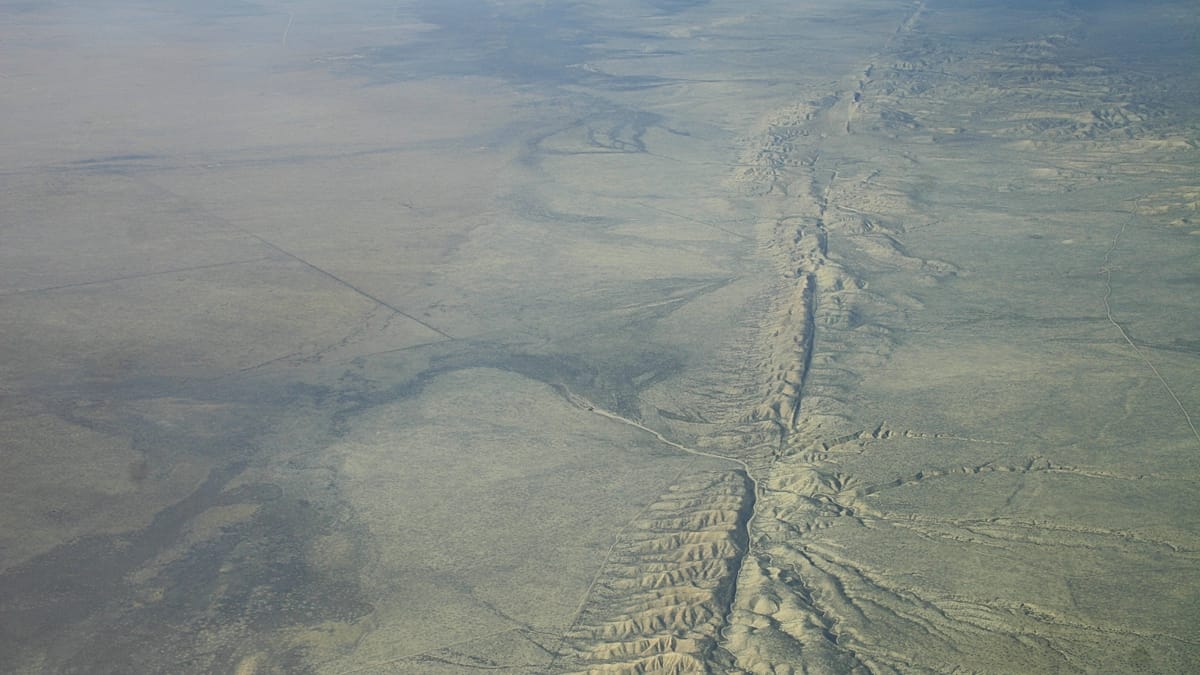
San Andreas Fault Stress Reaches Highest Level in 1,000 Years, Study Finds
A new peer-reviewed study finds that tectonic stress on Southern California's San Andreas and San Jacinto fault systems has reached its highest levels in at least 1,000 years, with the San Jacinto-Bernardino section measuring 3.6 megapascals. The research, led by the University of Hawaiʻi at Mānoa and published in the Journal of Geophysical Research: Solid Earth, used a computer model drawing on geological data including radiocarbon dating and tree-ring records to reconstruct a millennium of earthquake history. The findings cannot predict when a major earthquake will occur but are intended to improve hazard assessments, inform building codes, and guide emergency preparedness in a region home to millions.