ISS Astronauts Take Shelter in Dragon Capsule During Russian Segment Air Leak Repair

Five of seven International Space Station crew members took shelter inside a docked SpaceX Crew Dragon capsule on June 5, 2026, while two Russian cosmonauts attempted repairs on a worsening air leak in the Zvezda service module's PrK transfer tunnel. The leak, caused by microscopic cracks first detected in 2019, had doubled in rate to approximately two pounds of air per day during the week of June 1, prompting Roscosmos to plan a more aggressive structural repair that included cutting a bracket — a procedure NASA deemed risky enough to warrant the precautionary shelter order. After roughly 90 minutes, Roscosmos paused the repair to gather more measurements, NASA ended the safe-haven procedure, and the crew returned to normal operations, though one of two newly identified leak sites remains unsealed.
On the morning of June 5, 2026, NASA mission control ordered NASA astronauts Jessica Meir, Jack Hathaway, French ESA astronaut Sophie Adenot, Russian cosmonaut Andrey Fedyaev, and NASA astronaut Chris Williams into the docked SpaceX Crew Dragon Freedom capsule as a precautionary safe-haven measure while cosmonauts Sergey Kud-Sverchkov and Sergei Mikaev worked on a persistent air leak in the PrK transfer tunnel of Russia's Zvezda service module. The leak, first identified in 2019 and attributed to microscopic cracks in the tunnel structure, had escalated during cargo operations involving the Progress 95 spacecraft, with the leak rate roughly doubling to about two pounds of air per day and new suspected leak sites identified. Roscosmos had planned a more extensive repair that included cutting a bracket to improve access to a suspected leak area, a procedure NASA assessed as carrying elevated structural risk. After approximately 90 minutes, Roscosmos chose to pause the structural repair in favor of additional measurements and data review; NASA strongly supported the decision, and the crew exited the Dragon and resumed normal station activities. Roscosmos reported that one of two identified leak sites was sealed with Germetall-1 two-component sealant, while the second site on the conical section of the transfer chamber remains unaddressed. Both agencies stated that crew safety was not at immediate risk and that station pressure remained stable, though experts noted that the possibility of a small crack suddenly enlarging represents a low-probability but potentially catastrophic scenario. The incident underscores broader concerns about the aging ISS, which has been in orbit for more than 25 years beyond its original design parameters, and highlights unresolved disagreements between NASA and Roscosmos over repair strategy and acceptable leak thresholds, with the station currently planned for deorbit by 2030.
Limitations & open questions
No source confirmed the precise timeline or conditions under which Roscosmos will attempt the next repair, nor whether future repair attempts will again require a safe-haven procedure. The specific nature and extent of NASA's objections to the bracket-cutting method — and whether formal interagency protocols were followed before the repair was initiated — were not fully disclosed by either agency. The 2024 NASA Office of Inspector General report referenced by Gizmodo, which reportedly found disagreement between NASA and Roscosmos on what constitutes an unsustainable leak rate, was not detailed by any source.
How coverage differed
Most outlets framed the event as a precautionary but serious safety measure taken in good faith by both agencies. Gizmodo and Hackaday adopted a more skeptical tone, emphasizing apparent NASA-Roscosmos disagreement — including a Reuters-cited report that NASA officials objected to Roscosmos's plan to use a saw — and suggesting the repair was 'sprung' on NASA at the last moment, framing the episode as evidence of deeper interagency friction rather than routine collaborative caution.
What different sources said
- HackadayCenter
Questions Remain About Tense Moment Aboard ISS
- News18Center
'Danced, Snaked Its Way Below Us': NASA Astronaut Captures Stunning Southern Lights From SpaceX
- Space.comCenter
Astronauts on International Space Station take shelter in SpaceX Dragon as cosmonauts try to fix air leak
- The RegisterCenter
Serious ISS air leak forces NASA astronauts to temporarily take shelter in Dragon capsule
- Ars TechnicaCenter
The saga of the International Space Station air leak took a worrying turn Friday
- Scientific AmericanCenter
Astronauts take shelter on the International Space Station because of air leaks
- Science DailyCenter
NASA updates worsening ISS leak after crew safety alert
- GizmodoCenter
NASA’s Crew Safety Alert Exposed a Bigger ISS Leak Problem
- BBCCenter
Watch: Southern Lights timelapse filmed from space
- Hindustan TimesCenter
Stunning Southern Lights timelapse filmed by NASA astronaut from onboard SpaceX Dragon shuttle | Watch | Hindustan Times
- The Naked ScientistsCenter
Air leaks on the International Space Station
Related
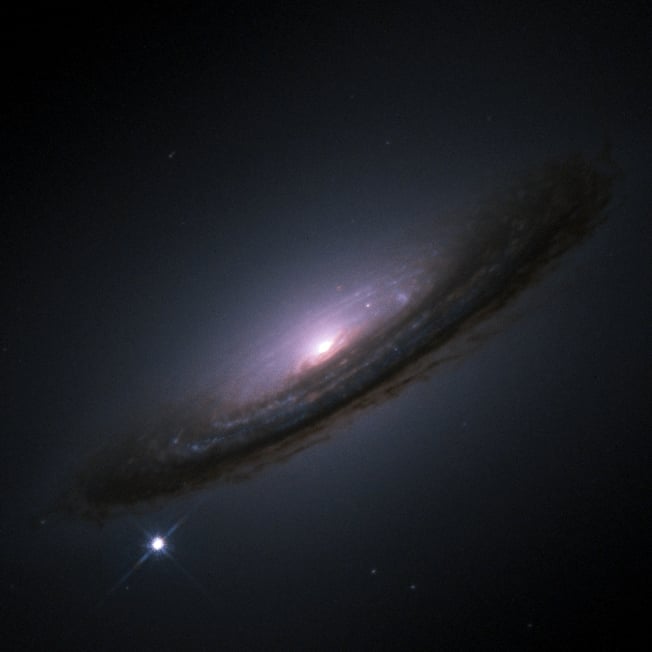
Nobel Laureates Rebut Study Claiming Universe's Expansion Is Slowing, Confirm Acceleration Continues
An international team of astrophysicists, including Nobel laureates Adam Riess and Brian Schmidt, has published a study in the Monthly Notices of the Royal Astronomical Society confirming that the universe's expansion is still accelerating. The rebuttal targets a late-2024 South Korean study that had claimed dark energy was weakening, a finding that would have overturned nearly three decades of cosmological understanding. The new study identifies two specific methodological errors in the earlier work, restoring confidence in the standard model of cosmic acceleration while leaving the deeper mystery of what dark energy actually is unresolved.
Study Finds Trees May Store Less Carbon Than Climate Models Predict
A new study published in Science Advances found that oak trees stop growing months before they stop photosynthesizing, meaning increased carbon uptake does not necessarily translate into more wood growth and long-term carbon storage. Researchers analyzed 137 sites across the US, finding that 26–36% of annual carbon uptake occurred after tree growth had already ceased, with drought and heat identified as key triggers for halting growth. The findings suggest that widely used climate models, which assume photosynthesis and growth are tightly linked, may be overestimating forests' future capacity to sequester carbon.
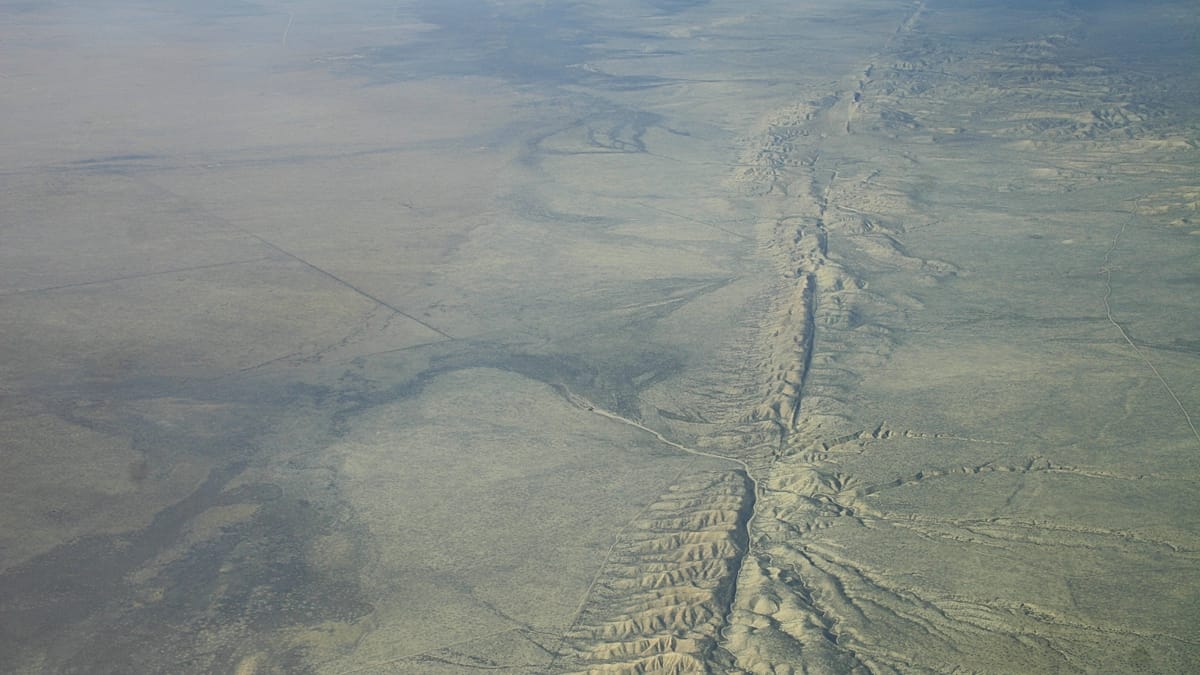
San Andreas Fault Stress Reaches Highest Level in 1,000 Years, Study Finds
A new peer-reviewed study finds that tectonic stress on Southern California's San Andreas and San Jacinto fault systems has reached its highest levels in at least 1,000 years, with the San Jacinto-Bernardino section measuring 3.6 megapascals. The research, led by the University of Hawaiʻi at Mānoa and published in the Journal of Geophysical Research: Solid Earth, used a computer model drawing on geological data including radiocarbon dating and tree-ring records to reconstruct a millennium of earthquake history. The findings cannot predict when a major earthquake will occur but are intended to improve hazard assessments, inform building codes, and guide emergency preparedness in a region home to millions.