Israeli Scientists Link Rapid-Growth Gene to Early Aging and Cancer Risk in Fish
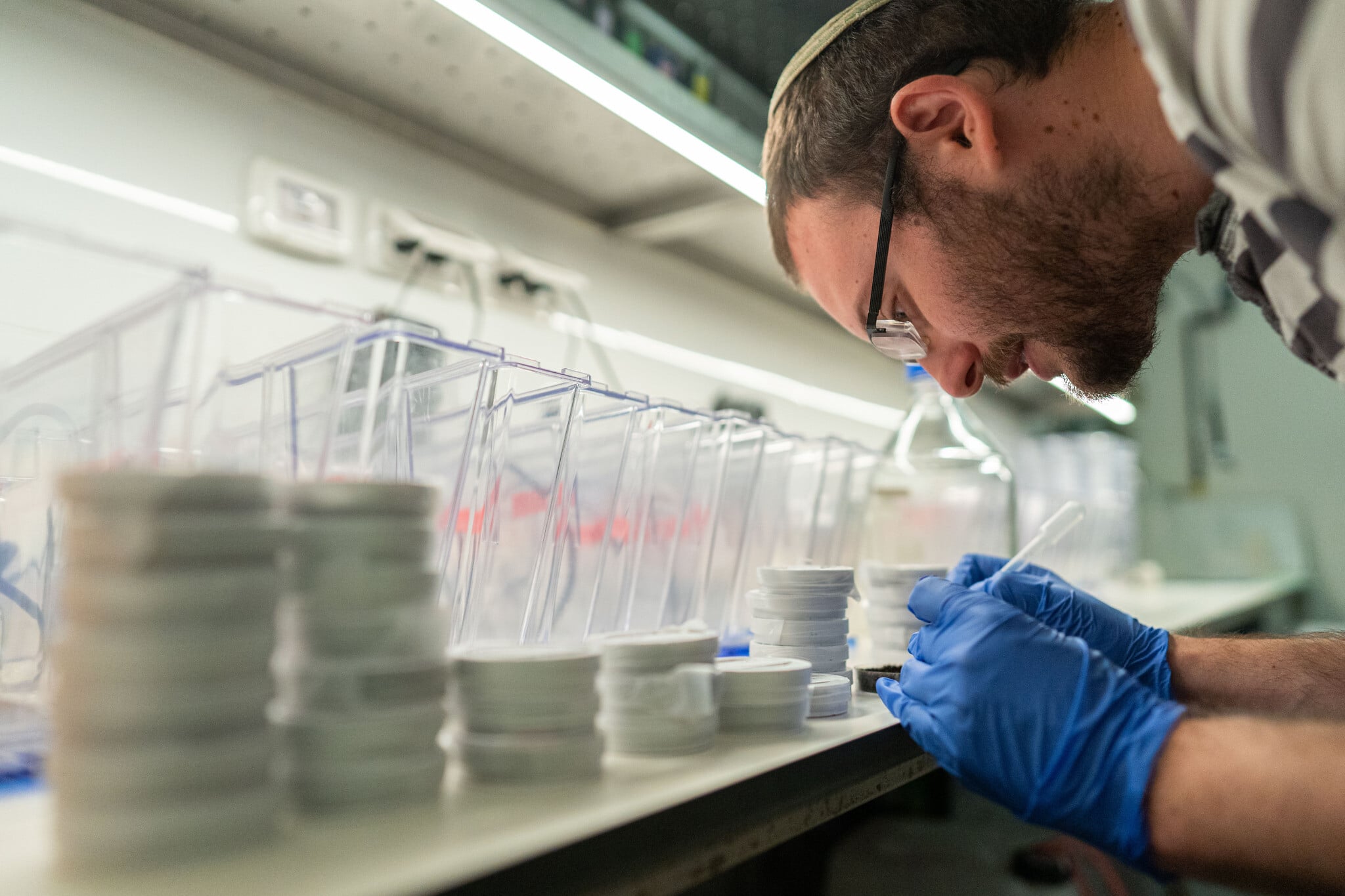
Israeli scientists have shown that a gene accelerating growth and early reproduction in killifish also shortens lifespan and raises cancer risk, while German researchers separately identified declining phosphatidylcholine levels as a reversible driver of mitochondrial aging. Both peer-reviewed studies were published in Nature Communications and approach aging from distinct but complementary angles. Together, they reinforce the view that aging is shaped by specific, potentially modifiable biological mechanisms rather than being a purely inevitable decline.
Researchers at Hebrew University of Jerusalem used CRISPR to modify the VGLL3 gene in African turquoise killifish, finding that fish with an activated version grew faster, reached sexual maturity earlier, and had higher early reproductive success, but also lived 7–15% shorter lives and developed melanoma-like tumors. The findings provide the first direct causal evidence in a vertebrate model for the antagonistic pleiotropy theory of aging, first proposed by George Williams in 1957, which holds that genes beneficial in youth become harmful later in life. Independently, scientists at the Leibniz Institute on Aging in Jena, Germany, discovered that falling levels of the membrane lipid phosphatidylcholine fragment mitochondrial networks in aging C. elegans, reducing cellular energy flexibility in ways that also appear in human metabolomic data. Crucially, supplementing older worms with phosphatidylcholine or its precursor choline restored more youthful mitochondrial structure within two days, suggesting some aspects of cellular aging are reversible. The German team also noted that the sharpest relative decline in phosphatidylcholine levels in human data occurred in women around menopause, coinciding with commonly reported fatigue. Both research groups emphasize that their goal is extending healthy years rather than simply total lifespan, and both identify their findings as starting points for future therapeutic or dietary interventions.
Limitations & open questions
The killifish study reports lifespan reductions and tumor rates but does not detail the absolute tumor incidence figures or whether the melanoma-like lesions were histologically confirmed as malignant. The phosphatidylcholine study demonstrates reversibility in C. elegans and human cell cultures but has not yet tested dietary choline supplementation in mammals or humans; safety and effective dosing for human use remain unestablished.
What different sources said
- Science DailyCenter
Scientists discover a hidden cause of aging cells that can be reversed
- Times of IsraelCenter
Live fast, die young: Israeli scientists link rapid-growth gene to early aging in fish
Related

Nobel Laureates Rebut Study Claiming Universe's Expansion Is Slowing, Confirm Acceleration Continues
An international team of astrophysicists, including Nobel laureates Adam Riess and Brian Schmidt, has published a study in the Monthly Notices of the Royal Astronomical Society confirming that the universe's expansion is still accelerating. The rebuttal targets a late-2024 South Korean study that had claimed dark energy was weakening, a finding that would have overturned nearly three decades of cosmological understanding. The new study identifies two specific methodological errors in the earlier work, restoring confidence in the standard model of cosmic acceleration while leaving the deeper mystery of what dark energy actually is unresolved.

Study Finds Trees May Store Less Carbon Than Climate Models Predict
A new study published in Science Advances found that oak trees stop growing months before they stop photosynthesizing, meaning increased carbon uptake does not necessarily translate into more wood growth and long-term carbon storage. Researchers analyzed 137 sites across the US, finding that 26–36% of annual carbon uptake occurred after tree growth had already ceased, with drought and heat identified as key triggers for halting growth. The findings suggest that widely used climate models, which assume photosynthesis and growth are tightly linked, may be overestimating forests' future capacity to sequester carbon.

San Andreas Fault Stress Reaches Highest Level in 1,000 Years, Study Finds
A new peer-reviewed study finds that tectonic stress on Southern California's San Andreas and San Jacinto fault systems has reached its highest levels in at least 1,000 years, with the San Jacinto-Bernardino section measuring 3.6 megapascals. The research, led by the University of Hawaiʻi at Mānoa and published in the Journal of Geophysical Research: Solid Earth, used a computer model drawing on geological data including radiocarbon dating and tree-ring records to reconstruct a millennium of earthquake history. The findings cannot predict when a major earthquake will occur but are intended to improve hazard assessments, inform building codes, and guide emergency preparedness in a region home to millions.