Hubble Space Telescope Captures Detailed Image of Galaxy Cluster MACS0329-0211
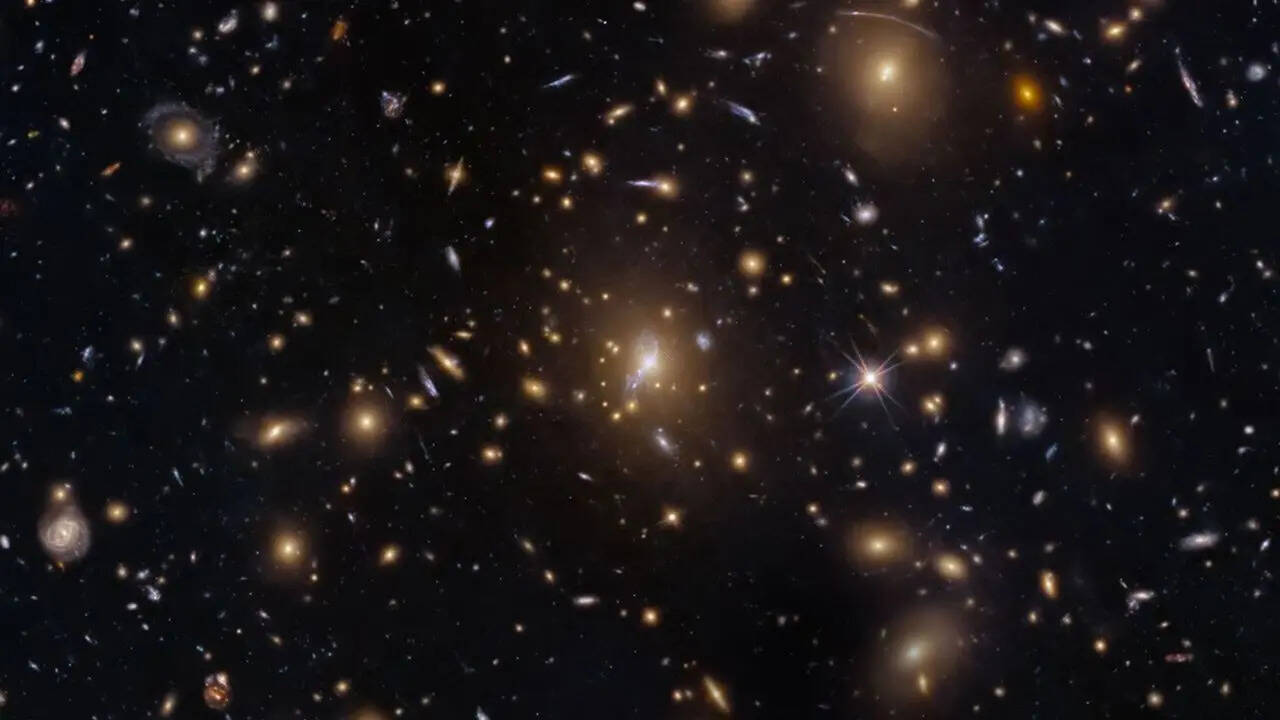
NASA has released a new Hubble Space Telescope image of galaxy cluster MACS0329-0211, showing a densely packed swarm of galaxies of varying shapes and sizes. The cluster, observed as part of a program targeting X-ray bright galaxy clusters, also displays dramatic gravitational lensing arcs where the cluster's mass bends and magnifies light from far more distant background galaxies. The image provides astronomers with a window into both the large-scale structure of the universe and the properties of galaxies from its earliest epochs.
The NASA Hubble Space Telescope has captured a striking new image of galaxy cluster MACS0329-0211, revealing a crowded field of elliptical, spiral, and lenticular galaxies bound together by gravity. The cluster serves as a natural gravitational lens, with its enormous combined mass warping space-time enough to bend light from much more distant background galaxies into visible arcs and distorted curves, including a prominent arc near a bright elliptical galaxy and a twisted figure-eight shape near the cluster's center. Hubble observed the cluster using its two primary imaging instruments — the Advanced Camera for Surveys and the Wide Field Camera 3 — collecting data in both visible and infrared wavelengths to build a comprehensive picture of the cluster's contents. The observation was part of a broader program focused on galaxy clusters that emit strong X-rays, which typically signal particularly massive and energetically active environments. By measuring how light is bent through gravitational lensing, scientists can also map the distribution of matter within the cluster, including dark matter that cannot be directly observed. Galaxy clusters like MACS0329-0211 are considered key signposts in understanding how the universe's large-scale structure evolved over billions of years. The image effectively combines the power of Hubble's instruments with the cluster's natural lensing capability to reveal galaxies from much earlier periods of cosmic history.
Limitations & open questions
The articles do not specify the distance or redshift of MACS0329-0211, nor do they provide details on the redshifts of the background galaxies being lensed, which would help contextualize how far back in cosmic history the lensed objects originate. The specific scientific findings or publications resulting from this observing program are also not mentioned.
What different sources said
- Times of IndiaCenter
NASA’s Hubble sees a swarm of galaxies in one of the universe’s largest structures
- Mirage NewsCenter
Hubble Sees Swarm Of Galaxies
- NASACenter
Hubble Sees Swarm of Galaxies
Related
Nobel Laureates Rebut Study Claiming Universe's Expansion Is Slowing, Confirm Acceleration Continues
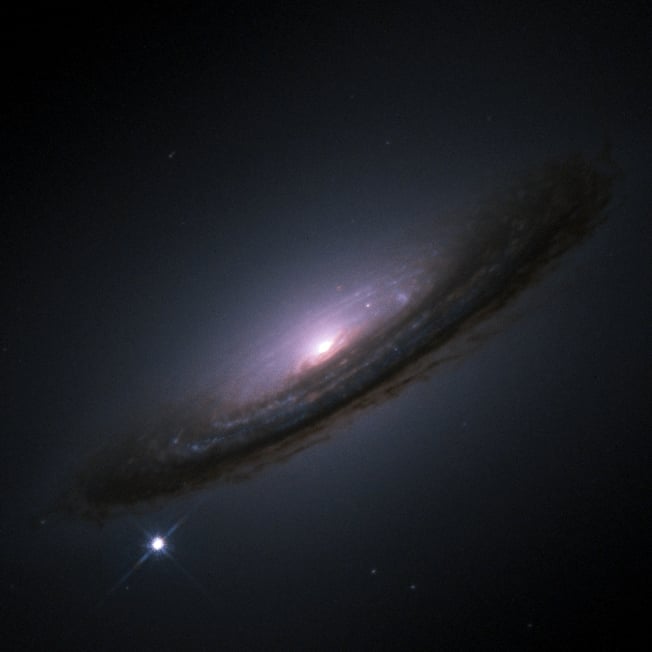
An international team of astrophysicists, including Nobel laureates Adam Riess and Brian Schmidt, has published a study in the Monthly Notices of the Royal Astronomical Society confirming that the universe's expansion is still accelerating. The rebuttal targets a late-2024 South Korean study that had claimed dark energy was weakening, a finding that would have overturned nearly three decades of cosmological understanding. The new study identifies two specific methodological errors in the earlier work, restoring confidence in the standard model of cosmic acceleration while leaving the deeper mystery of what dark energy actually is unresolved.
Study Finds Trees May Store Less Carbon Than Climate Models Predict
A new study published in Science Advances found that oak trees stop growing months before they stop photosynthesizing, meaning increased carbon uptake does not necessarily translate into more wood growth and long-term carbon storage. Researchers analyzed 137 sites across the US, finding that 26–36% of annual carbon uptake occurred after tree growth had already ceased, with drought and heat identified as key triggers for halting growth. The findings suggest that widely used climate models, which assume photosynthesis and growth are tightly linked, may be overestimating forests' future capacity to sequester carbon.
San Andreas Fault Stress Reaches Highest Level in 1,000 Years, Study Finds
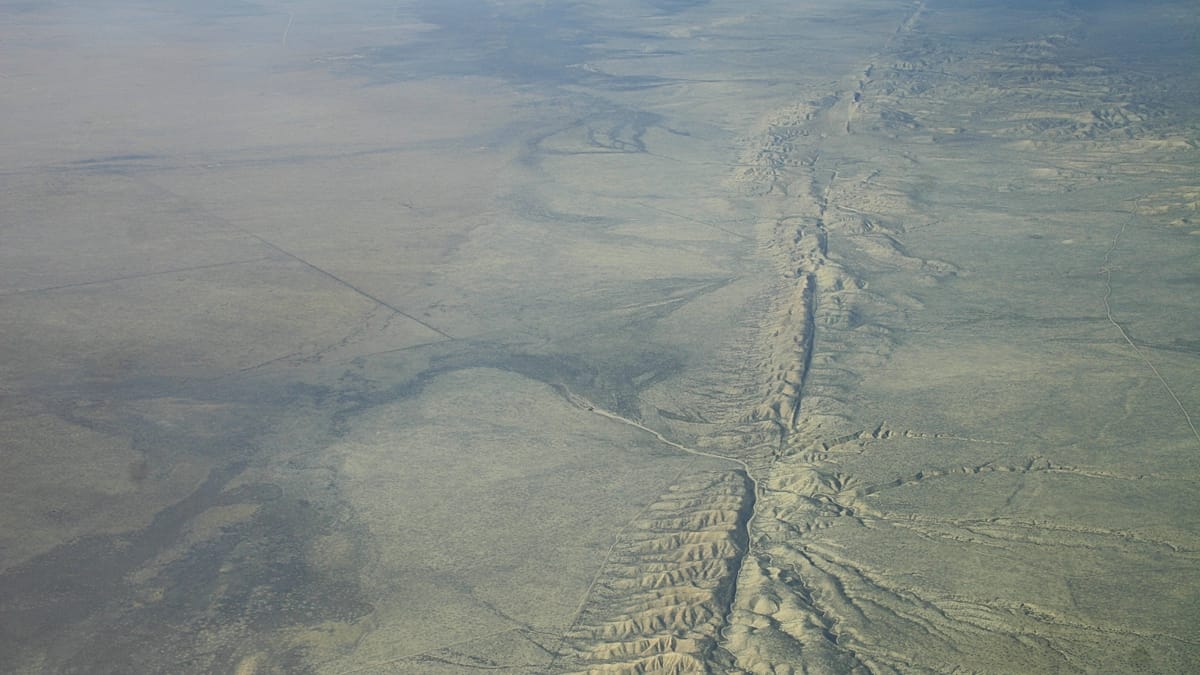
A new peer-reviewed study finds that tectonic stress on Southern California's San Andreas and San Jacinto fault systems has reached its highest levels in at least 1,000 years, with the San Jacinto-Bernardino section measuring 3.6 megapascals. The research, led by the University of Hawaiʻi at Mānoa and published in the Journal of Geophysical Research: Solid Earth, used a computer model drawing on geological data including radiocarbon dating and tree-ring records to reconstruct a millennium of earthquake history. The findings cannot predict when a major earthquake will occur but are intended to improve hazard assessments, inform building codes, and guide emergency preparedness in a region home to millions.