How the word 'algorithm' traces back to a 9th-century Persian mathematician

The word 'algorithm' derives from the Latinized name of Muhammad ibn Musa al-Khwarizmi, a 9th-century Persian mathematician, astronomer, and geographer. Al-Khwarizmi's influential works helped introduce algebraic methods and Hindu-Arabic numerals to the West, and his name was gradually transformed through Latin, French, and English over centuries. The etymology highlights how algorithms — now central to AI, social media, and navigation — have deep historical roots in Islamic scholarship.
The term 'algorithm,' which appears 19 times in Pope Leo XIV's recent encyclical on artificial intelligence, originates from the name of Muhammad ibn Musa al-Khwarizmi, a 9th-century Persian mathematician from the region of Khwarazm in present-day Uzbekistan. His name was Latinized as 'algorismus,' passed through French as 'algorisme,' and eventually became 'algorism' and then 'algorithm' in English, along the way becoming somewhat conflated with the word 'arithmetic.' Al-Khwarizmi's landmark book on calculation helped introduce algorithmic problem-solving methods, popularized Hindu-Arabic numerals including zero in the West, and laid the groundwork for algebra. His works were translated into Latin multiple times during the 12th-century European revival of learning, part of a broader transmission of Islamic science that also gave English words like alcohol, alkali, and alchemy. Today, algorithms underpin everything from celestial navigation and GPS to social media recommendation systems, illustrating how a concept rooted in medieval mathematics now shapes modern life.
What different sources said
- NPR NewsLeft
How 'algorithm' got its name from a 9th-century Persian mathematician
Related
Nobel Laureates Rebut Study Claiming Universe's Expansion Is Slowing, Confirm Acceleration Continues
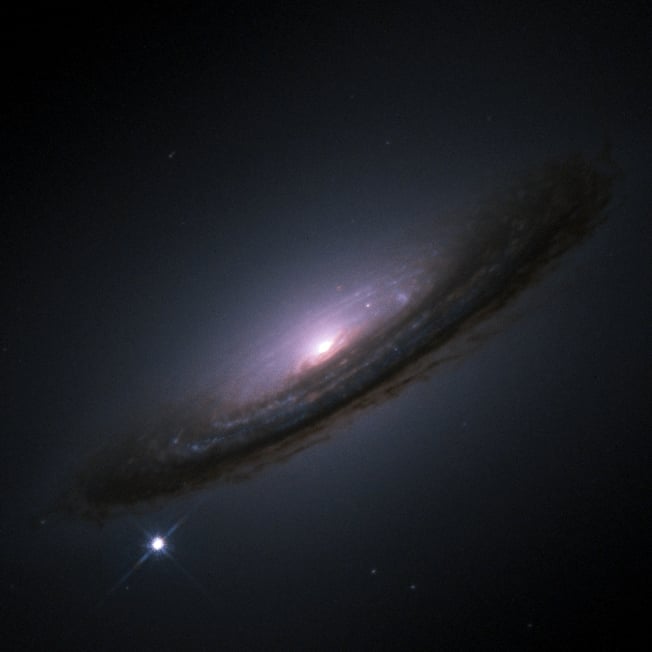
An international team of astrophysicists, including Nobel laureates Adam Riess and Brian Schmidt, has published a study in the Monthly Notices of the Royal Astronomical Society confirming that the universe's expansion is still accelerating. The rebuttal targets a late-2024 South Korean study that had claimed dark energy was weakening, a finding that would have overturned nearly three decades of cosmological understanding. The new study identifies two specific methodological errors in the earlier work, restoring confidence in the standard model of cosmic acceleration while leaving the deeper mystery of what dark energy actually is unresolved.

Study Finds Trees May Store Less Carbon Than Climate Models Predict
A new study published in Science Advances found that oak trees stop growing months before they stop photosynthesizing, meaning increased carbon uptake does not necessarily translate into more wood growth and long-term carbon storage. Researchers analyzed 137 sites across the US, finding that 26–36% of annual carbon uptake occurred after tree growth had already ceased, with drought and heat identified as key triggers for halting growth. The findings suggest that widely used climate models, which assume photosynthesis and growth are tightly linked, may be overestimating forests' future capacity to sequester carbon.
San Andreas Fault Stress Reaches Highest Level in 1,000 Years, Study Finds
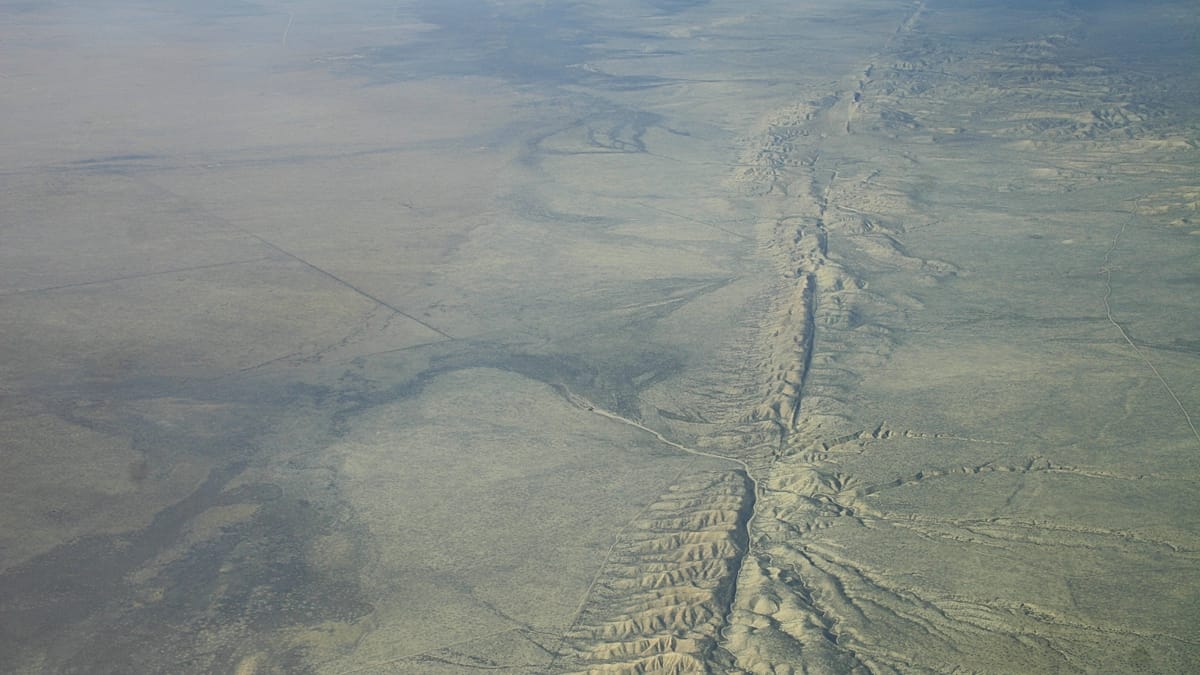
A new peer-reviewed study finds that tectonic stress on Southern California's San Andreas and San Jacinto fault systems has reached its highest levels in at least 1,000 years, with the San Jacinto-Bernardino section measuring 3.6 megapascals. The research, led by the University of Hawaiʻi at Mānoa and published in the Journal of Geophysical Research: Solid Earth, used a computer model drawing on geological data including radiocarbon dating and tree-ring records to reconstruct a millennium of earthquake history. The findings cannot predict when a major earthquake will occur but are intended to improve hazard assessments, inform building codes, and guide emergency preparedness in a region home to millions.