Global Climate Plans Fail to Adequately Protect Vulnerable Populations, Research Shows

Two new studies published in major journals find that national climate plans worldwide contain significant gaps in health integration and sustainable development alignment, particularly for the most vulnerable populations. One Lancet Planetary Health study reviewed adaptation policies from 198 countries, while a Nature Communications study used AI to analyze climate pledges from 158 nations. Together, the findings suggest that global climate planning systematically underserves low-income countries and marginalized groups at the moment when new national pledges are being prepared for 2035.
A Weill Cornell Medicine-led team reviewed national climate adaptation plans from 198 countries and the EU, finding that while 88% acknowledged health impacts of climate change, only 12% meaningfully engaged the vulnerable groups most at risk, such as women, children, people with disabilities, and Indigenous populations. Health conditions including mental health, violence, injuries, allergies, and sexual and reproductive health were largely absent from plans, and only six countries outlined complete financing strategies for health-related climate actions. Separately, an international team from the University of Alicante, Universitat Politècnica de València, and partner institutions used generative AI to analyze Nationally Determined Contributions (NDCs) submitted under the Paris Agreement by 158 countries, finding that high-income nations concentrate on health, technology, and emissions reduction while low- and middle-income countries focus on immediate survival needs like water, food, and energy. The AI analysis revealed that more than half of countries do not explicitly mention the UN Sustainable Development Goals in their pledges, and cross-cutting priorities like gender equality and education are poorly represented regardless of income level. Scatter plot data from the AI study further showed that the most climate-vulnerable nations — predominantly lower-income — have the lowest rates of SDG integration in their climate plans, a pattern that only became fully visible after AI-assisted analysis uncovered implicit connections. Both studies call for stronger cross-sector coordination, decentralized planning frameworks, and better resource allocation to prevent climate strategies from deepening existing global inequities.
Limitations & open questions
Neither study addresses whether the gaps identified in written plans translate directly into gaps in on-the-ground implementation — a country could have a weak written plan but strong local practice, or vice versa. Additionally, the Nature Communications AI study does not fully validate whether the LLM's implicit SDG mappings align with independent expert assessments.
How coverage differed
Both sources are centrist science news outlets reporting on separate but thematically related studies; their framing does not meaningfully differ, as each straightforwardly summarizes its respective research findings without editorial slant.
What different sources said
- Medical XpressCenter
National climate plans recognize health risks, yet few protect most vulnerable groups
- Phys.orgCenter
AI study reveals stark inequalities in global climate plans
Related

Nobel Laureates Rebut Study Claiming Universe's Expansion Is Slowing, Confirm Acceleration Continues
An international team of astrophysicists, including Nobel laureates Adam Riess and Brian Schmidt, has published a study in the Monthly Notices of the Royal Astronomical Society confirming that the universe's expansion is still accelerating. The rebuttal targets a late-2024 South Korean study that had claimed dark energy was weakening, a finding that would have overturned nearly three decades of cosmological understanding. The new study identifies two specific methodological errors in the earlier work, restoring confidence in the standard model of cosmic acceleration while leaving the deeper mystery of what dark energy actually is unresolved.

Study Finds Trees May Store Less Carbon Than Climate Models Predict
A new study published in Science Advances found that oak trees stop growing months before they stop photosynthesizing, meaning increased carbon uptake does not necessarily translate into more wood growth and long-term carbon storage. Researchers analyzed 137 sites across the US, finding that 26–36% of annual carbon uptake occurred after tree growth had already ceased, with drought and heat identified as key triggers for halting growth. The findings suggest that widely used climate models, which assume photosynthesis and growth are tightly linked, may be overestimating forests' future capacity to sequester carbon.
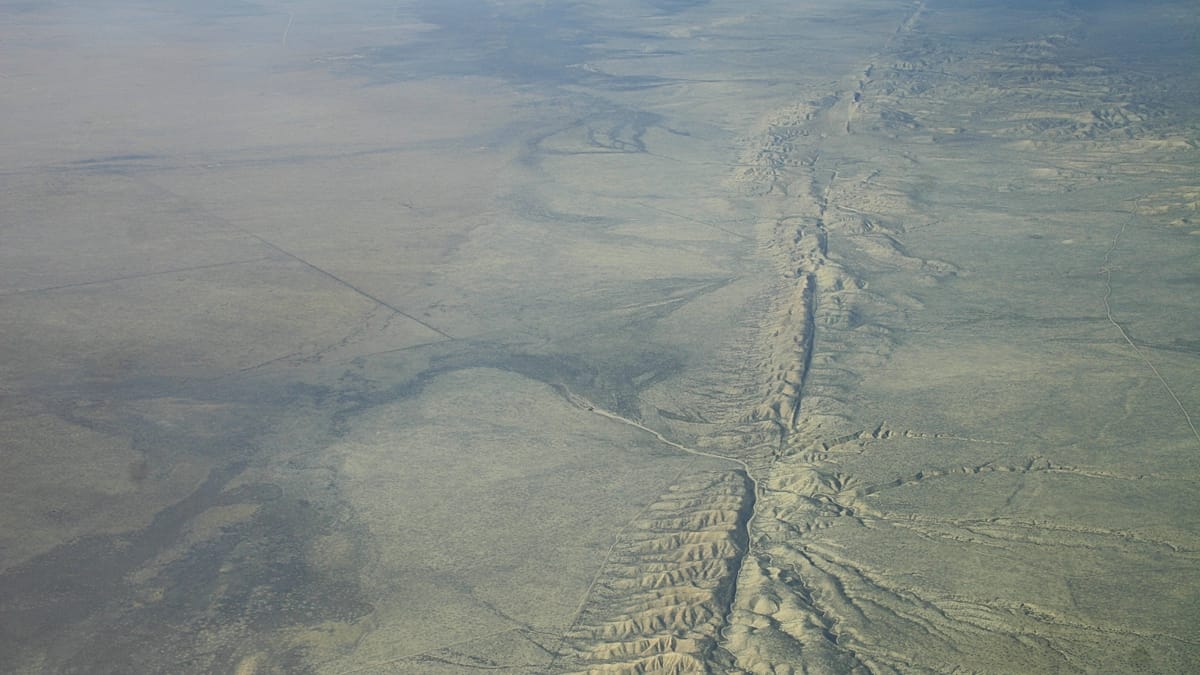
San Andreas Fault Stress Reaches Highest Level in 1,000 Years, Study Finds
A new peer-reviewed study finds that tectonic stress on Southern California's San Andreas and San Jacinto fault systems has reached its highest levels in at least 1,000 years, with the San Jacinto-Bernardino section measuring 3.6 megapascals. The research, led by the University of Hawaiʻi at Mānoa and published in the Journal of Geophysical Research: Solid Earth, used a computer model drawing on geological data including radiocarbon dating and tree-ring records to reconstruct a millennium of earthquake history. The findings cannot predict when a major earthquake will occur but are intended to improve hazard assessments, inform building codes, and guide emergency preparedness in a region home to millions.