Five Scientists Removed from American Diabetes Association Conference for Distributing Critical Editorial

Five prominent diabetes researchers were removed by security from the American Diabetes Association's annual meeting in New Orleans after handing out reprints of a published editorial criticizing the Trump administration's cuts to scientific research. The incident occurred outside a room where NIH Director Jay Bhattacharya had been scheduled to speak before canceling, and the ADA defended the ejections by citing its code of conduct and 501(c)(3) nonprofit status. The fallout has sparked widespread condemnation from the diabetes research community, prompted two senior ADA officials to resign, and dramatically amplified the editorial's reach.
On Friday, five leading diabetes scientists — including Diabetes Care editor-in-chief Steven Kahn, former ADA President Desmond Schatz, and professors Aaron Kelly, Justin Ryder, and Irl Hirsch — were physically escorted out of the ADA's annual scientific meeting in New Orleans by private security for distributing printed copies of a peer-reviewed editorial critical of federal research funding cuts. The editorial, published in Diabetes Care on April 29, explicitly represented the personal views of its authors and not the ADA. The ADA defended the ejections, citing its code of conduct prohibiting disruptive behavior and later invoking IRS rules barring 501(c)(3) nonprofits from partisan activity — a justification that drew sharp criticism, since the IRS does not prohibit individual members from expressing views on political issues at organizational events. NIH Director Jay Bhattacharya, whose scheduled keynote address had drawn the scientists to that location, canceled citing a meeting with President Trump; a senior NIH adviser spoke instead to an audience that applauded criticism of funding cuts. The ADA's handling of the aftermath intensified the backlash: two senior officials, President-Elect Jennifer Green and scientific sessions planning committee chair Mark Atkinson, subsequently resigned, and a Change.org open letter calling for accountability gathered nearly 6,000 signatures. The editorial itself went from roughly 300 page views before the incident to becoming one of the 50 most-viewed papers globally among 300,000 published in the past month.
Limitations & open questions
The official stated reasons for the resignations of President-Elect Jennifer Green and committee chair Mark Atkinson have not been disclosed.
How coverage differed
Both Ars Technica and STAT News covered the story from a broadly similar factual and critical angle, but STAT provided significantly deeper reporting — including named reactions from longtime ADA members, details of the resignation of two ADA officials, the IRS 501(c)(3) legal analysis, and the editorial's surge in readership — while Ars Technica focused primarily on the initial incident and the ADA's immediate response.
What different sources said
- Ars TechnicaCenter
Scientists ejected from diabetes conference for distributing journal reprints
- STAT NewsCenter
Diabetes association leader apologizes for expulsion of members, pledges to rebuild trust
Related
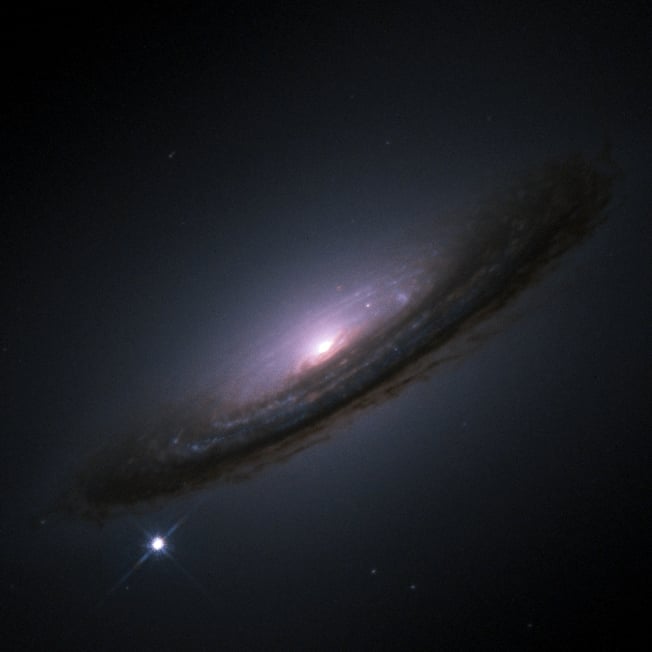
Nobel Laureates Rebut Study Claiming Universe's Expansion Is Slowing, Confirm Acceleration Continues
An international team of astrophysicists, including Nobel laureates Adam Riess and Brian Schmidt, has published a study in the Monthly Notices of the Royal Astronomical Society confirming that the universe's expansion is still accelerating. The rebuttal targets a late-2024 South Korean study that had claimed dark energy was weakening, a finding that would have overturned nearly three decades of cosmological understanding. The new study identifies two specific methodological errors in the earlier work, restoring confidence in the standard model of cosmic acceleration while leaving the deeper mystery of what dark energy actually is unresolved.

Study Finds Trees May Store Less Carbon Than Climate Models Predict
A new study published in Science Advances found that oak trees stop growing months before they stop photosynthesizing, meaning increased carbon uptake does not necessarily translate into more wood growth and long-term carbon storage. Researchers analyzed 137 sites across the US, finding that 26–36% of annual carbon uptake occurred after tree growth had already ceased, with drought and heat identified as key triggers for halting growth. The findings suggest that widely used climate models, which assume photosynthesis and growth are tightly linked, may be overestimating forests' future capacity to sequester carbon.
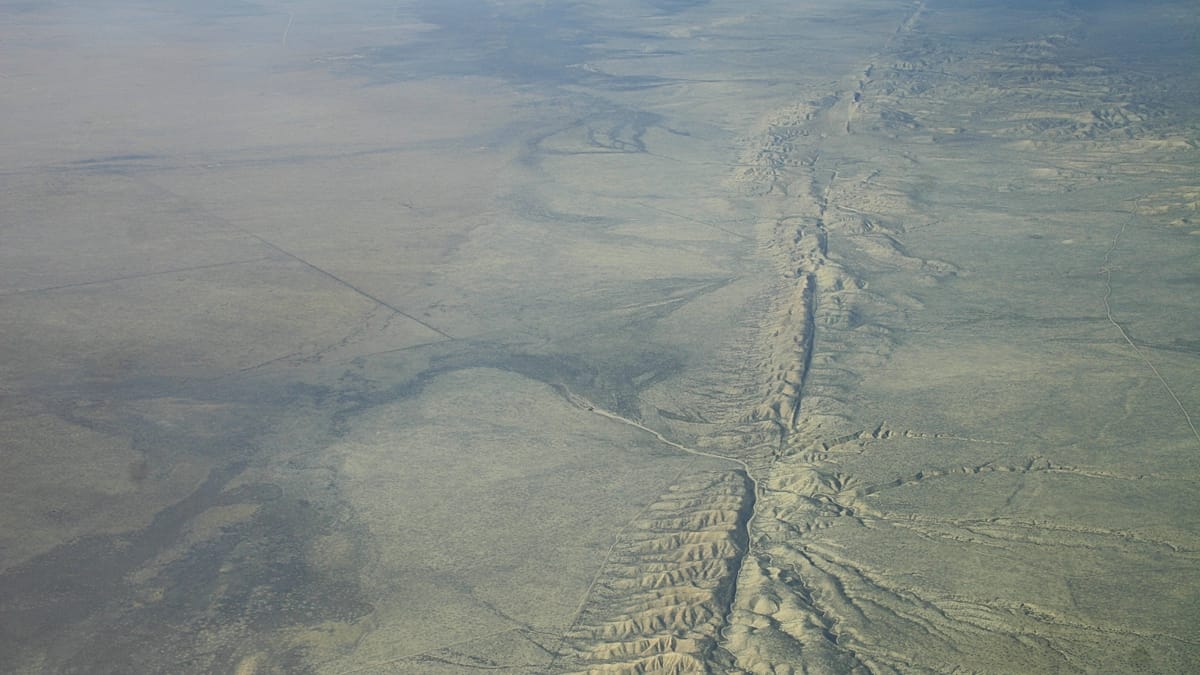
San Andreas Fault Stress Reaches Highest Level in 1,000 Years, Study Finds
A new peer-reviewed study finds that tectonic stress on Southern California's San Andreas and San Jacinto fault systems has reached its highest levels in at least 1,000 years, with the San Jacinto-Bernardino section measuring 3.6 megapascals. The research, led by the University of Hawaiʻi at Mānoa and published in the Journal of Geophysical Research: Solid Earth, used a computer model drawing on geological data including radiocarbon dating and tree-ring records to reconstruct a millennium of earthquake history. The findings cannot predict when a major earthquake will occur but are intended to improve hazard assessments, inform building codes, and guide emergency preparedness in a region home to millions.