England to Shift Bovine TB Strategy: Cattle Vaccination Starting 2030, Badger Culls to End by 2029
England has announced a new strategy to eradicate bovine tuberculosis by 2038, centring on cattle vaccination from 2030 and ending badger culls by 2029. The plan, developed by over 100 farmers, vets, scientists and government officials, shifts focus to cattle-to-cattle transmission, which occurs 15 times more often than transmission from badgers. The strategy is significant because it marks a major policy reversal on badger culling and introduces a vaccine tool that requires new international trade agreements and a companion diagnostic test.
The UK government is expected to implement a new bovine TB eradication strategy for England that targets cattle vaccination from 2030 and phases out the controversial badger cull by 2029. Developed by the Bovine TB Partnership — comprising more than 100 farmers, vets, scientists and government representatives — the plan acknowledges that cattle-to-cattle transmission accounts for 15 times more TB spread than transmission from badgers. Currently, over 20,000 infected cattle are slaughtered annually at a cost of around £100m to taxpayers, while the badger cull programme, running since 2013, has killed approximately 250,000 animals at a cost of about £60m. Cattle vaccination has long been considered a powerful eradication tool but is currently banned in the EU because vaccinated animals cannot easily be distinguished from infected ones; a companion 'Diva' diagnostic test will therefore also be rolled out in 2030. Diplomatic efforts are underway to secure acceptance of the vaccine and Diva test by the World Organisation for Animal Health and trading partners before 2030, so that beef and dairy exports are not disrupted. Badger vaccination will be expanded in priority areas, with experts noting that while badgers are not the primary driver of the epidemic, they are not entirely irrelevant to eradication efforts. The strategy has received broad support from farming bodies including the National Farmers' Union, though its success depends on meeting ambitious regulatory and diplomatic timelines.
Limitations & open questions
The articles do not detail the specific export markets at risk or the current status of EU regulatory negotiations over the Diva test, nor do they address what happens to farmers' compensation arrangements during the transition period before 2030.
How coverage differed
The Guardian provided extensive detail on the scientific rationale, stakeholder quotes and the contested history of the badger cull, framing the strategy as a science-led consensus shift. The Times headline foregrounded the replacement of culling with vaccination, suggesting a slightly stronger emphasis on the policy reversal aspect, though the underlying story is the same.
What different sources said
Cattle in England to get tuberculosis vaccine from 2030 as badger cull to end
- The TimesCenter
Vaccination ‘should replace badger culls’ to end bovine TB
Related

Nobel Laureates Rebut Study Claiming Universe's Expansion Is Slowing, Confirm Acceleration Continues
An international team of astrophysicists, including Nobel laureates Adam Riess and Brian Schmidt, has published a study in the Monthly Notices of the Royal Astronomical Society confirming that the universe's expansion is still accelerating. The rebuttal targets a late-2024 South Korean study that had claimed dark energy was weakening, a finding that would have overturned nearly three decades of cosmological understanding. The new study identifies two specific methodological errors in the earlier work, restoring confidence in the standard model of cosmic acceleration while leaving the deeper mystery of what dark energy actually is unresolved.

Study Finds Trees May Store Less Carbon Than Climate Models Predict
A new study published in Science Advances found that oak trees stop growing months before they stop photosynthesizing, meaning increased carbon uptake does not necessarily translate into more wood growth and long-term carbon storage. Researchers analyzed 137 sites across the US, finding that 26–36% of annual carbon uptake occurred after tree growth had already ceased, with drought and heat identified as key triggers for halting growth. The findings suggest that widely used climate models, which assume photosynthesis and growth are tightly linked, may be overestimating forests' future capacity to sequester carbon.
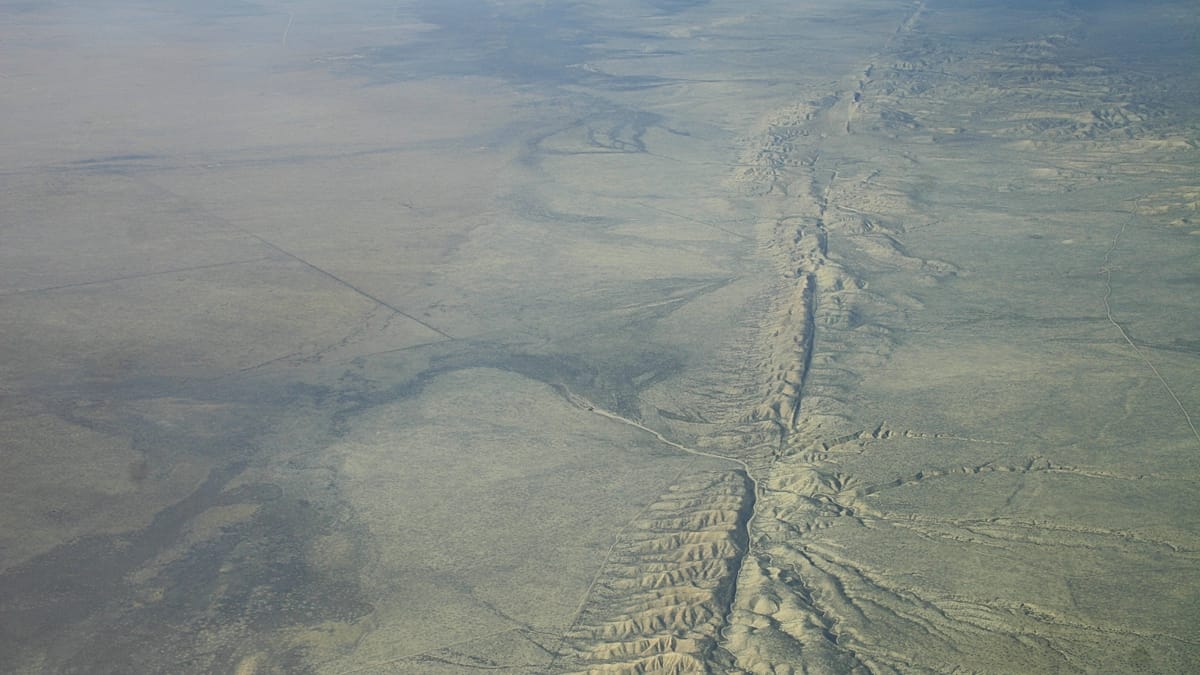
San Andreas Fault Stress Reaches Highest Level in 1,000 Years, Study Finds
A new peer-reviewed study finds that tectonic stress on Southern California's San Andreas and San Jacinto fault systems has reached its highest levels in at least 1,000 years, with the San Jacinto-Bernardino section measuring 3.6 megapascals. The research, led by the University of Hawaiʻi at Mānoa and published in the Journal of Geophysical Research: Solid Earth, used a computer model drawing on geological data including radiocarbon dating and tree-ring records to reconstruct a millennium of earthquake history. The findings cannot predict when a major earthquake will occur but are intended to improve hazard assessments, inform building codes, and guide emergency preparedness in a region home to millions.