Dogs Outperform Humans in Detecting Spotted Lanternfly Eggs in First Real-World Study
A Virginia Tech study published in PeerJ found that ordinary dogs trained by their owners detected spotted lanternfly egg masses more than twice as often as experienced human searchers in real-world vineyard conditions. The research, the first to test community dog-handler teams in naturalistic settings, involved 26 dog-handler pairs and showed dogs averaged three egg-mass finds per search compared to 1.3 for humans in densely vegetated areas. The findings suggest a scalable, community-based early detection network could help slow the spread of the invasive pest, which has reached 19 U.S. states and threatens vineyards, orchards, and forests.
Researchers at Virginia Tech's College of Agriculture and Life Sciences tested whether pet dogs trained by their owners could detect spotted lanternfly egg masses under real-world field conditions, publishing their results in the journal PeerJ. Twenty-six dog-handler teams were evaluated in distance-testing exercises, and nine teams were deployed to search half-acre areas where egg mass locations were unknown, following trained human searchers including plant disease specialists. In heavily vegetated sites, dogs found an average of three egg-mass locations each versus 1.3 for human searchers — a better than 2-to-1 advantage. Detection was most reliable when egg masses were within about 16 feet of the search path, dropping to zero beyond 50 feet, providing practical guidance for how handlers should move through an area. Importantly, dogs trained on nonliving egg masses were able to recognize live ones in the field, meaning new teams can train without risking accidental pest spread. The spotted lanternfly, which kills grapevines by feeding on their sap and lays cryptic egg masses that are difficult to spot visually, has spread to 19 states and poses significant economic risk to the wine and agriculture industries. Researchers plan to extend the approach to detecting other agricultural threats, including Pierce's disease, a bacterial infection that also damages grapevines.
Limitations & open questions
The study tested only nine dog-handler teams in naturalistic search conditions, which is a small sample size; the authors do not discuss statistical power or whether results would generalize across different dog breeds, training levels, or geographic environments. The study also does not report false-positive rates (dogs alerting where no egg masses exist), which would be important for evaluating real-world deployment reliability. Long-term scalability and cost of training community dog-handler teams compared to professional detection units is not addressed.
How coverage differed
Phys.org presented the findings in a straightforward research context, emphasizing methodology and scientific implications. The Independent framed the story with a more urgent, consumer-facing tone — highlighting the current pest season, economic threats, and the inadequacy of manual control methods like stomping — adding broader public-interest context not present in the Phys.org coverage.
What different sources said
- The IndependentLeft
Sniffing dogs could help fight an annoying invasive species found in cities across the US
- Phys.orgCenter
Dogs uncover invasive pests that experts missed in real-world vineyard tests
Related

Nobel Laureates Rebut Study Claiming Universe's Expansion Is Slowing, Confirm Acceleration Continues
An international team of astrophysicists, including Nobel laureates Adam Riess and Brian Schmidt, has published a study in the Monthly Notices of the Royal Astronomical Society confirming that the universe's expansion is still accelerating. The rebuttal targets a late-2024 South Korean study that had claimed dark energy was weakening, a finding that would have overturned nearly three decades of cosmological understanding. The new study identifies two specific methodological errors in the earlier work, restoring confidence in the standard model of cosmic acceleration while leaving the deeper mystery of what dark energy actually is unresolved.

Study Finds Trees May Store Less Carbon Than Climate Models Predict
A new study published in Science Advances found that oak trees stop growing months before they stop photosynthesizing, meaning increased carbon uptake does not necessarily translate into more wood growth and long-term carbon storage. Researchers analyzed 137 sites across the US, finding that 26–36% of annual carbon uptake occurred after tree growth had already ceased, with drought and heat identified as key triggers for halting growth. The findings suggest that widely used climate models, which assume photosynthesis and growth are tightly linked, may be overestimating forests' future capacity to sequester carbon.
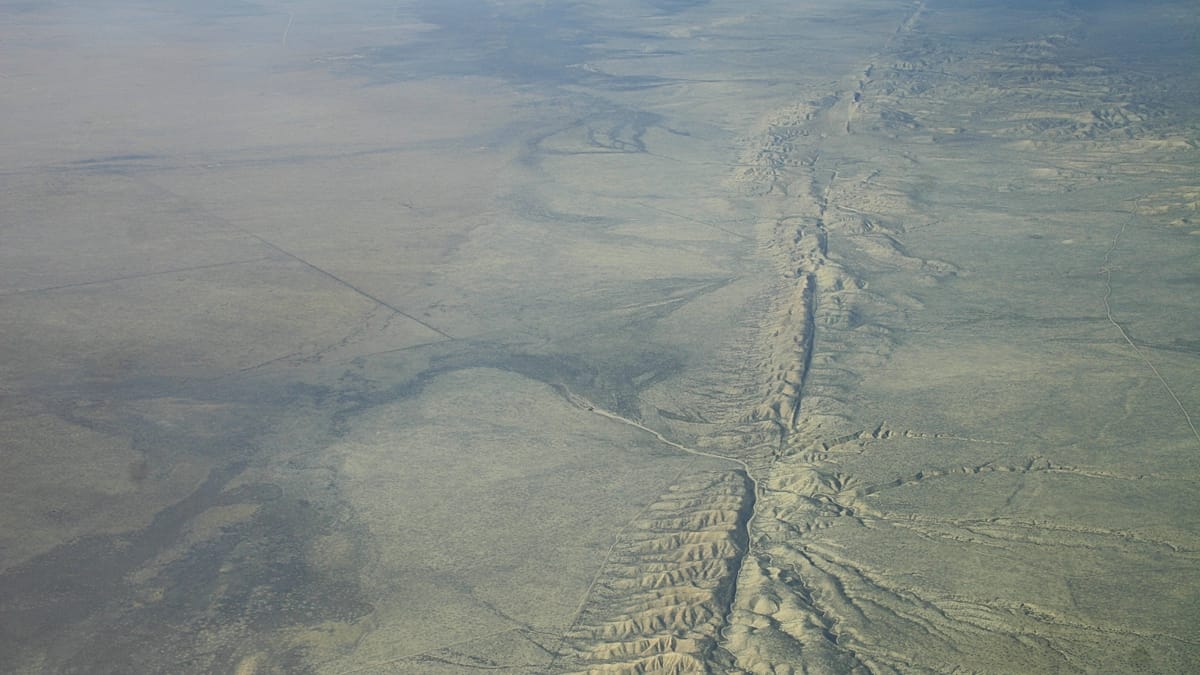
San Andreas Fault Stress Reaches Highest Level in 1,000 Years, Study Finds
A new peer-reviewed study finds that tectonic stress on Southern California's San Andreas and San Jacinto fault systems has reached its highest levels in at least 1,000 years, with the San Jacinto-Bernardino section measuring 3.6 megapascals. The research, led by the University of Hawaiʻi at Mānoa and published in the Journal of Geophysical Research: Solid Earth, used a computer model drawing on geological data including radiocarbon dating and tree-ring records to reconstruct a millennium of earthquake history. The findings cannot predict when a major earthquake will occur but are intended to improve hazard assessments, inform building codes, and guide emergency preparedness in a region home to millions.