CO₂ Injection Accelerates Cement Strength Development Through Novel Chemical Mechanism

MIT researchers have used Raman confocal microscopy to directly observe, for the first time, the transient chemical reactions that occur when carbon dioxide is injected into fresh cement paste. The study, published in the Journal of the American Ceramic Society, reveals a three-stage process in which CO₂ triggers the formation of a fleeting silica gel network that redistributes binding compounds more evenly throughout the cement matrix. The findings explain why CO₂-injected cement achieves 13% higher compressive strength at 24 hours and could help optimize the process as a carbon storage strategy in construction.
A team led by MIT Associate Professor Admir Masic and graduate student Marcin Hajduczek has published the first direct visualization of the chemical sequence that unfolds when CO₂ is injected into cement paste, using Raman confocal microscopy to track reactions continuously over 24 hours. The research, conducted at MIT's Concrete Sustainability Hub and published in the Journal of the American Ceramic Society, identifies a three-act process: CO₂ first sequesters calcium into calcium carbonate within the first hour, depriving silicates of their usual reaction partner and causing them to form a distributed silica gel network throughout the paste. Once the CO₂ is fully mineralized at around four to five hours, normal hydration resumes, and calcium hydroxide reacts with the silica gel via a pozzolanic reaction, converting it into calcium silicate hydrate (C-S-H) — the primary binding compound in cement — distributed far more uniformly than in conventional hydration. Raman imaging time-series data confirm this progression, showing silica gel (gray) present in early hours and giving way to standard hydration products (yellow) by 10 hours. The more even distribution of C-S-H explains the measured 13% gain in compressive strength at 24 hours for paste mixed with CO₂ at 1% by cement weight. The study also corrects a prior hypothesis: calcium carbonate crystals were previously thought to seed C-S-H growth, but are now shown to be passive bystanders embedded in the silica gel template. Researchers note that while the process could theoretically offset up to 40% of cement production's carbon emissions, the practical achievable offset is likely a fraction of that figure, and questions about the mechanical properties of the new C-S-H and optimal CO₂ dosage remain open.
Limitations & open questions
The study examined cement paste at laboratory scale using a specific CO₂ dosage (1% by cement weight); it is unclear how results translate to full-scale concrete production, different cement formulations, or varying CO₂ dosages. The long-term durability and mechanical properties of the redistributed C-S-H phase have not yet been directly measured.
What different sources said
Related

Nobel Laureates Rebut Study Claiming Universe's Expansion Is Slowing, Confirm Acceleration Continues
An international team of astrophysicists, including Nobel laureates Adam Riess and Brian Schmidt, has published a study in the Monthly Notices of the Royal Astronomical Society confirming that the universe's expansion is still accelerating. The rebuttal targets a late-2024 South Korean study that had claimed dark energy was weakening, a finding that would have overturned nearly three decades of cosmological understanding. The new study identifies two specific methodological errors in the earlier work, restoring confidence in the standard model of cosmic acceleration while leaving the deeper mystery of what dark energy actually is unresolved.

Study Finds Trees May Store Less Carbon Than Climate Models Predict
A new study published in Science Advances found that oak trees stop growing months before they stop photosynthesizing, meaning increased carbon uptake does not necessarily translate into more wood growth and long-term carbon storage. Researchers analyzed 137 sites across the US, finding that 26–36% of annual carbon uptake occurred after tree growth had already ceased, with drought and heat identified as key triggers for halting growth. The findings suggest that widely used climate models, which assume photosynthesis and growth are tightly linked, may be overestimating forests' future capacity to sequester carbon.
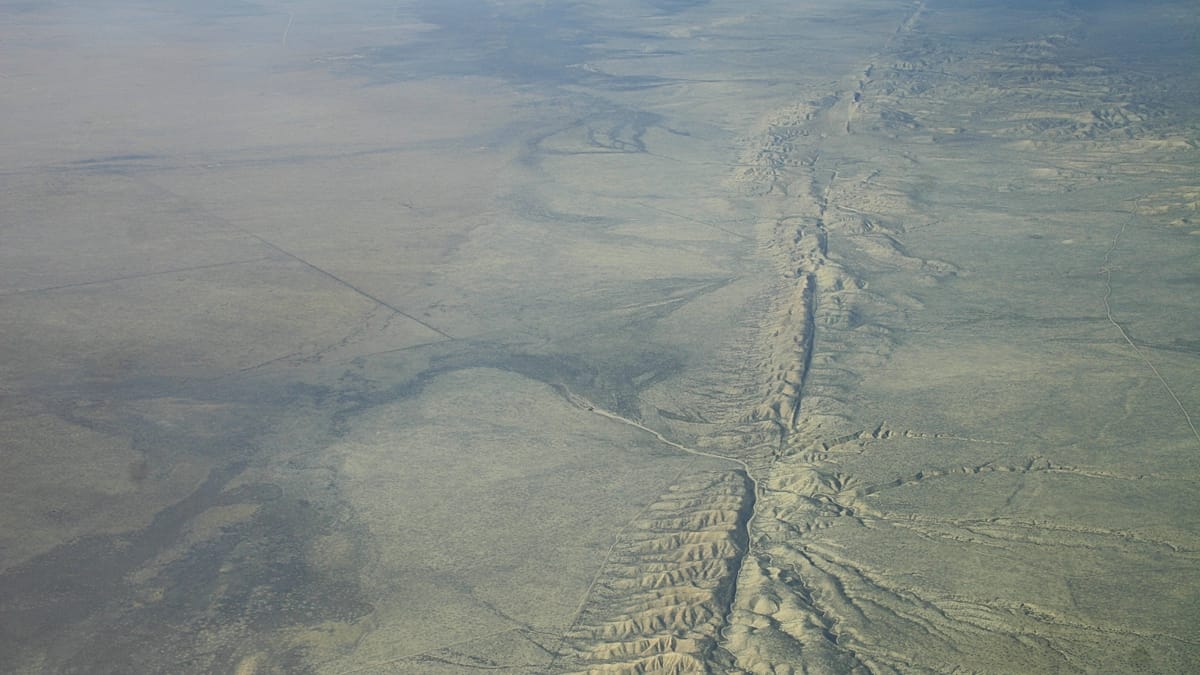
San Andreas Fault Stress Reaches Highest Level in 1,000 Years, Study Finds
A new peer-reviewed study finds that tectonic stress on Southern California's San Andreas and San Jacinto fault systems has reached its highest levels in at least 1,000 years, with the San Jacinto-Bernardino section measuring 3.6 megapascals. The research, led by the University of Hawaiʻi at Mānoa and published in the Journal of Geophysical Research: Solid Earth, used a computer model drawing on geological data including radiocarbon dating and tree-ring records to reconstruct a millennium of earthquake history. The findings cannot predict when a major earthquake will occur but are intended to improve hazard assessments, inform building codes, and guide emergency preparedness in a region home to millions.