Climate-Fueled Landslides Kill Significant Portion of World's Rarest Great Apes in Indonesia

A study published in Current Biology estimates that 58 Tapanuli orangutans — roughly 7% of the entire species — were killed by landslides triggered by Cyclone Senyar in Sumatra, Indonesia, in November 2025. Fewer than 800 of the critically endangered apes existed before the disaster, which also killed more than 1,000 people and destroyed approximately 8,300 hectares of the species' core forest habitat in the Batang Toru ecosystem, as confirmed by before-and-after satellite imagery showing extensive bare-earth scarring. The findings underscore how climate change-intensified extreme weather events can deliver catastrophic, near-instantaneous blows to already fragile wildlife populations, raising fears that the Tapanuli orangutan could become the first modern great ape species to go extinct.
Research published on June 10, 2026, in Current Biology by scientists from Borneo Futures, World Weather Attribution, and Liverpool John Moores University estimates that Cyclone Senyar's extreme rainfall — more than 1,000mm over four days in November 2025 — triggered approximately 50,185 individual landslides across 8,303 hectares, or about 11.7% of the West Block of the Batang Toru ecosystem, the primary habitat of the Tapanuli orangutan (Pongo tapanuliensis). By overlaying satellite-derived landslide maps with historical orangutan density data, the researchers calculated a central estimate of 58 deaths, with a range of 18 to 120 individuals; this represents 11% of the local West Block population and 7% of the estimated global wild population of roughly 800. The authors note these figures are conservative, as they do not account for canopy damage, reduced food availability, or deaths in the East and South Blocks, which were not surveyed. Human-induced climate change was found to have increased the storm's regional rainfall intensity by 10% to 50%, and researchers warn that such events are likely to grow more frequent and severe. Prior modeling has suggested that annual population losses exceeding 1% are sufficient to drive the species toward extinction, making a single-event loss of 7% an acute demographic shock. The Indonesian government has temporarily halted major industrial activity — including mining, palm oil, and hydropower expansion — in the Batang Toru area, and the study's authors call for permanent protection of the ecosystem, expansion of protected areas, and international biodiversity-recovery financing to prevent what they describe as the potential first modern extinction of a great ape species.
Limitations & open questions
The study's own authors acknowledge key limitations: the death toll estimate (18–120, central estimate 58) carries wide uncertainty because it relies on indirect methods — overlaying satellite landslide maps with historical density models rather than direct field counts of carcasses or living individuals. The East and South Block populations were not surveyed, meaning total species-level mortality could be higher. Long-term demographic consequences, such as reduced reproductive success or increased stress-related mortality in survivors, are not yet quantified. The study also does not assess whether the temporary Indonesian government moratorium on industrial activity will be made permanent or what enforcement mechanisms exist.
How coverage differed
Coverage was broadly consistent across outlets, but the NYT framed the story primarily through the lens of climate change as a driver of ecological loss, while the Guardian and BBC gave comparatively more prominence to the specific policy recommendations — including the moratorium on industrial activity and calls for international financing — and to direct quotes from Indonesian and local researchers emphasizing national responsibility.
What different sources said
- Phys.orgCenter
One storm pushed world's rarest great ape closer to extinction in Sumatra
- BBC Top StoriesCenter
Four days of extreme rain killed 7% of world's rarest orangutans, study says
- Yahoo FinanceCenter
Deadly Indonesia floods wiped out at least 7% of rare orangutan population, report says
Four days of extreme rain in Indonesia killed 7% of world’s rarest great apes, study finds
- Eos (AGU)Center
Our new paper: Extreme rainfall further endangers the world’s rarest great ape
- NYT WorldLeft
Indonesia Landslides Devastated Endangered Orangutans, Study Finds
- NewserCenter
4 Days of Rain Wiped Out 7% of Rarest Great Ape
- Live ScienceCenter
World's rarest great ape decimated by 4 days of extreme rain, with 7% of population lost to cyclone
Related

Nobel Laureates Rebut Study Claiming Universe's Expansion Is Slowing, Confirm Acceleration Continues
An international team of astrophysicists, including Nobel laureates Adam Riess and Brian Schmidt, has published a study in the Monthly Notices of the Royal Astronomical Society confirming that the universe's expansion is still accelerating. The rebuttal targets a late-2024 South Korean study that had claimed dark energy was weakening, a finding that would have overturned nearly three decades of cosmological understanding. The new study identifies two specific methodological errors in the earlier work, restoring confidence in the standard model of cosmic acceleration while leaving the deeper mystery of what dark energy actually is unresolved.

Study Finds Trees May Store Less Carbon Than Climate Models Predict
A new study published in Science Advances found that oak trees stop growing months before they stop photosynthesizing, meaning increased carbon uptake does not necessarily translate into more wood growth and long-term carbon storage. Researchers analyzed 137 sites across the US, finding that 26–36% of annual carbon uptake occurred after tree growth had already ceased, with drought and heat identified as key triggers for halting growth. The findings suggest that widely used climate models, which assume photosynthesis and growth are tightly linked, may be overestimating forests' future capacity to sequester carbon.
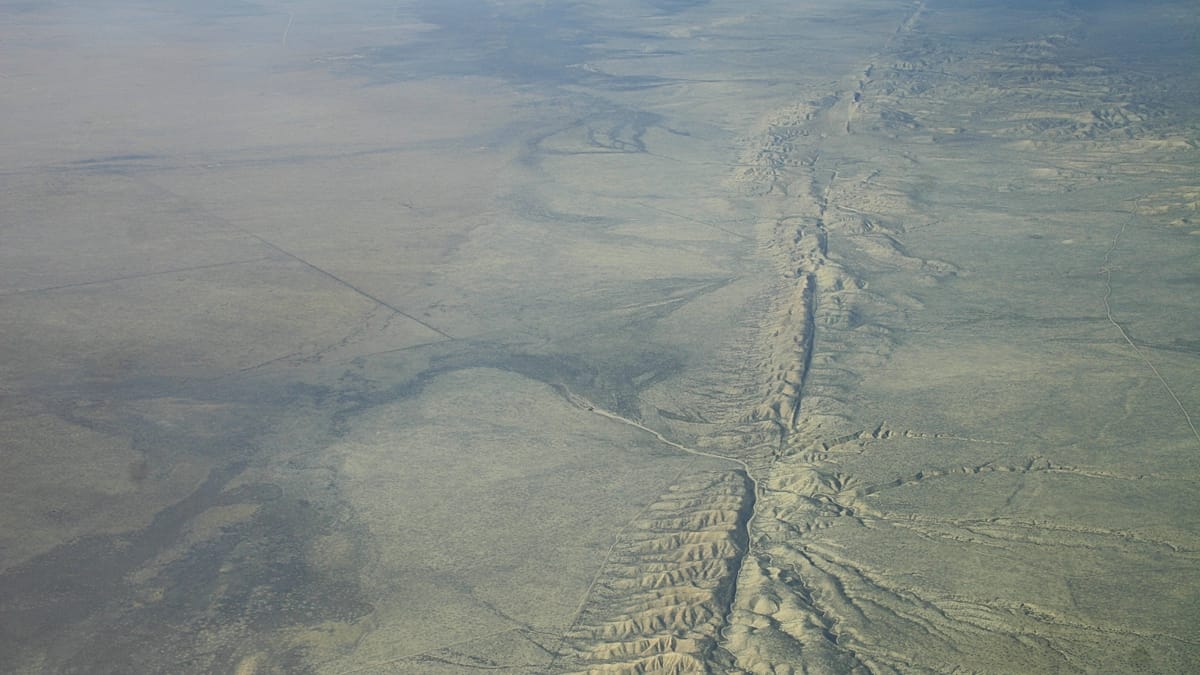
San Andreas Fault Stress Reaches Highest Level in 1,000 Years, Study Finds
A new peer-reviewed study finds that tectonic stress on Southern California's San Andreas and San Jacinto fault systems has reached its highest levels in at least 1,000 years, with the San Jacinto-Bernardino section measuring 3.6 megapascals. The research, led by the University of Hawaiʻi at Mānoa and published in the Journal of Geophysical Research: Solid Earth, used a computer model drawing on geological data including radiocarbon dating and tree-ring records to reconstruct a millennium of earthquake history. The findings cannot predict when a major earthquake will occur but are intended to improve hazard assessments, inform building codes, and guide emergency preparedness in a region home to millions.