Chinese Zhuque-2E Rocket Creates Spectacular Light Show Over Australia
A Chinese rocket named Zhuque-2E, launched by private aerospace firm LandSpace, lit up the skies over Queensland and northern New South Wales on Tuesday evening, creating a striking blue-white plume visible for roughly 20 minutes. The rocket, carrying two direct-to-cell telecommunications satellites, was launched from north-west China at approximately 4:23pm Beijing time and passed over north-eastern Australia about 20 minutes after liftoff. The event prompted widespread public speculation about comets or other phenomena, and experts say such sightings will become increasingly common as commercial space launches accelerate globally.
The Zhuque-2E Y6 rocket, developed by Chinese private aerospace company LandSpace and launched from the Dongfeng space innovation pilot zone, produced a vivid aerial display over eastern Australia on the evening of Tuesday, June 10, 2026. Photographs captured a bright blue-white cone-shaped plume against the darkening sky, consistent with the rocket venting excess propellant gases — a process experts call passivation — as it ascended into orbit. Because the rocket was high enough above the atmosphere to still be illuminated by sunlight even after darkness had fallen on the ground below, the expelled gas cloud reflected sunlight back toward Earth, creating the glowing effect. Observers on the ground reported a silvery or blue-tinted ball of gas that gradually turned red before disappearing, a colour shift explained by the rocket and its plume moving into Earth's shadow — the same optical effect that reddens clouds at sunset. LandSpace declared the mission a success, with the rocket's 6-tonne payload of two telecommunications satellites successfully delivered to orbit. Astrophysicists quoted across multiple outlets noted that the growing pace of commercial launches by China, the US, and potentially India means Australians should expect to see similar events more frequently in coming years. However, experts also cautioned that increased launch activity contributes to upper-atmosphere pollution and space debris, which can interfere with astronomical observation and eventually re-enter Earth's atmosphere as fireballs.
Limitations & open questions
No source specifies the intended orbital altitude or operational lifespan of the two deployed direct-to-cell satellites, nor details about which telecommunications network or operator they are intended to serve.
How coverage differed
ABC Australia framed the event with a tone of wonder and public excitement, emphasising the spectacular nature of the display and future opportunities for skywatching, while the Sydney Morning Herald and WAtoday gave more weight to the environmental and space-debris downsides of increasing rocket launches, offering a more cautionary perspective alongside the spectacle.
What different sources said
- Sydney Morning HeraldCenter
Chinese rocket identified as source of mystery light in Australian skies
Clear winter skies in northern NSW offer front-row seat to galaxy's best show
- ABC AustraliaCenter
Mystery streak of light from China gives Australians spectacular show
- WAtodayCenter
Chinese rocket identified as source of mystery light in Australian skies
- Live ScienceCenter
'Geminid Symphony' and 'Galactic Gandalf': See the breathtaking views of our home galaxy from the 2026 Milky Way Photographer of the Year contest
Related
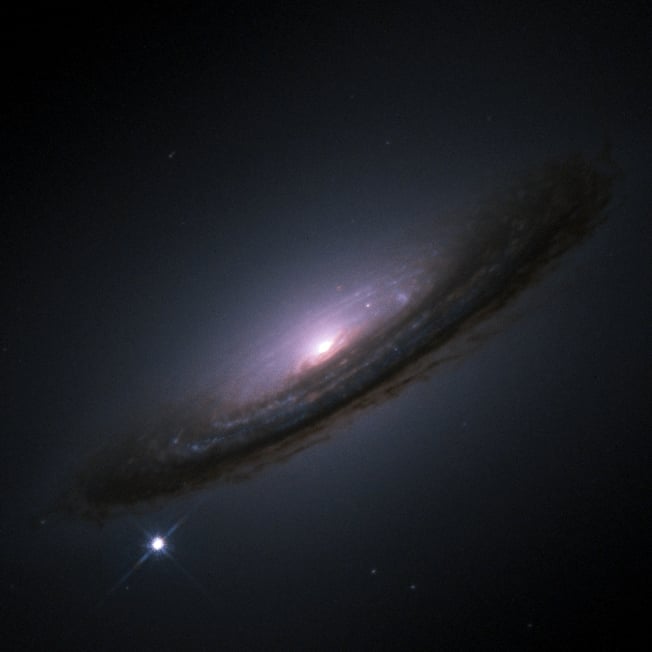
Nobel Laureates Rebut Study Claiming Universe's Expansion Is Slowing, Confirm Acceleration Continues
An international team of astrophysicists, including Nobel laureates Adam Riess and Brian Schmidt, has published a study in the Monthly Notices of the Royal Astronomical Society confirming that the universe's expansion is still accelerating. The rebuttal targets a late-2024 South Korean study that had claimed dark energy was weakening, a finding that would have overturned nearly three decades of cosmological understanding. The new study identifies two specific methodological errors in the earlier work, restoring confidence in the standard model of cosmic acceleration while leaving the deeper mystery of what dark energy actually is unresolved.

Study Finds Trees May Store Less Carbon Than Climate Models Predict
A new study published in Science Advances found that oak trees stop growing months before they stop photosynthesizing, meaning increased carbon uptake does not necessarily translate into more wood growth and long-term carbon storage. Researchers analyzed 137 sites across the US, finding that 26–36% of annual carbon uptake occurred after tree growth had already ceased, with drought and heat identified as key triggers for halting growth. The findings suggest that widely used climate models, which assume photosynthesis and growth are tightly linked, may be overestimating forests' future capacity to sequester carbon.
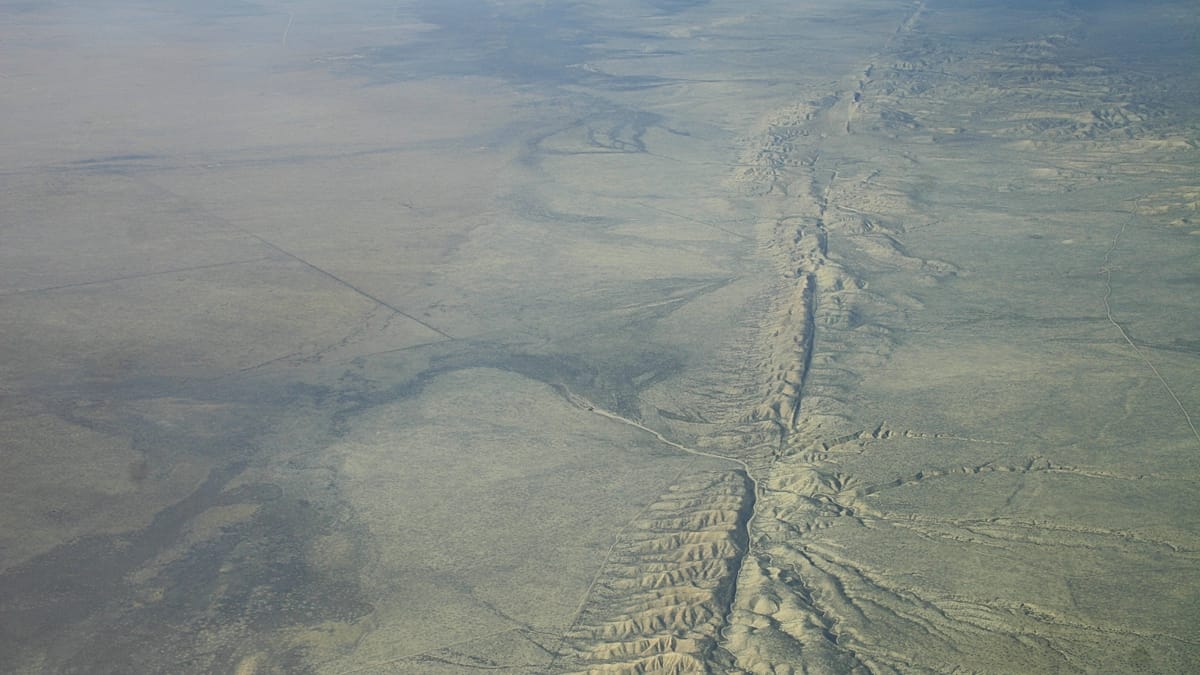
San Andreas Fault Stress Reaches Highest Level in 1,000 Years, Study Finds
A new peer-reviewed study finds that tectonic stress on Southern California's San Andreas and San Jacinto fault systems has reached its highest levels in at least 1,000 years, with the San Jacinto-Bernardino section measuring 3.6 megapascals. The research, led by the University of Hawaiʻi at Mānoa and published in the Journal of Geophysical Research: Solid Earth, used a computer model drawing on geological data including radiocarbon dating and tree-ring records to reconstruct a millennium of earthquake history. The findings cannot predict when a major earthquake will occur but are intended to improve hazard assessments, inform building codes, and guide emergency preparedness in a region home to millions.