Canadian Space Agency Awards Three B.C. Firms Contracts for Lunar Exploration Planning

The Canadian Space Agency has awarded $500,000 contracts to three companies — SpaceDirt, Volta Space Technologies, and Canadian Strategic Missions Corp. — to assess Canada's role in lunar surface missions. Over the next 10 months, the firms will evaluate power generation and distribution on the moon, lunar soil management, and the extraction of resources such as ice, metallic elements, and Helium-3. The contracts represent an early step in positioning Canada as a contributor to the growing international effort to develop the moon as a base for deeper space exploration.
The Canadian Space Agency has selected three companies to chart a course for Canadian participation in human and robotic lunar missions, awarding $500,000 in contracts to Langley, B.C.-based SpaceDirt, Volta Space Technologies, and Canadian Strategic Missions Corp. Over a 10-month period, the firms will assess requirements for generating and distributing power on the lunar surface, managing lunar soil, and extracting resources such as water ice, metallic elements, and Helium-3. SpaceDirt, led by CEO Shaun Riddell, specializes in autonomous robotic resource development technology and envisions its machines serving as industrial 'dump trucks' on the moon. The company is currently developing two robotic vehicles — a four-wheeled rover called Sled 75 with a 250-kilogram payload, and a larger eight-wheeled prototype still under refinement. Riddell described the moon as a 'proving ground' and 'sandbox' for validating technologies intended for more distant destinations such as Mars or asteroids, noting its relative proximity makes communications and logistics far more manageable. The contracts signal Canada's intent to play a role in the emerging commercial and governmental push toward lunar resource utilization.
Limitations & open questions
The article does not specify whether the $500,000 is split among all three companies or awarded separately to each, or what criteria the Canadian Space Agency used to select the recipients. No details are provided about Volta Space Technologies or Canadian Strategic Missions Corp. and their respective roles in the project.
What different sources said
- Global News CanadaCenter
B.C. firm ‘over the moon’ about contract to chart Canada’s role in lunar exploration
Related
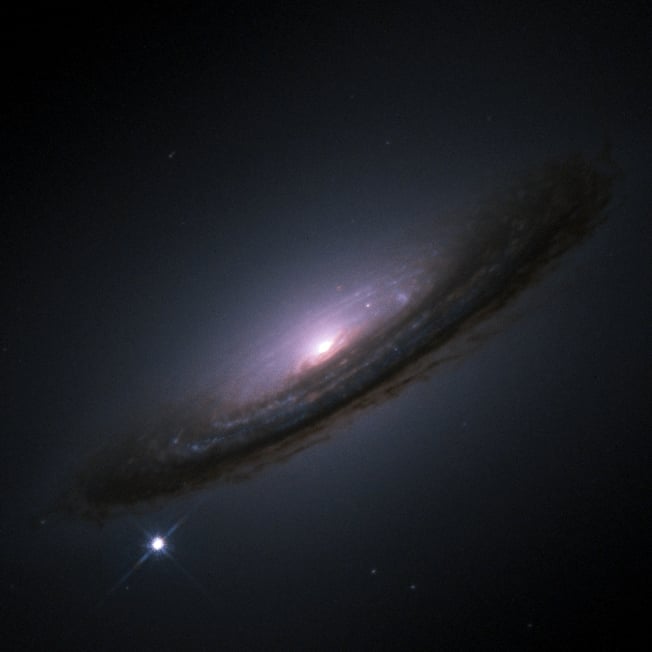
Nobel Laureates Rebut Study Claiming Universe's Expansion Is Slowing, Confirm Acceleration Continues
An international team of astrophysicists, including Nobel laureates Adam Riess and Brian Schmidt, has published a study in the Monthly Notices of the Royal Astronomical Society confirming that the universe's expansion is still accelerating. The rebuttal targets a late-2024 South Korean study that had claimed dark energy was weakening, a finding that would have overturned nearly three decades of cosmological understanding. The new study identifies two specific methodological errors in the earlier work, restoring confidence in the standard model of cosmic acceleration while leaving the deeper mystery of what dark energy actually is unresolved.
Study Finds Trees May Store Less Carbon Than Climate Models Predict
A new study published in Science Advances found that oak trees stop growing months before they stop photosynthesizing, meaning increased carbon uptake does not necessarily translate into more wood growth and long-term carbon storage. Researchers analyzed 137 sites across the US, finding that 26–36% of annual carbon uptake occurred after tree growth had already ceased, with drought and heat identified as key triggers for halting growth. The findings suggest that widely used climate models, which assume photosynthesis and growth are tightly linked, may be overestimating forests' future capacity to sequester carbon.
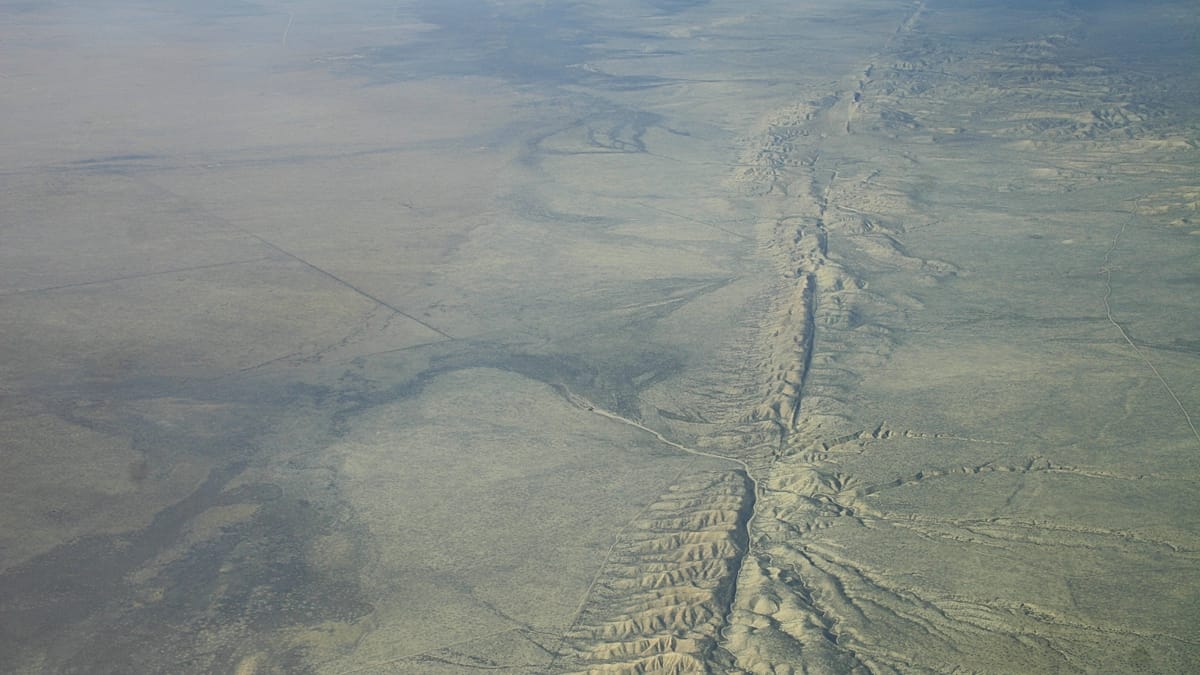
San Andreas Fault Stress Reaches Highest Level in 1,000 Years, Study Finds
A new peer-reviewed study finds that tectonic stress on Southern California's San Andreas and San Jacinto fault systems has reached its highest levels in at least 1,000 years, with the San Jacinto-Bernardino section measuring 3.6 megapascals. The research, led by the University of Hawaiʻi at Mānoa and published in the Journal of Geophysical Research: Solid Earth, used a computer model drawing on geological data including radiocarbon dating and tree-ring records to reconstruct a millennium of earthquake history. The findings cannot predict when a major earthquake will occur but are intended to improve hazard assessments, inform building codes, and guide emergency preparedness in a region home to millions.