Babel-USB: Developer Creates USB Drive with Procedurally Generated Infinite Filesystem
A developer has created a project that converts an ESP32-S3 microcontroller into a USB device that appears to contain an infinite filesystem, inspired by Jorge Luis Borges' Library of Babel concept. The project uses procedural generation to create files on-demand rather than storing them, allowing users to browse and retrieve any possible file combination. The project demonstrates creative use of embedded systems and has been shared on Hacker News as a technical curiosity.
The Babel-USB project transforms an ESP32-S3 development board into a USB stick that simulates an infinite filesystem using procedural generation algorithms. Rather than storing actual files, the device generates them dynamically based on user requests, inspired by Borges' fictional Library of Babel—a library containing every possible book. Users can set up the project by flashing custom firmware onto an ESP32-S3 board using Visual Studio Code and PlatformIO, then browse the virtual filesystem through their computer's file manager. The project includes a utility to locate specific files within the infinite namespace by calculating their procedural paths. The developer notes that files larger than a few hundred bytes take considerable time to generate, and most programs require copying files locally before reading them due to limited MTP (Media Transfer Protocol) support.
What's missing
The article does not explain the specific procedural generation algorithm used to create files, the mathematical basis for the infinite namespace, or practical limitations of the approach beyond generation time. It also lacks information about whether this is a completed project or proof-of-concept, and does not discuss potential use cases or why someone might use this beyond novelty.
What different sources said
- Hacker NewsCenter
Babel-USB: USB drive with every file
Related
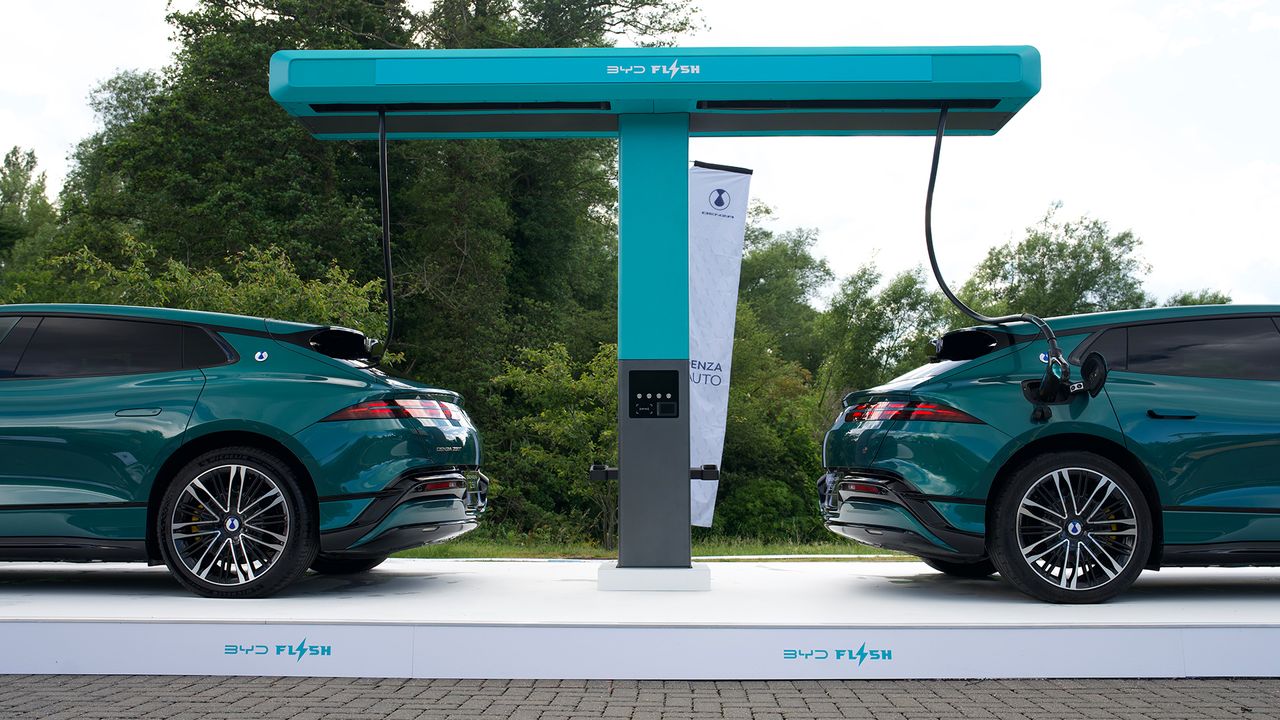
BYD Demonstrates Ultra-Fast 9-Minute EV Charging Technology at UK Headquarters
BYD showcased its Flash Charge technology at its West London headquarters, charging a Denza Z9 GT from 10% to nearly 100% in nine minutes using 1,500kW peak power. The system uses CCS 2 connectors compatible with most EVs and includes on-site battery storage to reduce grid demand. BYD plans to deploy 6,000 Flash Charging stalls globally by end of 2027, with 3,000 in Europe and 300 in the UK, potentially offering charging at under 50 pence per kilowatt-hour.

Anthropic's Claude Fable 5 Model Blocking Harmless User Requests with Overly Strict Safety Filters
Anthropic's newly released Claude Fable 5 AI model is refusing to respond to innocuous user prompts, including simple greetings like "hello," due to overly conservative safety guardrails. The company acknowledged the issue and stated that false positives occur in less than 5% of sessions, but has not provided exact refusal rates. The problem affects millions of users and has generated numerous bug reports and complaints from researchers and developers.

Open-Source Raspberry Pi Project Recreates Retro VCR Interface for Modern Media Playback
Developer Anthony Caccese has released 240-MP, an open-source Raspberry Pi project that creates a vintage VCR-style interface for playing local media files and Plex libraries on CRT or modern screens. The project runs on Raspberry Pi 4B, 3B+, and 3B models and supports navigation via remote control or keyboard. The tool addresses nostalgia for older display formats while enabling modern streaming functionality.