Australia's 'Education Power Couples' Nearly Quadrupled in Two Decades, Census Data Shows
An ABC analysis of Australian census data finds 1.14 million couples — about 23 per cent of partnered Australians — are now 'power couples' in which both partners hold university degrees, nearly quadrupling over two decades. The trend reflects a broader global pattern of 'assortative mating,' where people increasingly partner with others of similar educational background, driven by later marriage, shared social environments, and dating app filters. Experts warn the rise of education-matched couples may reinforce socioeconomic inequality across generations, even as it reduces power imbalances within individual relationships.
Census data analysed by the ABC reveals that 1.76 million Australian couples — more than one third — share the same level of education, with 1.14 million of those being university-educated 'power couples.' The share of power couples grew from 9 to 23 per cent of the partnered population between 2001 and 2021, outpacing the doubling of university qualification rates over the same period. The tendency to partner within one's education group is strongest at the extremes: those with no formal education are over 80 times more likely to partner with each other than average, while doctoral degree holders are nearly 15 times more likely. Bachelor's degree holders show the highest absolute self-matching rate at 42.1 per cent, according to network data visualisations. Sociologists attribute the trend to later marriage, university and workplace social circles, and increasingly, dating app filters that allow users to screen by education level — a feature offered by Bumble, Hinge, Tinder U, and EliteSingles. While couples like the Patels say educational parity reduces power imbalances within their marriages, researchers including University of Wisconsin-Madison sociologist Christine Schwartz warn the broader pattern is 'consistent with a growing social divide' along educational lines, with advantages compounding across generations.
Data: ABC News
Limitations & open questions
The article does not address whether the observed trends differ significantly by ethnicity or immigration status within Australia, which may be relevant given that some profiled couples are recent migrants.
What different sources said
- ABC AustraliaCenter
The trait that defines Australia's 1.1 million power couples
Related
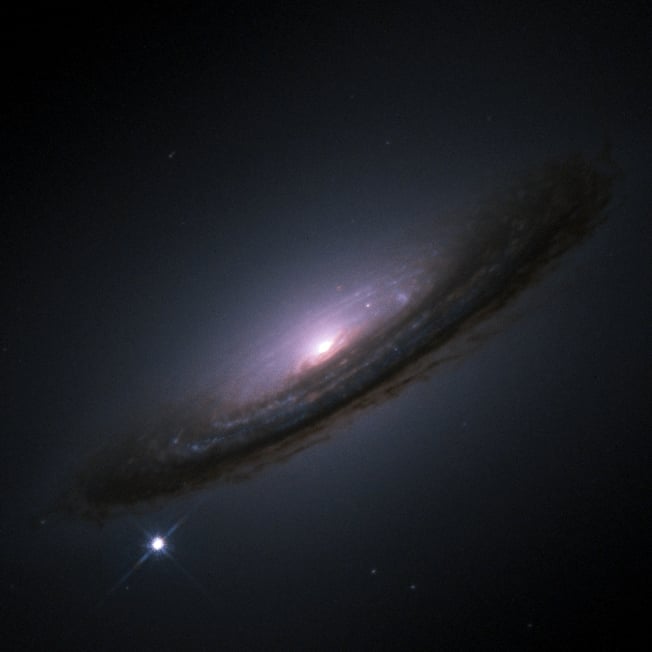
Nobel Laureates Rebut Study Claiming Universe's Expansion Is Slowing, Confirm Acceleration Continues
An international team of astrophysicists, including Nobel laureates Adam Riess and Brian Schmidt, has published a study in the Monthly Notices of the Royal Astronomical Society confirming that the universe's expansion is still accelerating. The rebuttal targets a late-2024 South Korean study that had claimed dark energy was weakening, a finding that would have overturned nearly three decades of cosmological understanding. The new study identifies two specific methodological errors in the earlier work, restoring confidence in the standard model of cosmic acceleration while leaving the deeper mystery of what dark energy actually is unresolved.
Study Finds Trees May Store Less Carbon Than Climate Models Predict
A new study published in Science Advances found that oak trees stop growing months before they stop photosynthesizing, meaning increased carbon uptake does not necessarily translate into more wood growth and long-term carbon storage. Researchers analyzed 137 sites across the US, finding that 26–36% of annual carbon uptake occurred after tree growth had already ceased, with drought and heat identified as key triggers for halting growth. The findings suggest that widely used climate models, which assume photosynthesis and growth are tightly linked, may be overestimating forests' future capacity to sequester carbon.
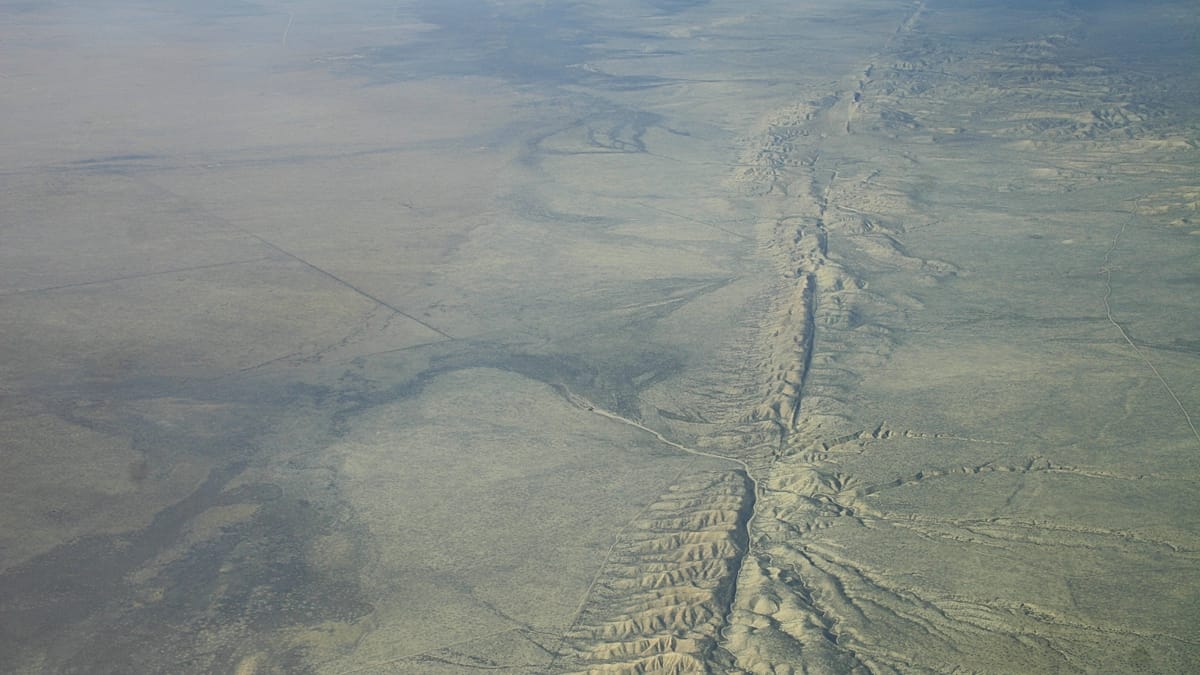
San Andreas Fault Stress Reaches Highest Level in 1,000 Years, Study Finds
A new peer-reviewed study finds that tectonic stress on Southern California's San Andreas and San Jacinto fault systems has reached its highest levels in at least 1,000 years, with the San Jacinto-Bernardino section measuring 3.6 megapascals. The research, led by the University of Hawaiʻi at Mānoa and published in the Journal of Geophysical Research: Solid Earth, used a computer model drawing on geological data including radiocarbon dating and tree-ring records to reconstruct a millennium of earthquake history. The findings cannot predict when a major earthquake will occur but are intended to improve hazard assessments, inform building codes, and guide emergency preparedness in a region home to millions.