Atlantic Ocean 'Cold Blob' Linked to Weakening Ocean Current System
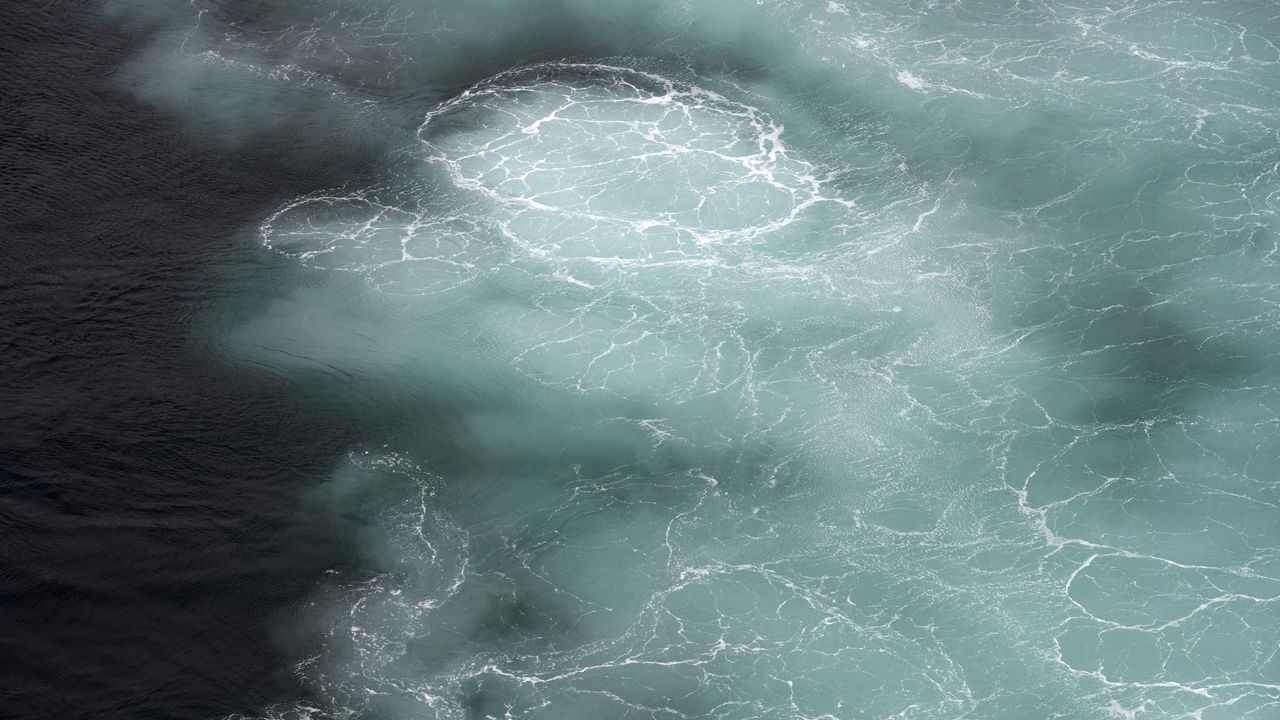
Multiple new studies confirm that an anomalous patch of cooling water south of Greenland — the North Atlantic 'cold blob' — is driven by a weakening Atlantic Meridional Overturning Circulation (AMOC), not surface heat loss. Research published in Geophysical Research Letters found that reduced ocean heat transport, not increased surface heat flux, explains the cooling trend, while a separate arXiv preprint introduces climate network methods to detect AMOC tipping events. The findings raise urgent concerns because an AMOC collapse or major reorganization would trigger severe climate disruptions across Europe, North America, and beyond, though scientists disagree on how close that threshold actually is.
A cluster of recent studies converges on the conclusion that the North Atlantic 'cold blob' — a region roughly between 25°W–45°W and 50°N–60°N that has cooled approximately 0.9°C over the past century while the rest of the ocean warms — is a fingerprint of AMOC weakening rather than local atmospheric effects. Research by Rahmstorf and colleagues, published in Geophysical Research Letters in 2026, used ocean heat content data extending back to 1955 alongside ERA5 reanalysis records to show that surface heat loss in the region has actually decreased, ruling out atmospheric forcing as the cause and pointing instead to reduced northward heat transport by the AMOC. Global temperature anomaly maps corroborate this: they show a pronounced cold anomaly of roughly -1.5°C or colder in the subpolar North Atlantic while the Arctic and Northern Hemisphere land masses warm by +1.5°C or more. A separate arXiv preprint proposes using climate networks — built from instantaneous temporal correlations between geographic locations — to characterize the AMOC 'edge state,' a boundary condition between stable and collapsed circulation, finding that normalized degree centrality reveals cross-equatorial teleconnections as the AMOC approaches this threshold. Paleoclimate evidence from The Conversation adds historical depth: sediment cores off Nova Scotia show that during the Younger Dryas (~13,000 years ago), Gulf Stream reorganization caused regional warming of 4°C–5°C off Atlantic Canada while Europe cooled, providing real-world validation for model predictions of future circulation shifts. Meanwhile, a Science (AAAS) report notes that some analyses find unexpected resilience in the AMOC, underscoring that large uncertainty remains over the timing of any tipping point, with CMIP6 models suggesting it could be crossed around mid-century in a substantial subset of simulations.
Data: Article/ScienceAlert
Limitations & open questions
The study's own authors acknowledge that direct AMOC monitoring has only existed since 2004, leaving an insufficient observational record to definitively establish long-term trajectory. Large uncertainty persists in tipping-point timing estimates across CMIP6 models. The relationship between the cold blob signal and actual AMOC transport strength in observations (as opposed to models) remains incompletely quantified.
How coverage differed
ScienceAlert framed the cold blob findings with urgency, emphasizing that scientists are 'almost at a tipping point,' while Science (AAAS) highlighted countervailing evidence of unexpected AMOC stability, offering a more cautious framing; the other outlets fell between these poles, generally reporting concern without the most alarmist or most reassuring language.
What different sources said
- Nature NewsCenter
Ocean ‘cold blob’ is evidence for a troubling climate trend
- arXiv physicsCenter
Climate network characterization of the AMOC edge state
- Ground NewsCenter
Atlantic 'cold blob' linked to weakening ocean current system nearing a tipping point, study finds
- Live ScienceCenter
Mysterious 'cold blob' in the Atlantic is a sign of the Gulf Stream weakening — and that's bad news for the US East Coast
- ScienceAlertCenter
A Strange 'Cold Blob' in The Atlantic Signals We're Almost at a Tipping Point
- Science (AAAS)Center
The ocean current that warms Europe may be more resilient than feared
- The ConversationCenter
The Gulf Stream suddenly moved north during an ancient cold snap – and it’s a warning for our future
- Hindustan TimesCenter
The ocean patch that is cooling in a warming world — and what it means for the rest of us | World News
Related
Nobel Laureates Rebut Study Claiming Universe's Expansion Is Slowing, Confirm Acceleration Continues
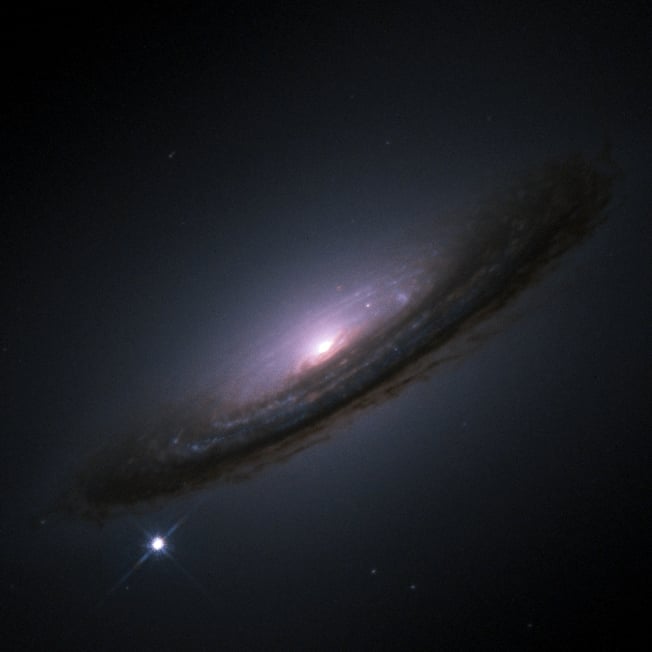
An international team of astrophysicists, including Nobel laureates Adam Riess and Brian Schmidt, has published a study in the Monthly Notices of the Royal Astronomical Society confirming that the universe's expansion is still accelerating. The rebuttal targets a late-2024 South Korean study that had claimed dark energy was weakening, a finding that would have overturned nearly three decades of cosmological understanding. The new study identifies two specific methodological errors in the earlier work, restoring confidence in the standard model of cosmic acceleration while leaving the deeper mystery of what dark energy actually is unresolved.

Study Finds Trees May Store Less Carbon Than Climate Models Predict
A new study published in Science Advances found that oak trees stop growing months before they stop photosynthesizing, meaning increased carbon uptake does not necessarily translate into more wood growth and long-term carbon storage. Researchers analyzed 137 sites across the US, finding that 26–36% of annual carbon uptake occurred after tree growth had already ceased, with drought and heat identified as key triggers for halting growth. The findings suggest that widely used climate models, which assume photosynthesis and growth are tightly linked, may be overestimating forests' future capacity to sequester carbon.
San Andreas Fault Stress Reaches Highest Level in 1,000 Years, Study Finds
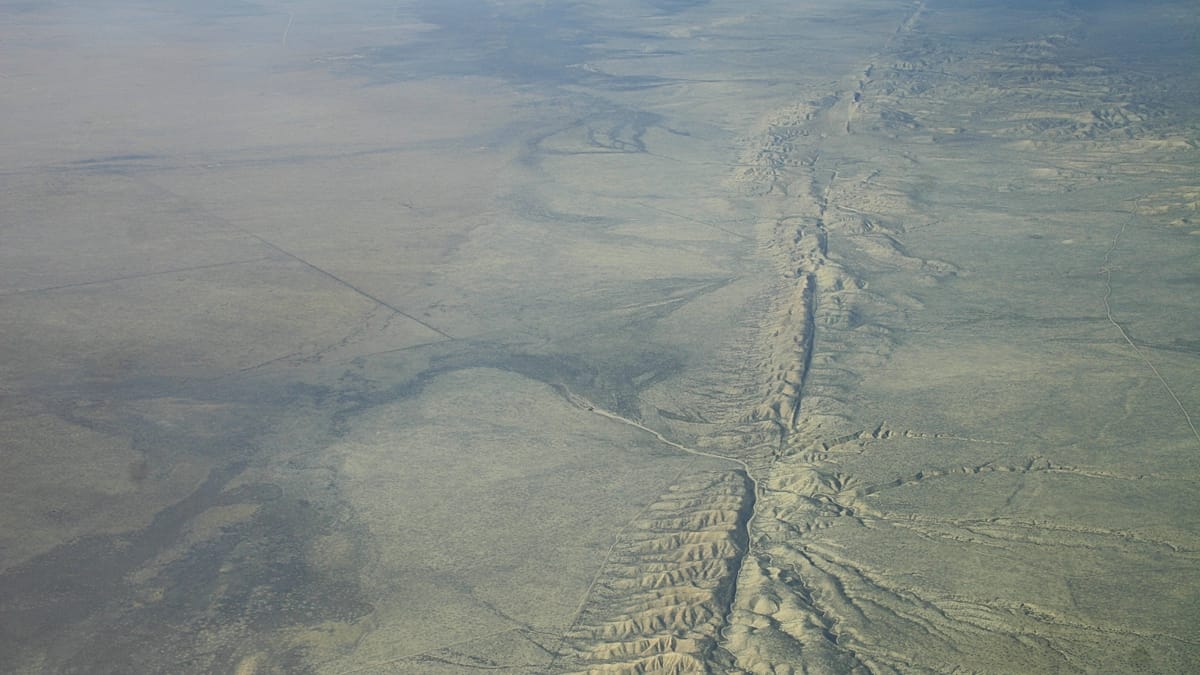
A new peer-reviewed study finds that tectonic stress on Southern California's San Andreas and San Jacinto fault systems has reached its highest levels in at least 1,000 years, with the San Jacinto-Bernardino section measuring 3.6 megapascals. The research, led by the University of Hawaiʻi at Mānoa and published in the Journal of Geophysical Research: Solid Earth, used a computer model drawing on geological data including radiocarbon dating and tree-ring records to reconstruct a millennium of earthquake history. The findings cannot predict when a major earthquake will occur but are intended to improve hazard assessments, inform building codes, and guide emergency preparedness in a region home to millions.