Astronomers Discover Record-Breaking Black Hole Winds Traveling at 30% Speed of Light
Astronomers have identified a quasar called J2318, located about 3 billion light-years away, whose supermassive black hole is ejecting winds at 30% the speed of light — the fastest ever recorded at ultraviolet wavelengths. The quasar is powered by a black hole 1.7 billion times the mass of the sun, and the winds are driven by radiation pressure from photons rather than atmospheric forces. The discovery offers a rare observational window into how supermassive black holes exchange energy with their host galaxies, potentially suppressing star formation.
A team of astronomers led by York University researcher Lucas Seaton has discovered that the quasar J2318 is producing ultraviolet-wavelength winds at roughly 201 million miles per hour — 30% the speed of light — making them the fastest black hole winds ever detected at those wavelengths. The quasar's central supermassive black hole has a mass of approximately 1.7 billion solar masses, which is typical for such objects, but the wind speed is extraordinary. These winds are radiation-driven: the intense light output of the quasar pushes photons against atoms, accelerating gas to extreme velocities. However, this same radiation can strip electrons from atoms, making them invisible, posing a significant puzzle for researchers trying to understand how the gas retains detectable carbon and silicon ions at such speeds. The findings, published in The Astrophysical Journal, draw on spectroscopic data from the Sloan Digital Sky Survey's SDSS-IV and SDSS-V programs. Scientists believe these extreme outflows are a critical mechanism — sometimes called 'feedback' — by which active galactic nuclei regulate star formation across their host galaxies by expelling the gas and dust needed for new stars. Researchers say finding a faster ultraviolet outflow than J2318's will be difficult, but the search is ongoing across the observable universe.
Limitations & open questions
The study does not yet explain the physical mechanism that allows carbon and silicon ions to survive intact at such extreme velocities — a puzzle the authors themselves acknowledge.
What different sources said
- Space.comCenter
These record-breaking black hole winds could create a category 79 hurricane on Earth
Related
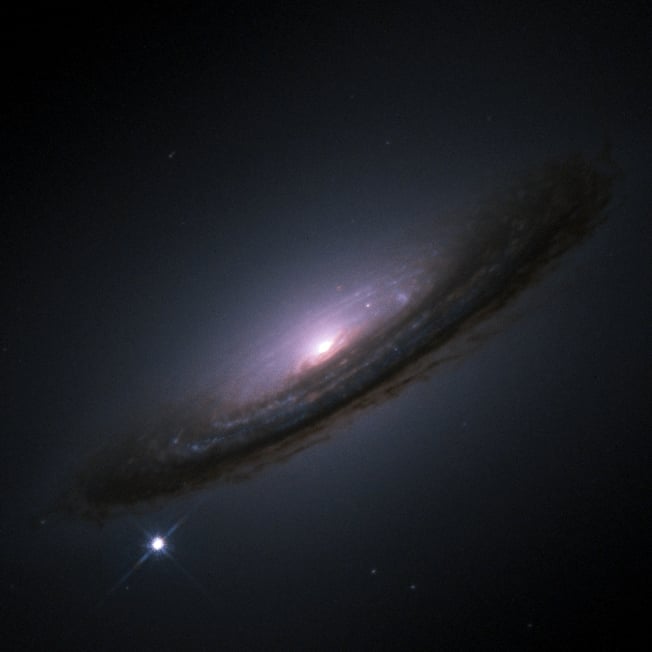
Nobel Laureates Rebut Study Claiming Universe's Expansion Is Slowing, Confirm Acceleration Continues
An international team of astrophysicists, including Nobel laureates Adam Riess and Brian Schmidt, has published a study in the Monthly Notices of the Royal Astronomical Society confirming that the universe's expansion is still accelerating. The rebuttal targets a late-2024 South Korean study that had claimed dark energy was weakening, a finding that would have overturned nearly three decades of cosmological understanding. The new study identifies two specific methodological errors in the earlier work, restoring confidence in the standard model of cosmic acceleration while leaving the deeper mystery of what dark energy actually is unresolved.

Study Finds Trees May Store Less Carbon Than Climate Models Predict
A new study published in Science Advances found that oak trees stop growing months before they stop photosynthesizing, meaning increased carbon uptake does not necessarily translate into more wood growth and long-term carbon storage. Researchers analyzed 137 sites across the US, finding that 26–36% of annual carbon uptake occurred after tree growth had already ceased, with drought and heat identified as key triggers for halting growth. The findings suggest that widely used climate models, which assume photosynthesis and growth are tightly linked, may be overestimating forests' future capacity to sequester carbon.
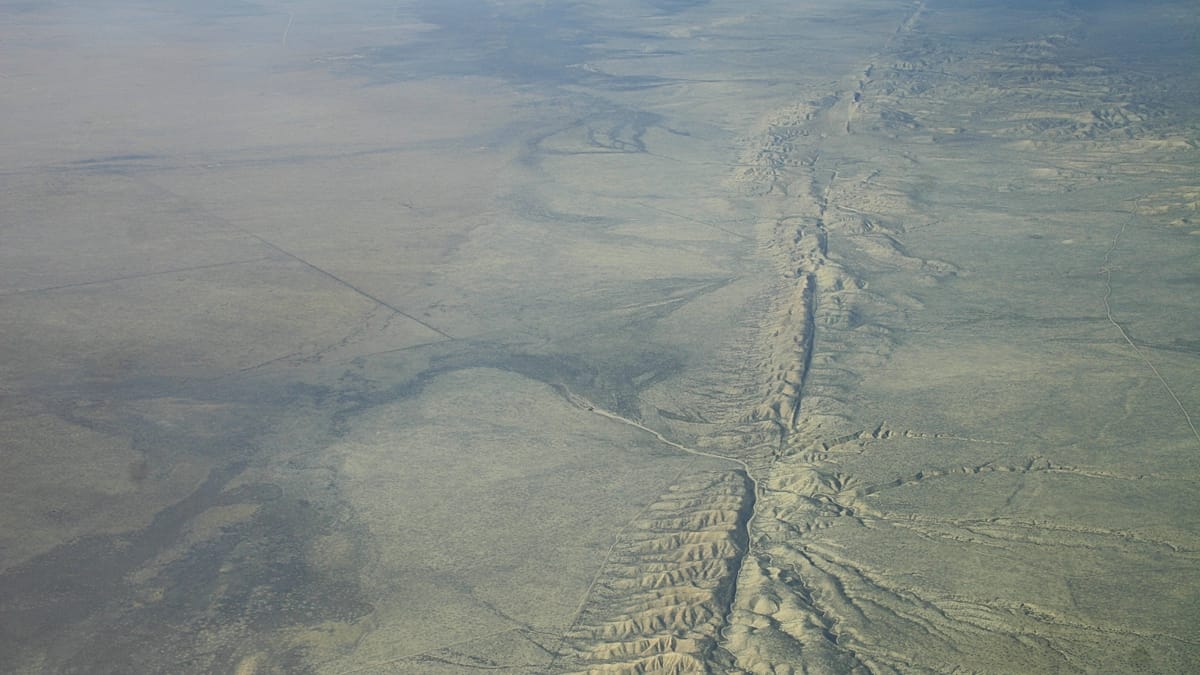
San Andreas Fault Stress Reaches Highest Level in 1,000 Years, Study Finds
A new peer-reviewed study finds that tectonic stress on Southern California's San Andreas and San Jacinto fault systems has reached its highest levels in at least 1,000 years, with the San Jacinto-Bernardino section measuring 3.6 megapascals. The research, led by the University of Hawaiʻi at Mānoa and published in the Journal of Geophysical Research: Solid Earth, used a computer model drawing on geological data including radiocarbon dating and tree-ring records to reconstruct a millennium of earthquake history. The findings cannot predict when a major earthquake will occur but are intended to improve hazard assessments, inform building codes, and guide emergency preparedness in a region home to millions.