Archaeological Analysis Reveals 2,000-Year-Old Scottish Burial with Brain Removal and Bone Tool Creation
/https://tf-cmsv2-smithsonianmag-media.s3.amazonaws.com/filer_public/46/93/46930972-022b-4df7-b1da-305d2e82d428/long-bones-1000.jpg)
Researchers re-examining two Iron Age burials at Loch Borralie in northern Scotland found evidence that an adult woman's brain was deliberately removed after death and her long bones whittled into pointed tools before she was carefully reassembled and interred in a stone cairn. The study, published in the journal Antiquity, combined osteology, isotope analysis, and ancient DNA to show the two individuals — likely maternal second cousins — had genetic ties to communities in Orkney and Applecross, some 175–225 km away. The findings illuminate previously poorly understood Iron Age funerary practices and suggest highly mobile, interconnected maritime communities maintained complex ritual traditions across northern Scotland.
A multidisciplinary team from the UK and US has published new findings on two Iron Age individuals — an adult woman over 30 and a teenage boy of about 15 — buried in a low stone cairn at Loch Borralie, Sutherland, originally excavated in 2000 after rabbits unearthed a skull in 1998. Both died between approximately 50 BC and AD 70. Scanning electron microscope imagery and close-up analysis of the woman's skull revealed straight, parallel striations on the inner cranial surface and an unusual basal fracture consistent with deliberate brain extraction using a sharp implement; the researchers also identified at least four long bones — both humeri, the left ulna, and the left femur — that had been broken and whittled to sharp, tapered points, with one showing wear consistent with use as a tool. Despite these extensive modifications, all bones were placed back in anatomically correct positions in the grave, which researchers interpret as evidence of reverence rather than denigration, though they acknowledge abuse of a low-status individual cannot be ruled out. Ancient DNA analysis revealed the two individuals were likely maternal second cousins and shared genetic identity-by-descent links with Iron Age populations from Orkney (~175 km northeast) and Applecross (~225 km southwest), while isotope data placed their childhoods roughly 80 km southeast of the burial site. Some outside archaeologists, including Richard Madgwick of Cardiff University, accept that the cranium was manipulated but remain cautious about inferring brain removal specifically, and question whether the long bones were deliberately whittled or simply repurposed after natural breakage. The study concludes that Iron Age communities in northern Scotland were highly mobile maritime networks that maintained and transmitted complex funerary traditions over long distances.
Limitations & open questions
The study's own authors acknowledge that the precise motivation for the postmortem modifications — whether reverence, ritual, cannibalism, or mistreatment of a low-status outsider — cannot be determined from the physical evidence alone. The paper also does not resolve whether the two individuals were buried simultaneously or in separate events.
What different sources said
- Ars TechnicaCenter
Did Iron Age Britons remove brains of the dead?
- Live ScienceCenter
2,000 years ago in Scotland, people removed a corpse's brain and fashioned the arm bones into tools
- Phys.orgCenter
Brain removal in Iron Age Scotland burial reveals far-reaching family ties
- New ScientistCenter
Iron Age Britons may have removed the brains of the dead
- Smithsonian MagazineCenter
This Woman's Brains Were Scooped Out and Her Bones Were Broken and Whittled in Scotland 2,000 Years Ago
- CNN WorldCenter
Iron Age woman likely had her brains scooped out before burial, study suggests
Related
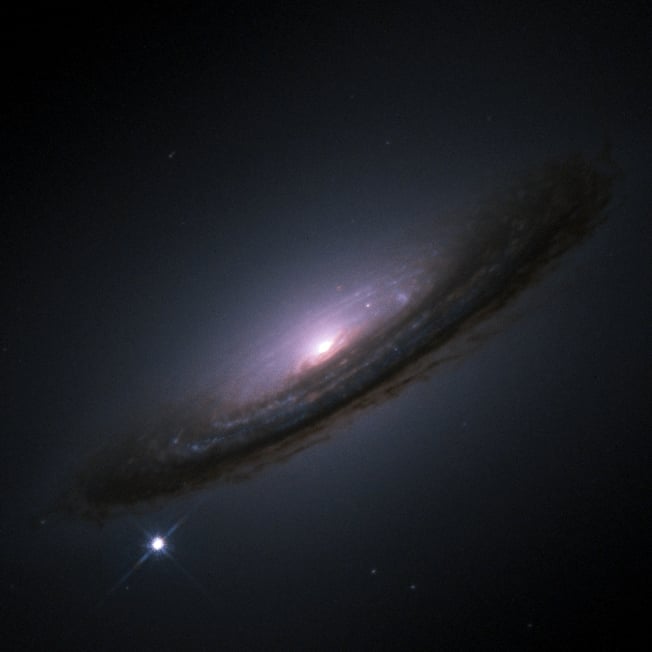
Nobel Laureates Rebut Study Claiming Universe's Expansion Is Slowing, Confirm Acceleration Continues
An international team of astrophysicists, including Nobel laureates Adam Riess and Brian Schmidt, has published a study in the Monthly Notices of the Royal Astronomical Society confirming that the universe's expansion is still accelerating. The rebuttal targets a late-2024 South Korean study that had claimed dark energy was weakening, a finding that would have overturned nearly three decades of cosmological understanding. The new study identifies two specific methodological errors in the earlier work, restoring confidence in the standard model of cosmic acceleration while leaving the deeper mystery of what dark energy actually is unresolved.

Study Finds Trees May Store Less Carbon Than Climate Models Predict
A new study published in Science Advances found that oak trees stop growing months before they stop photosynthesizing, meaning increased carbon uptake does not necessarily translate into more wood growth and long-term carbon storage. Researchers analyzed 137 sites across the US, finding that 26–36% of annual carbon uptake occurred after tree growth had already ceased, with drought and heat identified as key triggers for halting growth. The findings suggest that widely used climate models, which assume photosynthesis and growth are tightly linked, may be overestimating forests' future capacity to sequester carbon.
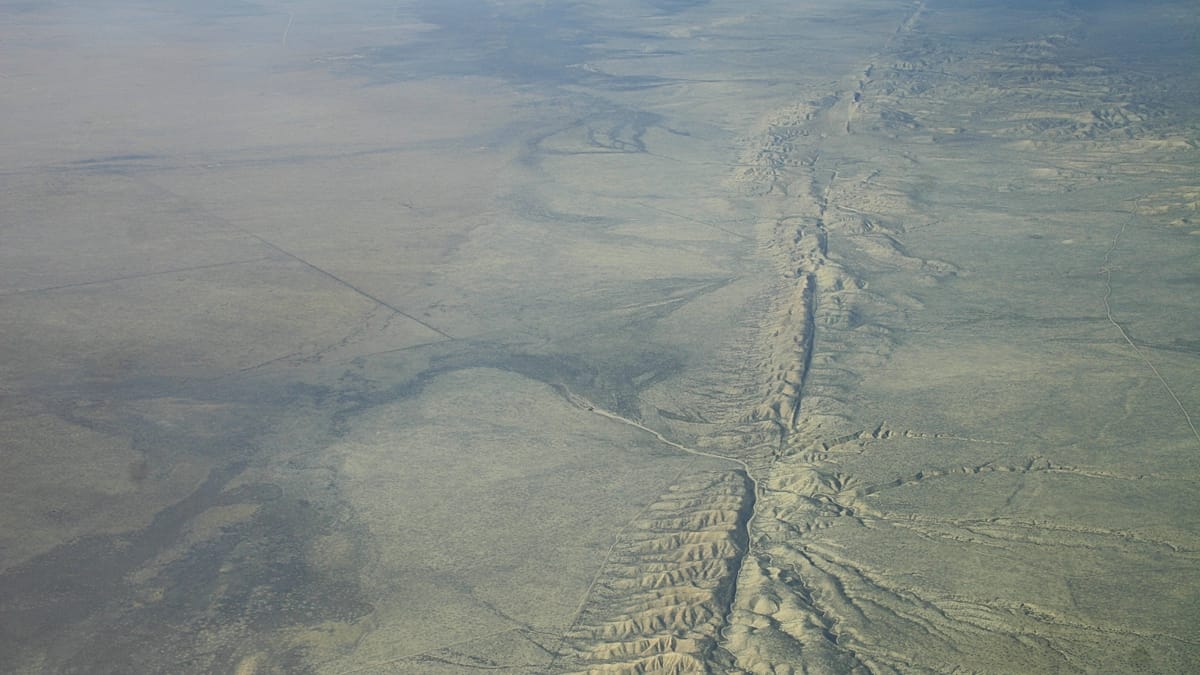
San Andreas Fault Stress Reaches Highest Level in 1,000 Years, Study Finds
A new peer-reviewed study finds that tectonic stress on Southern California's San Andreas and San Jacinto fault systems has reached its highest levels in at least 1,000 years, with the San Jacinto-Bernardino section measuring 3.6 megapascals. The research, led by the University of Hawaiʻi at Mānoa and published in the Journal of Geophysical Research: Solid Earth, used a computer model drawing on geological data including radiocarbon dating and tree-ring records to reconstruct a millennium of earthquake history. The findings cannot predict when a major earthquake will occur but are intended to improve hazard assessments, inform building codes, and guide emergency preparedness in a region home to millions.