Antarctica's West Coast Missing Sea Ice Area the Size of France as Temperatures Soar
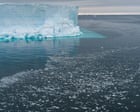
Argentina's Esperanza base on the Antarctic Peninsula recorded a winter temperature of 15.4°C on June 6, shattering the previous record by 2°C and sitting roughly 20°C above seasonal norms. The heatwave coincides with a near-total absence of sea ice in the Bellingshausen Sea, where an area roughly the size of France — about 650,000 square kilometres — has failed to form. Scientists warn the combined conditions threaten emperor penguin breeding, krill populations, and could accelerate ice loss from the Pine Island and Thwaites glaciers, with implications for global sea levels.
During what should be the height of Antarctic winter, the Esperanza research base logged a peak temperature of 15.4°C on June 6, breaking the station's previous June record of 13.3°C set in 1998 and exceeding seasonal averages by approximately 20°C. Two other Argentine stations, Marambio and San Martin, also set records in the same period, while Chilean glaciologist Luis Muñoz reported rain — rather than snow — falling at the 500-metre summit of the Collins glacier on King George Island, causing active ice ablation at a time of year when accumulation is expected. Satellite data from the National Snow and Ice Data Center shows the Bellingshausen Sea, on the western side of the Antarctic Peninsula, is almost completely ice-free, with roughly 650,000 sq km of sea ice absent compared to the 1991–2020 average — the third such episode in four years. Dr Will Hobbs of the University of Tasmania described the situation as 'depressing' and said he no longer expects sea ice to reliably return to the region. The absence of sea ice removes a buffer that normally moderates warm air flowing in from the north, potentially intensifying heatwaves, and also exposes the coastlines near the Pine Island and Thwaites glaciers, whose floating ice shelves could destabilise more rapidly without protective sea ice. Emperor penguin colonies in the Bellingshausen region have already suffered catastrophic breeding failures linked to sea ice loss, and scientists note that krill — a keystone species for whales, penguins, and seals — depend on under-ice algae during winter. Climate scientists stress that the Antarctic Peninsula has warmed roughly five times faster than the global average since 1950, and that feedback loops between ice loss and ocean heat absorption are accelerating the trend.
Limitations & open questions
None of the sources quantify the specific atmospheric or oceanic mechanisms — such as the precise role of blocking high-pressure systems or anomalous sea surface temperatures — that drove this particular heatwave event, nor do they provide formal attribution analysis linking it to anthropogenic climate change, which would strengthen or qualify the causal claims being made.
How coverage differed
The Guardian led with the sea ice deficit and ecological consequences, giving prominent space to expert alarm and specific wildlife impacts, while Gizmodo and Euronews foregrounded the temperature record and heatwave drama; all three outlets framed the events as evidence of accelerating climate change, but The Guardian provided the most granular scientific sourcing whereas Gizmodo and Euronews relied more heavily on The Guardian's own reporting as a secondary reference.
What different sources said
Related
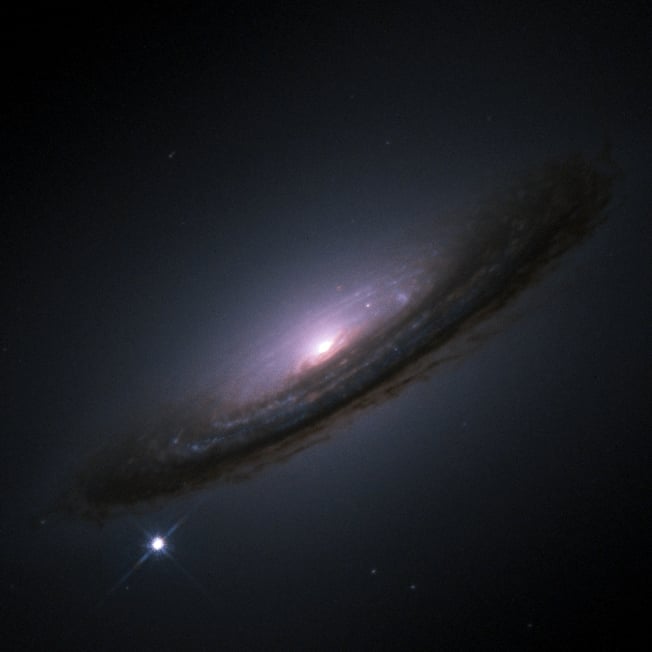
Nobel Laureates Rebut Study Claiming Universe's Expansion Is Slowing, Confirm Acceleration Continues
An international team of astrophysicists, including Nobel laureates Adam Riess and Brian Schmidt, has published a study in the Monthly Notices of the Royal Astronomical Society confirming that the universe's expansion is still accelerating. The rebuttal targets a late-2024 South Korean study that had claimed dark energy was weakening, a finding that would have overturned nearly three decades of cosmological understanding. The new study identifies two specific methodological errors in the earlier work, restoring confidence in the standard model of cosmic acceleration while leaving the deeper mystery of what dark energy actually is unresolved.
Study Finds Trees May Store Less Carbon Than Climate Models Predict
A new study published in Science Advances found that oak trees stop growing months before they stop photosynthesizing, meaning increased carbon uptake does not necessarily translate into more wood growth and long-term carbon storage. Researchers analyzed 137 sites across the US, finding that 26–36% of annual carbon uptake occurred after tree growth had already ceased, with drought and heat identified as key triggers for halting growth. The findings suggest that widely used climate models, which assume photosynthesis and growth are tightly linked, may be overestimating forests' future capacity to sequester carbon.
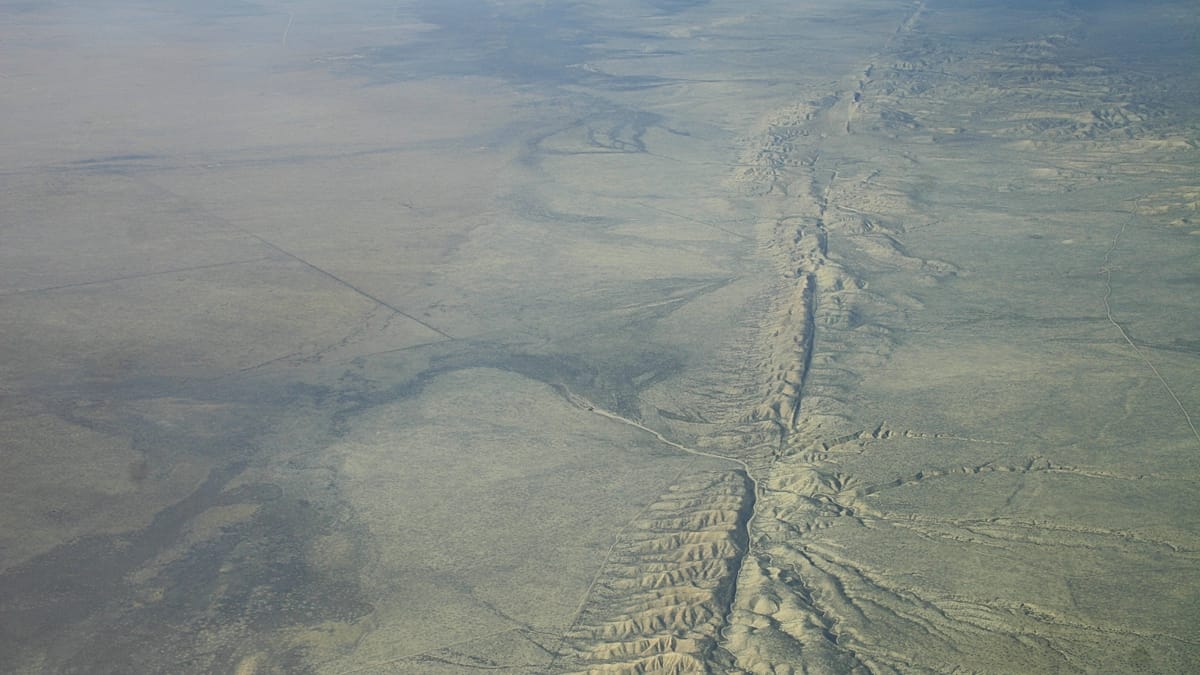
San Andreas Fault Stress Reaches Highest Level in 1,000 Years, Study Finds
A new peer-reviewed study finds that tectonic stress on Southern California's San Andreas and San Jacinto fault systems has reached its highest levels in at least 1,000 years, with the San Jacinto-Bernardino section measuring 3.6 megapascals. The research, led by the University of Hawaiʻi at Mānoa and published in the Journal of Geophysical Research: Solid Earth, used a computer model drawing on geological data including radiocarbon dating and tree-ring records to reconstruct a millennium of earthquake history. The findings cannot predict when a major earthquake will occur but are intended to improve hazard assessments, inform building codes, and guide emergency preparedness in a region home to millions.