Ancient Australia: A Polar Dinosaur World 100 Million Years Ago
Palaeontologists have pieced together a picture of Australia during the early Cretaceous Period, when parts of the continent sat within the Antarctic Circle and were home to a diverse range of dinosaurs adapted to polar conditions. At the time, Australia was still attached to Antarctica, featuring a temperate rainforest along a vast rift valley river, with temperatures as low as minus 6 degrees Celsius and months of continuous darkness. The findings highlight Australia as a unique evolutionary refuge where species that died out elsewhere in the world persisted due to its cold, isolated environment.
Around 100 million years ago, south-eastern Australia lay within the Antarctic Circle, hosting a temperate rainforest teeming with dinosaurs adapted to polar life, including swift megaraptors like Australovenator and small herbivores like Leaellynasaura. Palaeontologists from Monash University and Museums Victoria describe dinosaur populations comparable in density to modern kangaroo mobs or emu flocks, with evidence drawn from sites such as Dinosaur Cove, the Dinosaur Dreaming project near Inverloch, and Lightning Ridge in New South Wales. Approximately 50 individual dinosaur species have been identified across Australia, though researchers believe the true number may be considerably higher. The cold conditions also preserved ancient amphibians called temnospondyls, thought to have gone globally extinct some 20 million years earlier, underscoring Australia's role as an evolutionary refuge. Fossil excavation in Australia is notably difficult due to extremely hard rock, requiring drilling and blasting at some sites, and more than 700 volunteers have contributed to digs over the decades. Exploration in Western Australia remains in its early stages, while Queensland has yielded major finds including giant titanosaurs and large marine reptiles. The research continues to reshape understanding of how dinosaurs adapted to high-latitude, low-light environments.
What different sources said
- ABC AustraliaCenter
What Australia would have looked like when the dinosaurs roamed
Related
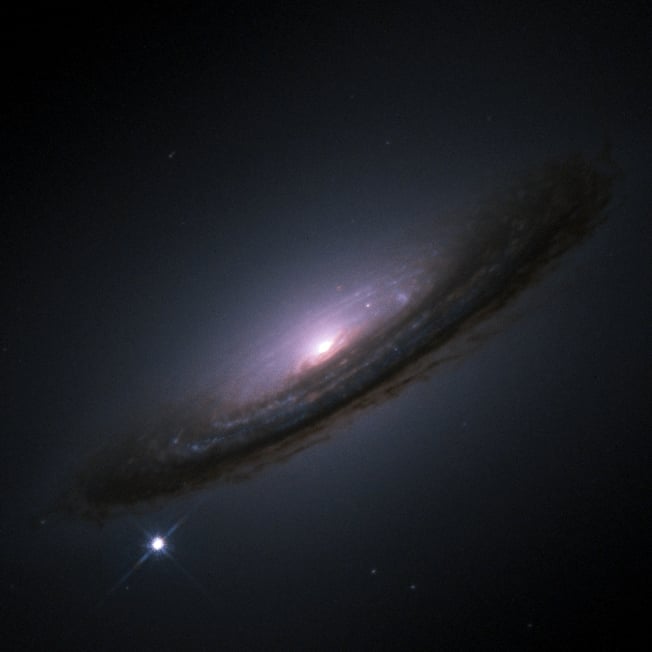
Nobel Laureates Rebut Study Claiming Universe's Expansion Is Slowing, Confirm Acceleration Continues
An international team of astrophysicists, including Nobel laureates Adam Riess and Brian Schmidt, has published a study in the Monthly Notices of the Royal Astronomical Society confirming that the universe's expansion is still accelerating. The rebuttal targets a late-2024 South Korean study that had claimed dark energy was weakening, a finding that would have overturned nearly three decades of cosmological understanding. The new study identifies two specific methodological errors in the earlier work, restoring confidence in the standard model of cosmic acceleration while leaving the deeper mystery of what dark energy actually is unresolved.
Study Finds Trees May Store Less Carbon Than Climate Models Predict
A new study published in Science Advances found that oak trees stop growing months before they stop photosynthesizing, meaning increased carbon uptake does not necessarily translate into more wood growth and long-term carbon storage. Researchers analyzed 137 sites across the US, finding that 26–36% of annual carbon uptake occurred after tree growth had already ceased, with drought and heat identified as key triggers for halting growth. The findings suggest that widely used climate models, which assume photosynthesis and growth are tightly linked, may be overestimating forests' future capacity to sequester carbon.
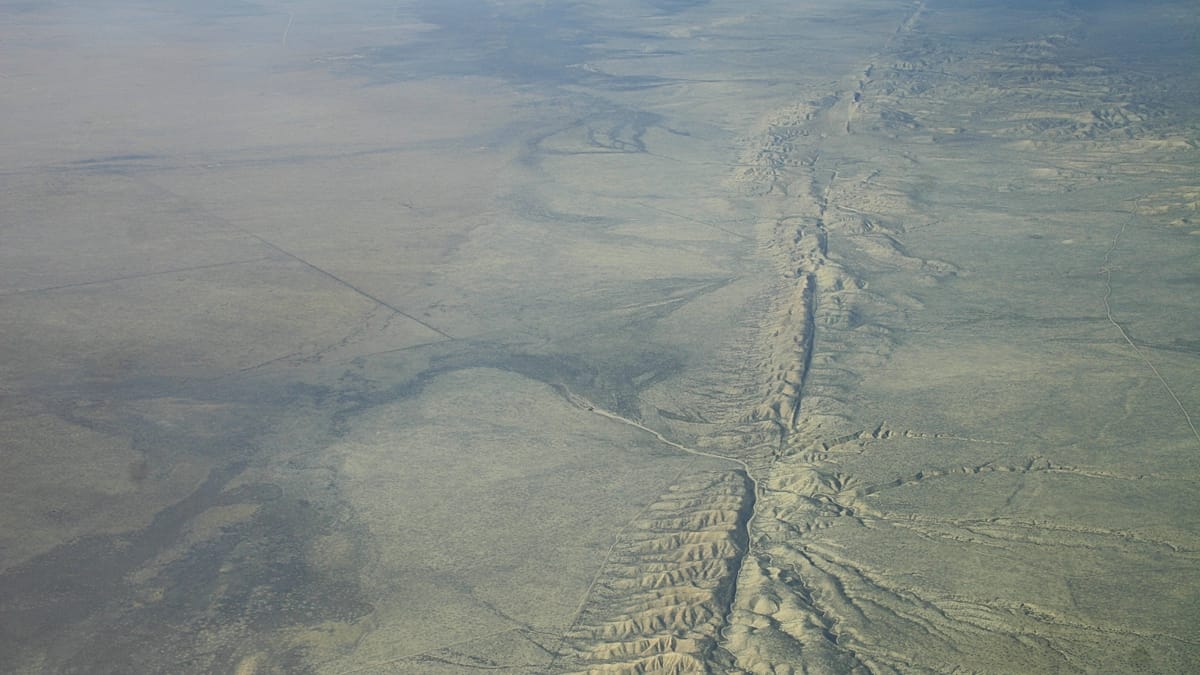
San Andreas Fault Stress Reaches Highest Level in 1,000 Years, Study Finds
A new peer-reviewed study finds that tectonic stress on Southern California's San Andreas and San Jacinto fault systems has reached its highest levels in at least 1,000 years, with the San Jacinto-Bernardino section measuring 3.6 megapascals. The research, led by the University of Hawaiʻi at Mānoa and published in the Journal of Geophysical Research: Solid Earth, used a computer model drawing on geological data including radiocarbon dating and tree-ring records to reconstruct a millennium of earthquake history. The findings cannot predict when a major earthquake will occur but are intended to improve hazard assessments, inform building codes, and guide emergency preparedness in a region home to millions.